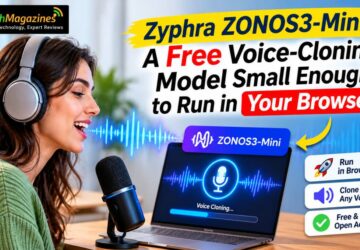

Zyphra ZONOS3-Mini was released on November 9th 2026. This is an open source Text to Speech model which can clone voices and run in real time on phones, laptops and browsers. The weights are freely available under the Apache 2.0 licence. Voice cloning can now be achieved using a small model locally rather than having to use a cloud server or pay for subscriptions.
What Zyphra released
Zyphra, a San Francisco-based AI company, calls ZONOS3-Mini a text-to-speech (TTS) system with zero-shot voice cloning. It can imitate a voice it has never encountered in training, using a short recording as a guide.
Released on November 9, 2026, the model uses a Mixture of Experts design. Selected parts of a larger model handle each step. It has 800 million parameters in total, with about 100 million active. The weights are on Hugging Face under Apache 2.0, while runtime code is on GitHub under MIT.
It follows Zonos-v0.1, released in February 2025, and ZONOS2, released in June 2026. Training took 2.5 days on 112 NVIDIA H100 GPUs.
How it got so small
ZONOS2 had 8 billion parameters and used an audio codec running at 86 frames per second. That made local use harder. A codec compresses and represents sound for a model.
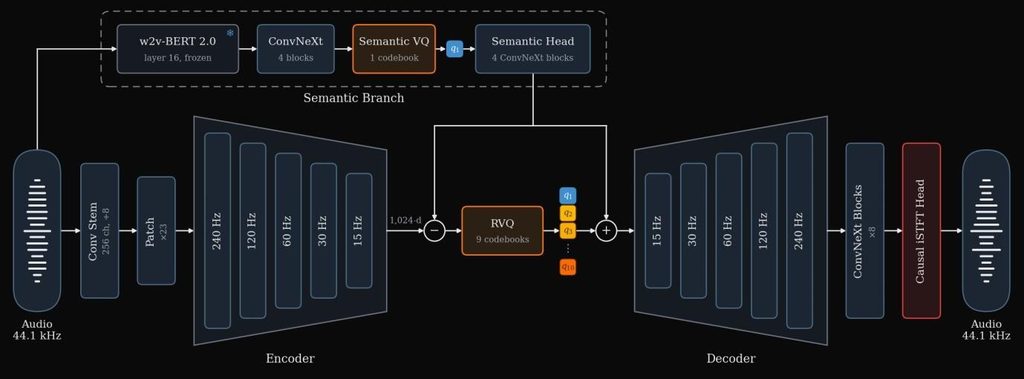
For the Mini, Zyphra built ZAC-1, or Zyphra Audio Codec 1. It runs at 15 frames per second and produces 44.1 kHz audio. Zyphra says a model trained with ZAC-1 had ten times lower word error rate than one trained with the older DAC codec, using similar data. Word error rate measures how often a speech system gets words wrong.
The backbone pairs Gated DeltaNet layers with global attention in a 3:1 ratio. Only two of its 64 experts work at each step. Zyphra used DPO and GRPO to tune behaviour. It can generate up to ten minutes of audio at once.
How fast it runs
In a browser, first audio arrives in under 570 milliseconds on a Pixel 9 phone. Zyphra reports under 150 milliseconds on an M3 MacBook Air.
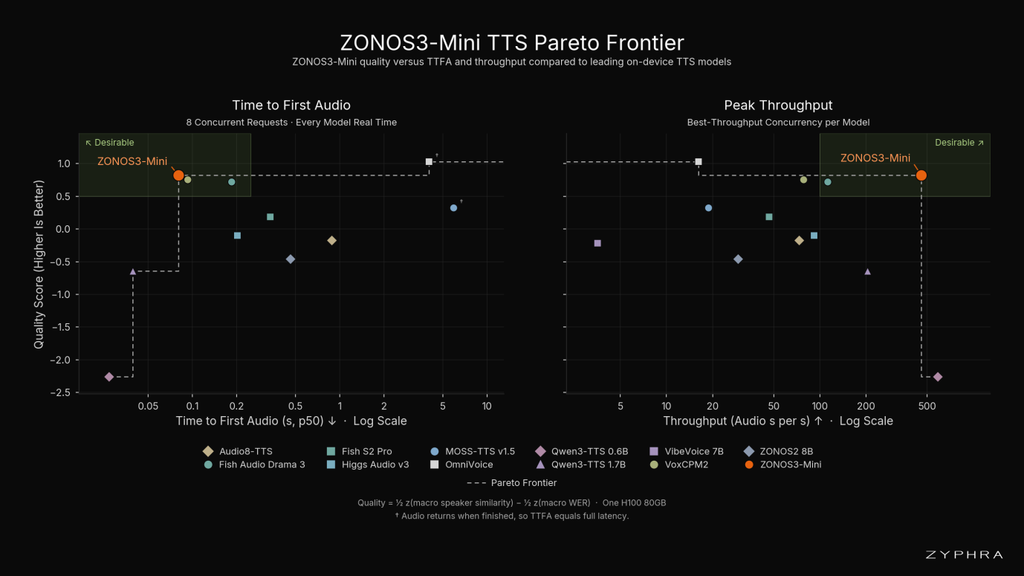
With one H100 server GPU, median time to first audio is 80 milliseconds, and peak throughput is 457 seconds of audio per second. Zyphra says it ranks first among open-weight models on its own ZTTS2-Eval capability index, ahead of Fish S2 Pro and MOSS TTS v1.5. This is Zyphra’s benchmark, not an independent test.
Cloning and steering a voice
Zyphra ZONOS3-Mini accepts a reference clip of up to 60 seconds. This helps capture natural prosody, the rhythm and stress of speech. The Hugging Face quick-start example uses five to ten seconds. A compact speaker embedding is another way to represent a voice.
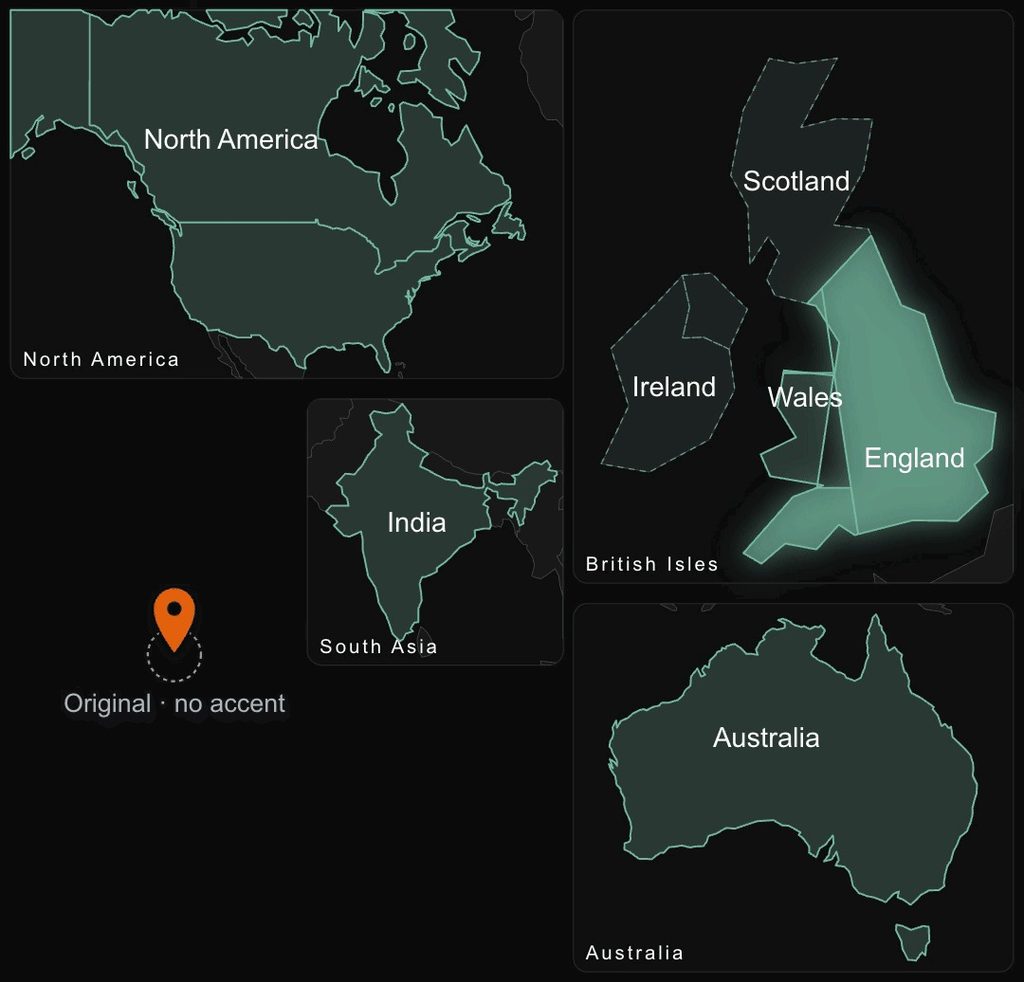
Voice design lets users specify age, gender presentation and accents such as American, British or Australian. They can choose a soft, raspy, bright or deep texture. Controls also cover pace, emotion, projection and liveliness.
There is word-level control, too. A user could ask the model to whisper one phrase and speak the rest normally. A separate edit model can change words in audio that already exists. Zyphra cautions that emotion settings are targets, not guarantees. A request for a happy voice may not produce a convincingly happy result.
43 languages, including 11 from South Asia
The model supports 43 languages, including 11 from South Asia: Hindi, Bengali, Tamil, Telugu, Marathi, Gujarati, Kannada, Malayalam, Punjabi, Odia and Urdu. It also handles Mandarin, Japanese, Korean, Arabic and most major European languages. Zyphra includes 27 built-in default voices, ready to use before shaping a new one. These give it broad regional reach.
How to try it
The simplest way is via Zonos Voice Studio at zyphra.com. It is implemented in a browser using WebGPU, which allows a web app to use the device’s graphics processor. No installation is needed. The model is downloaded on the first visit and stored in the browser cache; the browser needs to support WebGPU.
There’s also a Hugging Face Space demo and a hosted Zyphra Cloud version. An SGLang-Omni server with an OpenAI-compatible speech endpoint is available, as is MLX for Apple Silicon Macs, and a C++/ggml runtime for CPU, CUDA, Metal and Vulkan.
Conclusion
A voice imitation task used to require a whole data centre to do, but now it can all be done using a browser tab on your 2-year old phone! As this is an easy to use tool, there is less of a technical barrier. When listening to someone’s voice you can easily feel like they are there and choosing what they say. This can be created easily with cloning tools.
A creator may want to give their work a constant voice to narrate it, or a developer may want to try out a speech interface. However, it should be considered if the person would be okay with their voice being used from your browser.
FAQs
1. Can I use ZONOS3-Mini commercially?
The weights use the Apache 2.0 license, while runtime code uses MIT. Both are permissive licenses that allow commercial use. Check the terms for the particular files and components you use, since the weights and runtime are distributed under separate licenses.
2. Do I need a GPU?
The browser version uses your device’s graphics processor through WebGPU, so that route needs compatible hardware and a supported browser. The C++/ggml runtime also supports CPU execution, along with CUDA, Metal and Vulkan. A browser GPU is not the only option.
3. How much audio do I need to clone a voice?
A few seconds can provide a useful reference. Zyphra’s Hugging Face quick-start example uses a five-to-ten-second clip. Reference mode accepts recordings of up to 60 seconds, giving the system more material to capture a speaker’s natural rhythm and sound.
4. How does it compare with ElevenLabs?
Zyphra has published side-by-side samples against ElevenLabs, Cartesia, Fish Audio, Qwen and OmniVoice. Its ranking claim covers open-weight models on Zyphra’s own benchmark, so it offers no official verdict against ElevenLabs. Listen to the samples and judge the voices for yourself.