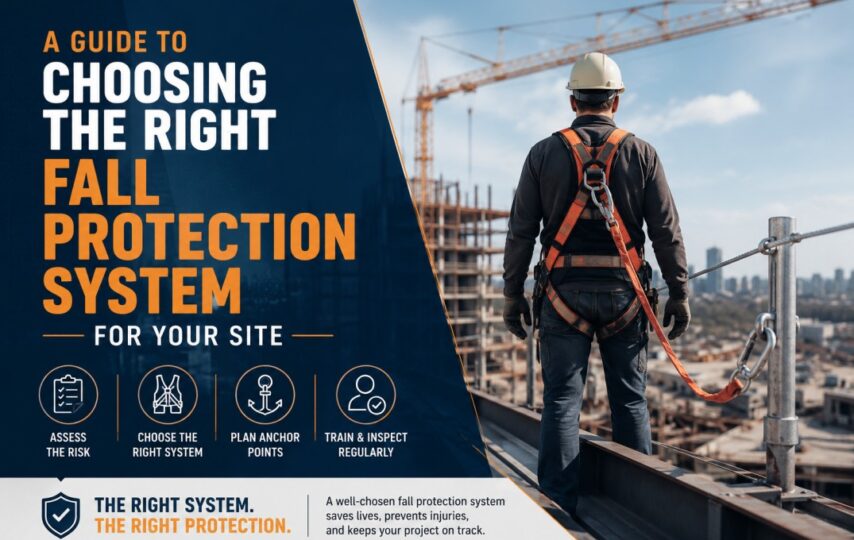

Working at height is a routine part of many construction, maintenance, roofing, industrial, and facilities management tasks. However, it also comes with serious risks if the right safety measures are not in place. Choosing the right fall protection system for your site is not just about meeting legal duties. It is about protecting workers, improving confidence, and making sure tasks can be completed safely and efficiently.
Every site is different, so the best solution will depend on your environment, the type of work being carried out, and how often access is required. Here are the key factors to consider.
Understand the Risks on Your Site
The first step is to carry out a detailed risk assessment. This should identify where falls could happen, who may be exposed to those risks, and how often workers need to access those areas. Common risk zones include rooftops, loading bays, mezzanine floors, open edges, fragile surfaces, ladders, and elevated platforms.
You should also think about whether the work is temporary or ongoing. A short-term construction project may need a different approach compared to a facility where maintenance teams regularly access the roof plant, solar panels, gutters, or ventilation systems.
Consider Collective Protection First
Where possible, collective protection should be considered before personal protection. Collective systems protect everyone in the area and do not rely as heavily on individual behaviour. Examples include guardrails, edge protection, safety platforms, and access walkways.
These solutions can be highly effective for areas with frequent access or where multiple people may be working at height. They are also useful for reducing training demands, as workers are protected by the system itself rather than needing to connect to specialist equipment.
Know When Personal Fall Protection Is Needed
In some environments, collective protection may not be practical. This is often the case on complex roofs, heritage buildings, narrow access routes, or sites where permanent guardrails would not be suitable. In these cases, personal fall protection systems may be required.
Systems such as anchor points, harnesses, lanyards, and lifeline systems can allow workers to move safely while remaining connected. For larger roof areas or routes where users need continuous movement, horizontal lifeline fall protection can provide a practical solution by allowing workers to travel along a defined line while staying protected.
Think About Frequency of Use
How often the system will be used should influence your decision. If workers only need occasional access, a simple, carefully designed system may be suitable. If access is frequent, investing in a more permanent, user-friendly solution can improve safety and save time.
A system that is difficult to use may lead to delays or poor compliance. The best fall protection system should support safe working without making routine tasks unnecessarily complicated.
Check Compatibility With Your Structure
Not every system is suitable for every building or surface. Roof type, structural strength, fixing points, material condition, and load capacity all need to be assessed. A system must be designed around the structure, not simply added as an afterthought.
Professional installation and inspection are essential to make sure the system performs correctly if it is ever needed.
Factor in Training and Maintenance
Even the best fall protection system must be used properly. Workers should understand how the system works, what equipment is required, and what to do in an emergency. Regular inspections and maintenance are also vital to keep the system compliant and reliable.
Choose a Solution That Fits the Site
The right fall protection system should be safe, practical, compliant, and suited to the way your site operates. By assessing your risks, understanding access needs, and choosing equipment that fits your structure, you can create a safer working environment for everyone involved.