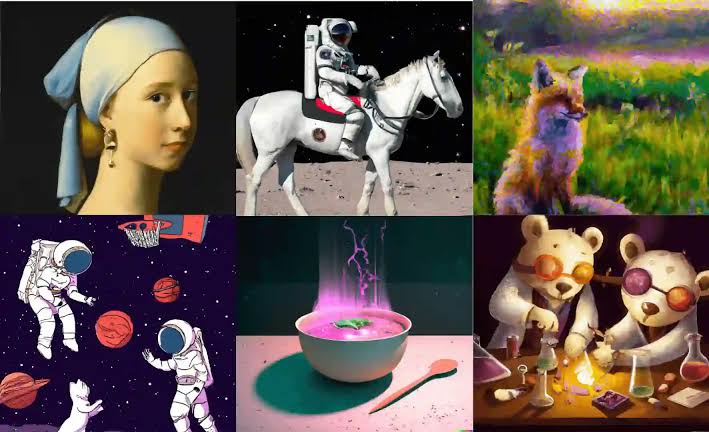

The field of artificial intelligence has undergone a creative revolution, with machines now capable of generating realistic images, artwork, and designs from simple text prompts. This innovation is powered by diffusion models, the underlying technology behind platforms like DALL·E, Midjourney, and Stable Diffusion. These models represent a new paradigm in generative AI — one that blends mathematical precision with creative flexibility. For learners pursuing an artificial intelligence course in Bangalore, understanding diffusion models is essential to grasp how modern generative AI systems are designed, trained, and deployed.
From Noise to Art: The Core Concept of Diffusion Models
Diffusion models are generative models that work by learning to reverse the process of noise. In simple terms, they start with a noisy, random image and iteratively remove the noise until a clear, meaningful image emerges. This process mimics diffusion in physics, where particles spread out over time — but in reverse.
Here’s how it works conceptually:
- Forward Process (Adding Noise): The model takes a real image and gradually adds random noise to it over several steps, until the image becomes pure noise.
- Reverse Process (Removing Noise): The model learns to reverse this process, step by step, by predicting and removing noise to reconstruct the original image.
During training, diffusion models learn to predict the noise added at each step, which allows them to generate new, coherent images from random starting points. Unlike earlier generative models such as GANs (Generative Adversarial Networks), diffusion models are more stable and less prone to artifacts, making them particularly effective for high-quality image generation.
The Mathematical Foundation: Learning the Reverse Process
At the heart of diffusion models lies a probabilistic framework. The forward process is defined mathematically as a Markov chain that progressively adds Gaussian noise to data. The reverse process aims to learn the probability distribution that can denoise the data back to its original form.
This denoising is guided by a neural network — often a variant of the U-Net architecture — which predicts the noise at each step. Training involves minimizing the difference between the predicted and actual noise using a loss function. Over time, the model becomes skilled at reconstructing complex visual features from randomness.
What makes this approach powerful is its ability to model the full data distribution, rather than relying on adversarial feedback (as in GANs). The result is smooth, stable learning that produces diverse and detailed outputs.
Students in an ai course in bangalore are often introduced to this concept through hands-on coding exercises, where they can observe how noise levels affect the model’s ability to generate coherent images during inference.
Why Diffusion Models Outperform GANs
Before diffusion models gained popularity, GANs dominated generative AI research. GANs use two networks — a generator and a discriminator — that compete with each other. While effective, this setup often leads to instability and issues like mode collapse, where the model produces limited variety in outputs.
Diffusion models solve these challenges through a simpler training mechanism and more controllable output generation. Key advantages include:
- Training Stability: Diffusion models don’t require adversarial training, reducing the risk of oscillations and divergence.
- Higher Image Quality: They generate sharper, more realistic visuals with fine details.
- Better Diversity: They can produce a wider range of creative variations from the same input prompt.
- Flexibility: They integrate easily with conditional inputs such as text, allowing models like DALL·E 2 and Stable Diffusion to create images from language descriptions.
The trade-off, however, is computational intensity — diffusion models require hundreds or even thousands of denoising steps, making them slower than GANs. But recent advancements in model optimization have significantly reduced inference time without sacrificing quality.
Text-to-Image Generation: The Breakthrough of Modern Diffusion Models
DALL·E, Midjourney, and Stable Diffusion all use diffusion as their generative backbone, but they differ in how they integrate text understanding. These systems combine diffusion with large language models (LLMs) or text encoders such as CLIP (Contrastive Language-Image Pretraining). CLIP learns to associate text and image embeddings, enabling the diffusion model to understand textual prompts.
For example, when you type “a futuristic cityscape at sunset,” the text encoder converts this phrase into a vector representation. The diffusion model then conditions its denoising process on this representation, guiding the generation of an image that matches the prompt. This synergy between text and image representation has made diffusion models the foundation of multimodal AI — systems capable of processing and generating across different data types.
Professionals enrolled in an artificial intelligence course in Bangalore gain insights into these architectures through practical labs, exploring how conditioning, latent spaces, and encoder-decoder mechanisms work together to produce realistic AI-generated visuals.
Applications and Future of Diffusion Models
The success of diffusion models extends beyond creative art tools. Industries are adopting them for a wide range of applications:
- Healthcare: Synthesizing medical images for training diagnostic models.
- Entertainment: Designing virtual worlds, characters, and textures.
- Fashion and Architecture: Generating concept designs and prototypes.
- Education: Creating visual aids and content for learning environments.
Future research aims to make diffusion models more efficient by reducing the number of inference steps and combining them with reinforcement learning or attention-based transformers. This could make real-time generative AI accessible even on consumer devices.
Learners joining an ai course in bangalore will find that mastering diffusion concepts equips them with an essential skill set for the next generation of AI-driven creative industries.
Conclusion
Diffusion models represent one of the most significant advancements in generative AI. Their ability to produce stunningly realistic images from noise — guided by mathematical precision and language understanding — has reshaped how we perceive creativity in machines. Understanding how models like DALL·E, Midjourney, and Stable Diffusion work is not just about technology; it’s about exploring the intersection of art and science.
For anyone pursuing an artificial intelligence course in Bangalore, diffusion models offer a fascinating gateway into the world of generative systems — one where algorithms no longer just analyse data, but also create, imagine, and inspire.
For more details visit us:
Name: ExcelR – Data Science, Generative AI, Artificial Intelligence Course in Bangalore
Address: Unit No. T-2 4th Floor, Raja Ikon Sy, No.89/1 Munnekolala, Village, Marathahalli – Sarjapur Outer Ring Rd, above Yes Bank, Marathahalli, Bengaluru, Karnataka 560037
Phone: 87929 28623
Email: enquiry@excelr.com