Pool cleaning robots usually cost anywhere from a few hundred dollars to nearly two thousand dollars. Basic models may start around $300 to $500, while many strong residential options sit between $700 and $1,800. Premium models can go higher when they add broader coverage, smarter movement, surface debris handling, app features, or stronger convenience tools.
That wide price range can feel confusing. The real question is not only “How much does one cost?” It is “What kind of cleaning work am I paying to reduce?”
A small pool with light dust does not need the same budget as a large pool under trees. A homeowner who wants only basic floor cleaning may spend less than someone who wants help with leaves, waterline marks, and frequent summer use.
The Quick Price Answer
Entry-level robots are usually built for simpler jobs. They may work well for small pools, light debris, and owners who only need basic floor cleaning. The lower price can be attractive, but it may also mean fewer cleaning zones, shorter runtime, smaller baskets, or less refined movement.
Mid-range models are where many homeowners start comparing real value. This is the price area where a robot may feel less like a gadget and more like a regular home maintenance tool. You are often paying for better usability, steadier cleaning, easier basket access, and a design that fits normal residential use.
Premium models cost more because they are built for larger pools, heavier debris, more complex layouts, or owners who want less hands-on supervision.
What Changes as the Price Goes Up
The price difference is not only about suction. Higher-priced robots may offer better movement, broader pool coverage, larger debris capacity, finer filtration, or easier retrieval. Cordless models may also cost more when battery design, charging convenience, and runtime improve.
Some features matter more than others. A homeowner comparing a pool cleaner robot should not pay only for impressive words on a product page. The better test is whether the feature solves a real problem in the pool.
If leaves collect on the surface, surface handling has value. If dust settles after every windy day, filtration matters. If the pool has steps or curves, movement and coverage matter. If the owner dislikes lifting heavy equipment, retrieval and weight matter.
Hidden Costs Buyers Should Remember
The purchase price is only part of the story. A pool robot has filters, baskets, brushes, tracks, wheels, seals, and sometimes battery components that may need cleaning, care, or replacement over time.
Electricity or charging cost is usually small, but it is still part of ownership. More important is whether the robot saves enough time, manual effort, or service-related expense to feel worthwhile.
There is also the cost of poor fit. A cheap robot that cannot handle your debris may lead to more manual cleaning. An expensive robot with features you never use may be wasted money. Good value sits between those two mistakes.
A Beatbot Example for Cost and Feature Value
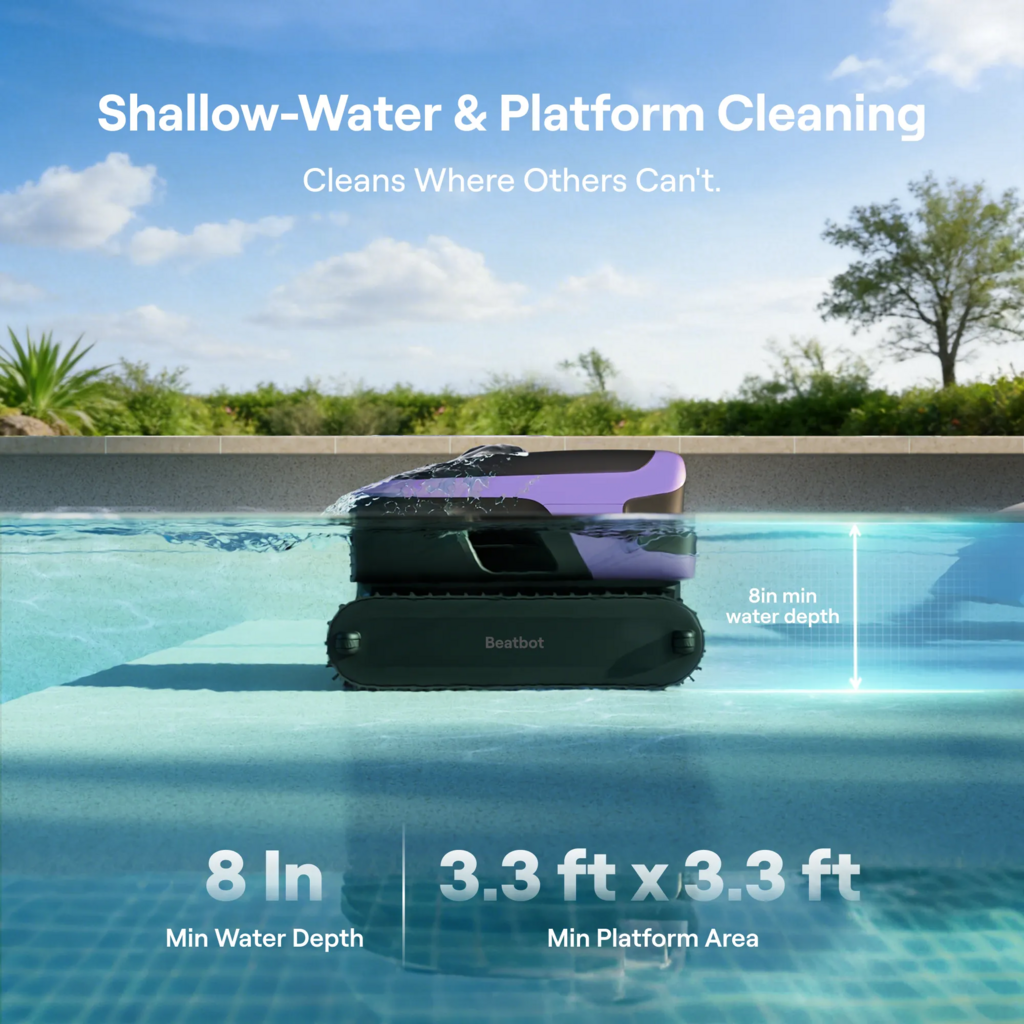
Beatbot Sora 70 is a useful example when explaining cost because it sits above basic floor-only cleaners and below many flagship systems. Its price can vary by promotion, retailer, and timing, so shoppers should check the current official price before comparing value.
The value is not just in one headline feature. For a homeowner, the more useful question is whether the cleaner can support the areas that usually get dirty, reduce repeated manual work, and fit naturally into a weekly pool routine. Sora 70 is positioned as a cordless residential option that helps with common cleaning needs across visible pool areas, including surface debris and settled dirt. That makes it a clear example of paying for broader everyday usefulness rather than paying only for raw suction.
For shoppers comparing a robotic pool cleaner, this is the key cost lesson: a higher price can make sense when it buys convenience the owner will actually use. It still does not replace water testing, chemical balance, main filter care, skimmer and pump basket cleaning, large debris removal, safe supervision, or professional help for leaks, equipment faults, algae, stains, scale, or persistent cloudy water.
How to Decide Your Budget
Start with pool size. A larger pool usually needs more runtime and capacity. Then look at debris. Leaves, pollen, sand, insects, and waterline residue create different cleaning needs.
Next, decide what you want the robot to clean. Some owners only need floor cleaning. Others need help with walls, surface debris, or waterline buildup. After that, compare cordless convenience, charging habits, basket access, robot weight, and storage.
Warranty and replacement parts also matter. A cheaper cleaner may not stay cheap if filters, brushes, or support are hard to find.
When Paying More Is Worth It
A higher price is easier to justify when the pool is large, irregular, used often, or exposed to frequent debris. It can also make sense when the owner currently spends a lot of time vacuuming or pays for extra service visits mainly because of physical debris.
Paying more is harder to justify for a small, simple, lightly used pool. In that case, an entry-level or mid-range model may be enough.
The point is not to buy the most advanced robot. The point is to buy the level of automation your pool actually needs.
Match Cost to Real Pool Use
Pool cleaning robots cost more when they solve more problems, cover more areas, or make ownership easier. Entry-level models can work for small, simple pools. Mid-range models often offer the best balance for ordinary homeowners. Premium models make sense when pool size, debris, or convenience needs justify the price.
A pool cleaning robot is worth its cost when its features match the work your pool creates. The best deal is not always the lowest price. It is the cleaner that saves time, reduces repeated effort, and fits the way you actually use your pool.