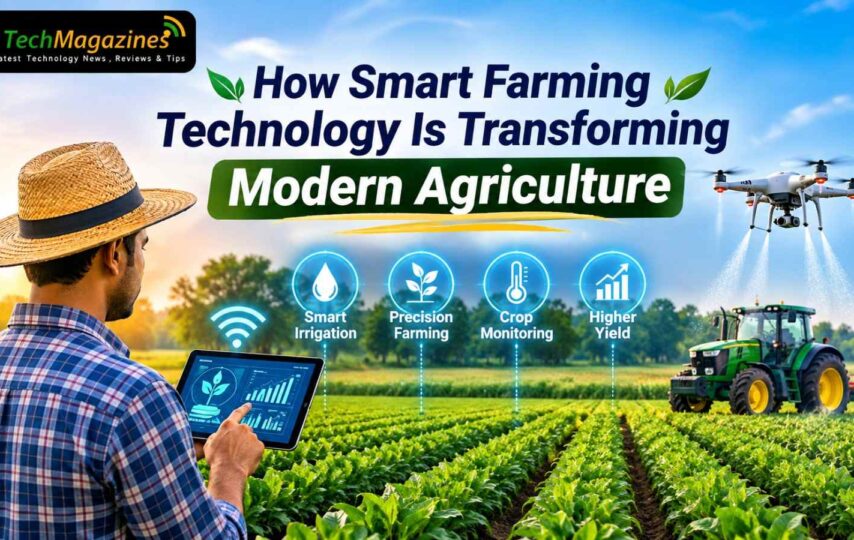

Farming is changing because modern technology is advancing. Farmers today face challenges. The weather keeps changing. The cost of supplies keeps rising. Water is becoming harder to find. At the time, the need for food keeps growing. Traditional farming knowledge still matters. It gives insight. Technology offers ways to manage farming better.
Smart farming technology helps farmers use tools, devices and machines. It also uses data to improve tasks. Things such as GPS-enabled tractors, soil sensors and artificial intelligence are part of this. These tools help farmers make decisions. They also lead to efficient work.
Smart farming does not replace ways. It brings together the experience of farmers and new technology. This mix makes farming stronger. It helps increase productivity. It also helps manage resources such as water and fertilizer.
What Is Smart Farming Technology?
Smart farming is about using tools to keep an eye on the farm and get the work done. It relies on things like sensors, GPS systems, drones, mobile apps, automated irrigation, and artificial intelligence.
Take soil moisture sensors, for example. They let farmers know when the crops are thirsty. Weather apps help them figure out the time to plant and the right time to bring in the harvest. Gaps tech keeps tractor movements smooth while they work in the fields.
The whole point of farming is to trim costs, improve how the farm is managed, and help farmers make better choices about their land. Smart farming does that. It saves farmers money, keeps their operations running, and leads to smarter decisions.
1. IoT Sensors Help Farmers Monitor Soil and Crops
The Internet of Things lets devices that are connected to each gather and pass along information. On farms, sensors can keep an eye on things like soil wetness, heat, dampness in the air, and other conditions around them.
Picture a farmer who grows vegetables. If they water their crops without looking at the soil, they might give them too much water or too little water. A sensor that measures soil wetness tells them how much water is near the plant’s roots.
With this information, farmers can make a watering plan that fits what the crops really need.
These sensors help farmers keep a watch on their fields. They cut down on wasted water. Help farmers spot shifts that might affect how crops grow.
2. Precision Farming Improves Agricultural Accuracy
Precision farming uses GPS, digital maps, sensors, and data analysis. It helps farmers care for each part of a farm based on what that part needs.
Not every spot in a field has soil quality or nutrients. So, putting the amount of fertilizer or water everywhere is not always needed.
For example, a farmer working in a field can use soil maps to find spots that need nutrients. GPS-enabled equipment can also hold a path while sowing, spraying, and doing other jobs.
This way of farming cuts down on overlapping field work. It also helps farmers use seeds, fertilizers, and fuel without waste.
3. GPS-Enabled Tractors Are Changing Field Operations
I have seen modern tractors becoming thanks to GPS technology, digital screens and guidance systems. These tools help farmers do work accurately.
GPS guidance makes sure the tractor moves in lines while ploughing, sowing, and spraying. GPS guidance also reduces wasted movement across the field.
Technology is changing the way farmers look for and choose tractors. Of only going to dealerships, farmers can now check tractor specs, prices, features and compare models online.
Having digital information makes it easier for farmers to match machinery with farming needs.
4. Smart Irrigation Helps Save Water
Water management is a concern for modern farmers. Smart irrigation systems help farmers use water wisely by looking at soil moisture, what the crops need, and the weather conditions.
These systems can use sensors, automatic timers, and digital controllers to manage watering.
For example, a farmer using drip irrigation can connect a moisture sensor to the system. When the soil gets dry, the system automatically turns on the water supply just like it is programmed to do.
Smart irrigation works well for vegetable farms orchards, greenhouses and any farm where water needs to be managed
Even simple drip irrigation setups with timers can make a difference in water use. They help a lot without needing equipment.
5. Agricultural Drones Support Crop Monitoring
I think drones are turning into tools for keeping an eye on fields. They carry cameras and imaging gear, so they can grab pictures of crops. That helps spot places that need a look.
For example, drone photos might help farmers catch crop growth, waterlogged spots, or clear damage in parts of a field.
Some farm drones also do spray work. Only where it is allowed and under certain conditions.
Still, drones need trained pilots, proper safety steps, and follow the rules. Drones should be seen as tools, not as a swap for walking the field yourself.
6. Artificial Intelligence Is Supporting Better Decisions
I see that Artificial intelligence is opening doors in farming. Artificial intelligence tools can look at pictures of crops, check weather information and study data to give insights.
For example, a farmer might upload a picture of a plant that has spots. I have noticed that Artificial intelligence may spot disease symptoms and recommend places that need study.
Artificial intelligence tools can also help with weather analysis, crop monitoring and farm planning. I find that this helps a lot for farmers.
However, Artificial intelligence advice is not always right. Farmers should double-check facts before spraying pesticides or making crop decisions. I always remind them to verify.
7. Mobile Applications Make Agricultural Information Accessible
I have seen how smartphones are becoming tools for farmers. Farmers can use applications to get weather updates, market news, details about machinery, guidance on crops and information about government schemes.
Before sowing, a farmer can use applications to look at weather forecasts and find out which farming equipment is best for the season. Digital platforms also help farmers compare products and find out about services.
These applications are especially useful because farmers can get information right while farmers are in the field.
Nevertheless, farmers should pick up platforms. Be careful when farmers share personal or financial details.
8. Challenges in Adopting Smart Farming Technology
Smart farming brings benefits, but smart farming also brings difficult challenges. The first cost of sensors, drones, advanced machines, and software can be hard for farmers. Limited internet and lack of training can add problems. Language barriers can stop farmers from using apps that’re only in strange languages. A good way is to start with technology. Farmers can start with weather apps, soil tests, digital crop logs, or drip irrigation before buying farming systems. Training programs, farmer groups, equipment rental and custom hiring centers can help farmers get farming tools.
9. What Is the Future of Smart Farming?
The future of farming will likely include machines, automated systems, AI tools and online farming platforms. Farmers may use real-time data more and more to monitor crops, control equipment and organize field work. Technology will also help farmers connect with farming companies, machine makers and service providers. For success, new tools need to be affordable, dependable, easy to use and offer benefits. The best technology is the one that solves farming problems and fits what farmers actually need.
Conclusion
Smart farming technology is changing agriculture. It offers ways to watch crops, control resources, and carry out field tasks. IoT sensors, precision farming, GPS‑enabled tractors, drones, artificial intelligence and mobile apps help farmers make choices.
Technology does not solve all farming problems. When digital tools are used together with traditional farming knowledge, the work becomes more efficient.
When these tools become cheaper and easier to use, smart farming will become more important in the future of agriculture.