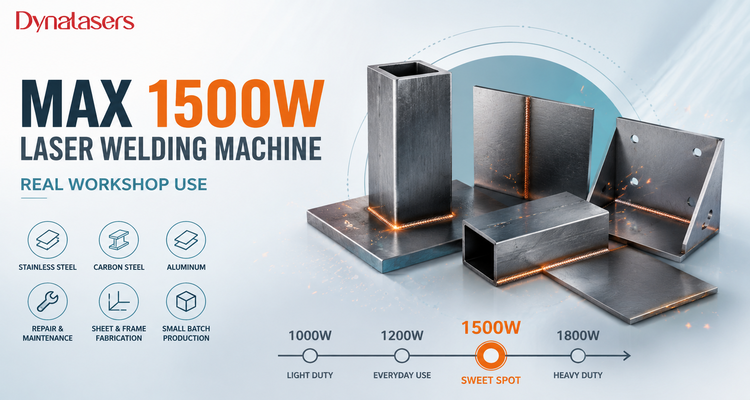

A max 1500W laser welding machine sits in a useful middle ground. It’s not the entry-level option for thin sheet, and it’s not the heavy industrial rig for thick plate. It handles everyday metal welding, repair, visible seams, and small-batch production across stainless steel, carbon steel, and aluminum.
Compared to conventional arc welding, 1500W laser welding typically delivers narrower seams, lower heat input, faster travel speeds, and less post-weld finishing. But it’s not a universal solution for every thick plate or heavy fabrication job—knowing where it fits matters more than chasing maximum wattage.
Max 1500W Laser Welding Machine Comparison Table
| Power Level | Typical Use Case |
| 1000W | Thin sheet welding, light repair, simple stainless/carbon steel jobs |
| 1200W | General sheet metal welding, maintenance, small workshop tasks |
| 1500W | Medium sheet thickness, repair, visible welds, small-batch production |
| 1800W | Thicker materials, higher workload, faster welding or deeper penetration needs |
Power isn’t about bigger being better—it’s about matching the machine to your material, thickness, joint type, speed requirements, and actual workload. The 1500W laser welder for workshops hits a practical balance: more capability than entry-level units, without the overhead of a full industrial production line.
Where a 1500W Laser Welding Machine Fits Best
For stainless steel, a 1500W fiber laser welder with proper gas shielding and parameter control produces narrow, clean seams with minimal discoloration. On carbon steel, it increases welding speed and reduces distortion compared to TIG or MIG. Aluminum is weldable too, but it demands a cleaner surface, stable wire feeding, and more cautious parameter tuning.
Typical applications include medium-thickness sheet metal, cabinets, frames, enclosures, repair parts, and small production runs. For visible welds, decorative parts, and repair work, the reduced need for grinding and finishing is a real advantage. This is where the 1500W laser welding machine proves itself as a genuine medium power laser welding machine for workshop environments.
Why Dynalasers Is Practical for Medium-Power Laser Welding
Dynalasers focuses on compact handheld fiber laser systems built for workshops, maintenance teams, and metal fabrication users. Their equipment handles welding, cleaning, repair, maintenance, and small-batch processing in real shop conditions—not just demo booths.
For users considering a max 1500W laser welding machine or similar power levels, Dynalasers offers multiple series tailored to different workflows.
Stable Beam Output for Consistent Welds
Consistent beam output helps maintain penetration depth, weld shape, and appearance across repeat jobs. This matters for visible seams, heat-sensitive materials, and production runs where rework costs add up. Dynalasers builds on fiber laser welding machine technology, delivering concentrated energy, a narrow heat-affected zone, and faster welding speeds. With proper setup, you reduce burn-through, distortion, spatter, and rework.
Compact Body for Workshop Mobility
Not every shop has floor space for a fixed welding line. A compact handheld system moves between workstations, repair areas, and production benches. For repair, maintenance, small-batch production, and multi-material work, mobility is a practical advantage—exactly what a 1500W laser welder for workshops should offer.
Welding, Cleaning, and Light Cutting in One Platform
Depending on the model and configuration, Dynalasers systems support welding, cleaning, and light auxiliary cutting. For small to mid-size shops, one platform covering multiple tasks reduces equipment overlap. You might weld a stainless steel frame, clean rust before repair, or do simple auxiliary cuts—but this is not a replacement for a dedicated CNC cutting line.
Support for Parameter Setup and Process Testing
Laser welding results depend on more than power. Material, thickness, joint gap, wire feeding, shielding gas, focus position, and travel speed all affect the outcome. Dynalasers provides parameter guidance and process testing support to help users move from trial welds to stable production—especially important for shops new to 1500W laser welding.
Dynalasers Welding Series for 1500W-Class Users
M Series: Practical Multi-Function Choice
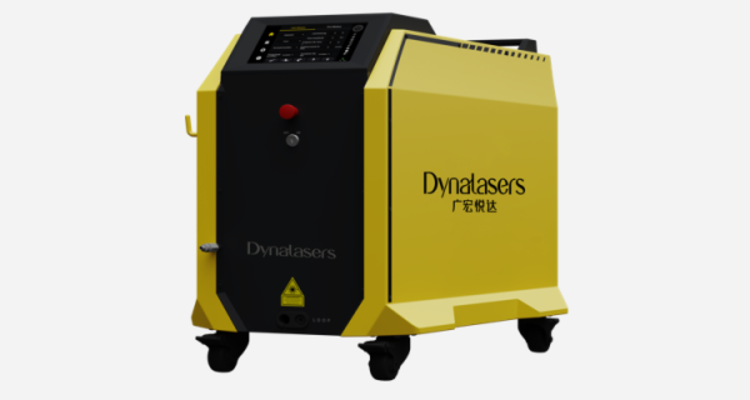
The M Series suits daily workshop welding on stainless steel, carbon steel, and aluminum—covering repair, maintenance, and small production. It’s a balanced, multi-function choice for shops transitioning from conventional welding to handheld laser welding. Models in this series range from 800W to 1800W, with the 1500W class offering a sweet spot for versatility.
D Series: Stronger Multi-Mode Welding Capability
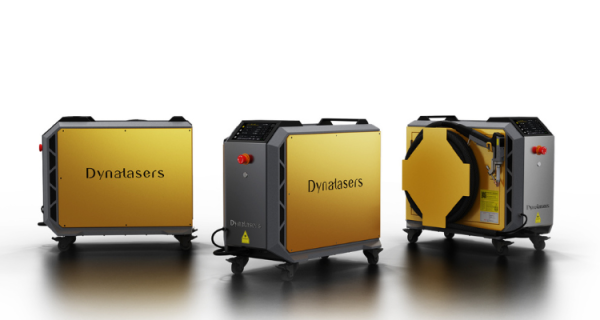
The D Series fits users who need more welding modes and greater process flexibility. It handles different materials, varied weld requirements, and higher daily workloads. If your shop needs more welding margin and handles complex jobs, the D Series offers more capability than a basic handheld system.
S Series: Lightweight Option for Mobile Welding Work
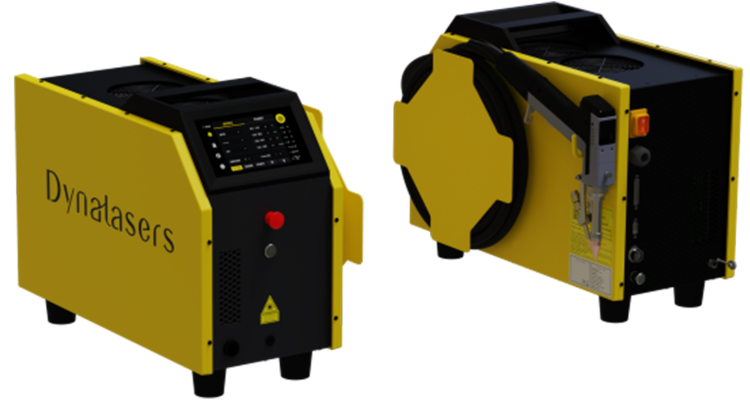
The S Series prioritizes lightweight portability. It’s built for on-site repair, mobile welding, and space-constrained environments. For teams that move equipment frequently, the reduced weight lowers operator fatigue. The S Series weighs under 21 kg with a compact footprint—ideal for a handheld 1500W laser welder in mobile applications.
What Affects Welding Depth and Quality
Welding depth and quality depend on several variables:
- Material: Stainless steel and carbon steel are generally more forgiving. Aluminum requires cleaner surfaces and more careful parameter control.
- Joint fit-up: Tighter, more consistent gaps produce more stable welds. Larger gaps may require wire feeding or parameter adjustments.
- Wire feeding: Filler wire helps fill gaps and improve bead shape and joint strength.
- Shielding gas: Protects the weld pool from oxidation—nitrogen or argon at adequate flow rates is essential.
- Focus position: Affects penetration depth and bead profile. For thicker materials, focusing below the surface increases penetration.
- Travel speed: Too fast and penetration suffers; too slow and heat input and distortion increase.
Before production, run sample tests and record stable parameters for each material and thickness combination.
FAQs
Q1. What can a 1500W laser welding machine weld?
It handles stainless steel, carbon steel, aluminum, sheet metal parts, tubes, frames, cabinets, repair work, and small production runs. Typical thickness ranges: stainless and carbon steel up to 4 mm, aluminum up to 3 mm.
Q2. Is 1500W enough for workshop metal welding?
For many workshop jobs—medium sheet metal, visible seams, stainless steel products, and general fabrication—yes. If you’re welding thick plate or running continuous heavy-load production, higher power may be necessary.
Q3. Can a 1500W laser welder handle aluminum?
Yes, but aluminum demands more care: clean surfaces, correct focus, stable shielding gas, and suitable wire feeding. Test parameters thoroughly before production.
Q4. What should users test before production?
Test material thickness, joint gap, wire feeding, shielding gas flow, focus position, travel speed, weld appearance, penetration, and repeatability. Document the settings that work for each job.
Conclusion
A max 1500W laser welding machine offers a practical mid-range option for workshops needing clean welds, medium sheet metal capability, repair work, visible seams, and small-batch production. It’s not a replacement for every traditional method, but it reduces post-weld finishing, distortion, and rework in the right applications.
Dynalasers provides M, D, and S Series handheld fiber laser welding systems. The right choice depends on your material range, mobility needs, welding depth requirements, and multi-function preferences. Match the machine to your actual workflow—not the other way around.