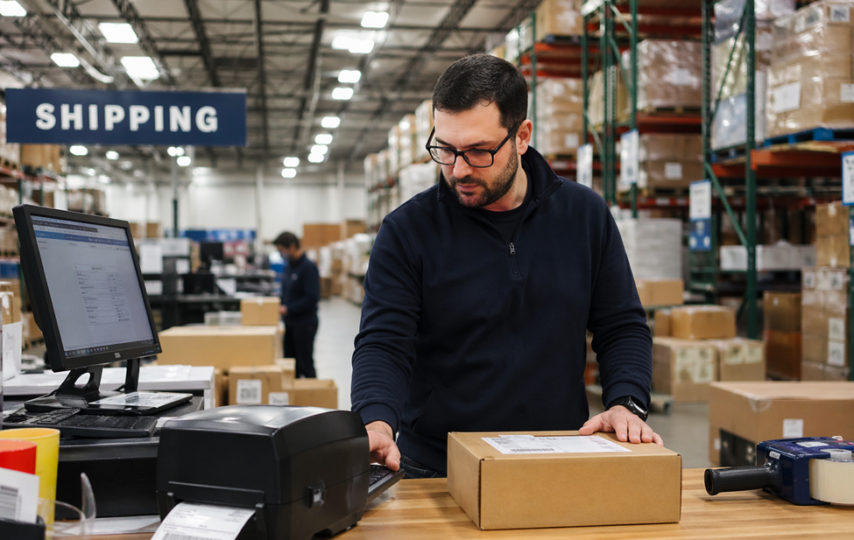

Shipping looks simple from the outside. An order comes in. A label gets printed. A package leaves the warehouse. The customer waits for delivery. That’s the clean version.
For large businesses, the real version has a lot more moving parts. Orders come in from multiple channels. Carrier rates shift. Warehouses deal with volume spikes. Customer service teams field delivery questions. Leadership wants tighter cost control. Operations teams need faster workflows without adding more people to every problem.
At a certain size, shipping stops being a back-office task and becomes one of the most important parts of the customer experience.
That’s where many growing ecommerce businesses hit a wall. The same tools that worked during early growth don’t always hold up once fulfillment becomes more complex. A basic label-printing setup might be fine for a small team shipping a manageable number of packages each day. Large businesses need more speed, more automation, more visibility, and more control.
The smartest companies look at shipping differently. It’s not just about getting packages out the door. It’s about creating a fulfillment system that can support real scale without slowing the team down.
Large Businesses Need More Than Basic Label Printing
Basic shipping tools usually solve one problem: they help businesses create labels.
That’s useful, but it’s not enough for companies managing high order volume, multiple sales channels, several carriers, and more demanding customers.
Large businesses need shipping software that does more than process orders one at a time. They need a system that helps teams move faster across every step of fulfillment. That includes order syncing, batch processing, carrier selection, rate comparison, tracking updates, returns coordination, and customer communication.
Once shipping volume climbs, every extra click is important. Every manual decision adds drag. Every disconnected system creates another place where something can go wrong.
A team may start the day with hundreds or thousands of orders waiting to ship. If the software forces staff to work through those orders slowly, the entire operation feels the pressure. Warehouse teams fall behind. Delivery promises become harder to keep. Support tickets increase. Margins get squeezed by rushed decisions and inefficient carrier choices.
That’s why the best shipping software for large businesses has to be built around speed and control. It needs to help teams process more orders with less friction while giving the business better ways to manage cost, performance, and customer expectations.
The Hidden Cost of Outgrowing Shipping Software
A company doesn’t always know the exact moment it outgrows its shipping software. It usually starts small.
A workflow that used to feel manageable takes longer than it should. A team creates a workaround to handle an order exception. Someone manually checks rates because the software doesn’t make comparison easy. Customer service starts seeing more “where is my order?” questions. Peak season feels heavier than expected.
Then those small issues start stacking up. The real cost isn’t only the monthly software fee. It’s the labor wasted on repetitive tasks. It’s the margin lost through poor carrier decisions. It’s the time spent fixing preventable mistakes. It’s the frustration customers feel when tracking information is slow, unclear, or missing.
Large businesses can’t afford a shipping process that depends on guesswork and patchwork. The more volume a business handles, the more expensive inefficiency becomes.
A slow shipping workflow may not seem like a big deal when order counts are low. At scale, it becomes a real operational problem. If a warehouse team loses even a few seconds on each order, that time adds up quickly. Multiply that across thousands of shipments, and the business is losing hours of productivity that should’ve been protected by better software.
Stronger shipping software helps reduce that friction. It gives businesses the tools to process orders faster, compare carriers more easily, and create workflows that match the pace of high-volume fulfillment.
Why Multi-Carrier Shipping Needs to Scale
Carrier flexibility is one of the biggest advantages a large business can have. Relying on one carrier may feel simple, but it can also limit options. Rates change. Delivery speeds vary by region. Surcharges appear. Capacity issues happen. Service levels don’t always perform the same way across every destination.
A strong multi-carrier shipping strategy gives businesses more room to make smart decisions. Instead of shipping every order the same way, teams can compare options based on cost, speed, destination, package details, and service level. Shipping costs can quietly eat into profit when teams don’t have a simple way to choose the best option.
Modern shipping platforms support multi-carrier workflows that help businesses make smarter fulfillment decisions without slowing down the warehouse. Teams can shop rates, process shipments, and manage order flow inside a system designed for scale.
Large businesses don’t want software that creates more decisions for staff to manage manually. They need software that helps automate the right decisions while still giving the team control where it matters.
Automation Keeps Fulfillment Moving
Manual work is one of the biggest enemies of high-volume shipping. A few manual steps may not feel painful at first. But as order volume grows, those steps become bottlenecks. Staff spends too much time repeating the same actions. Orders take longer to process. Errors become easier to make. Managers spend more time cleaning up issues that could’ve been prevented. Automation helps solve that problem.
With the right rules in place, shipping software can help businesses standardize common decisions. Orders can be routed based on package weight, destination, service level, carrier preference, or other conditions. Teams can reduce repetitive choices and move through batches faster. That’s especially important during peak periods.
Holiday surges, promotional campaigns, product launches, and seasonal demand spikes can expose every weakness in a fulfillment process. If teams are still relying heavily on manual decisions during those moments, volume can get out of hand fast.
Enterprise-level shipping software helps large businesses use automation to keep shipping workflows consistent, even when order volume climbs. That means less time spent on repetitive tasks and more time focused on keeping packages moving.
Connected Systems Create Cleaner Operations
Large ecommerce businesses rarely operate from one platform. Orders may come from Shopify, Amazon, WooCommerce, Walmart, BigCommerce, Magento, NetSuite, or other systems. Each channel brings its own data, timing, rules, and customer expectations.
If those systems don’t connect cleanly to shipping software, the fulfillment team gets stuck in the middle. That can lead to duplicated work, missed updates, delayed tracking, and more room for human error. It can also make reporting harder because data is spread across too many places.
Integrated shipping software helps fix that problem. A connected fulfillment environment allows businesses to manage shipping workflows across the platforms they already use. It also makes it easier to support the post-purchase experience, including order tracking, customer updates, and returns.
That connected approach is important because shipping and returns aren’t separate in the eyes of the customer. They’re part of the same experience.
A customer wants fast delivery, clear tracking, and an easy return process if something doesn’t work out. A business wants lower labor costs, fewer support tickets, and better control over fulfillment performance.
The best ecommerce operations bring those needs together.
Cost Control Starts With Better Shipping Decisions
Many businesses think about shipping costs only in terms of carrier rates. Carrier rates are important, of course, but they’re only one part of the bigger picture.
The real cost of shipping also includes labor, process speed, software limitations, packaging decisions, customer support volume, reships, returns, and operational mistakes. A cheaper shipping tool may not actually save money if it creates more manual work or makes carrier comparison harder. Large businesses need to look at the full cost of fulfillment.
Better shipping software helps businesses control shipping costs by improving how orders move through the system. Rate shopping helps teams compare available carrier options. Batch processing helps move larger order volumes faster. Automation helps reduce time-consuming manual decisions. Better visibility helps leaders spot where performance may be slipping.
That’s where a more advanced shipping system can make a real difference. It’s not about cutting corners. It’s about cutting waste.
The goal is to help the business ship faster, choose smarter, and reduce the hidden costs that come from disconnected or outdated workflows.
Better Shipping Supports a Better Customer Experience
Customers don’t see the warehouse workflow. They see the result.
They notice when an order ships quickly. They notice when tracking updates are clear. They notice when delivery expectations are accurate. They also notice when something feels messy, late, or confusing.
For large businesses, shipping performance has a direct impact on customer trust. A great shopping experience can lose momentum fast if fulfillment falls short after checkout.
That’s why shipping software should be seen as part of the customer experience, not just part of operations.
A strong platform helps businesses reduce delays, improve tracking communication, and keep fulfillment more consistent. It also helps support teams by reducing the number of customer questions tied to unclear order status.
When customers know where their orders are, they’re less likely to contact support. When packages move on time, customers are more likely to buy again. When returns are easier to manage, the business protects the relationship even when the original purchase doesn’t work out.
That’s the real value of a stronger shipping system. It gives the business more control behind the scenes while creating a smoother experience for the customer.
Signs a Business Needs a Stronger Shipping Platform
A large business doesn’t need to wait for a major fulfillment breakdown before upgrading its shipping software. There are usually warning signs.
The team may be spending too much time processing orders manually. Batch shipping may feel slower than it should. Carrier decisions may be based on habit instead of real-time comparison. Customer service may be seeing more shipping-related tickets. Peak season may require too many workarounds.
Another major sign is disconnected data. If a team has to jump between too many systems to understand order status, shipping performance, or tracking updates, the software stack may be holding the business back.
Growth should create opportunity, not operational chaos. When shipping software can’t keep up with the business, teams start compensating with extra labor and extra steps. That may work for a short time, but it usually becomes expensive and frustrating.
A stronger shipping platform gives large businesses a better path forward with tools designed to support higher volume, smarter workflows, and cleaner fulfillment management.
What Large Businesses Should Look For
Choosing shipping software shouldn’t come down to a flashy demo or a long feature list. Large businesses need to evaluate how the platform performs in real operating conditions.
Can the team process large batches quickly? Can routine decisions be automated? Can the software compare carrier options without slowing fulfillment? Does it connect with the ecommerce platforms, marketplaces, and back-office systems the business already depends on?
Reliability is important, too. Some platforms look good when order volume is light but struggle during busy periods. Large businesses need software that can hold up when the warehouse is under pressure. That includes peak season, major promotions, flash sales, new product releases, and any other moment when fulfillment speed is critical.
The right platform should help a business grow without creating another software migration a year later. It should support the company’s current needs while giving the operation room to scale.
High-Volume Fulfillment Requires Speed and Control
Large businesses need shipping software that can manage complexity without making the process harder. That means multi-carrier rate shopping, batch processing, automation, connected integrations, and dependable performance across busy fulfillment environments.
Those features matter because large businesses have moved beyond basic label printing. They need systems that support real fulfillment strategy.
A strong shipping platform helps teams process orders more efficiently while keeping control over carrier choices and shipping workflows. Instead of forcing teams into slow, manual processes, it helps simplify the daily work of fulfillment.
A platform may look fine during average order volume. The real test comes when sales spike, order flow increases, and the warehouse needs to keep moving without delays. The best shipping software is built for those moments.
Smarter Shipping Helps Businesses Prepare for What Comes Next
Ecommerce isn’t getting simpler. Customers expect faster shipping, clearer tracking, and easier returns. Businesses are managing more channels, tighter margins, and more pressure to operate efficiently. Fulfillment teams need tools that help them keep pace without creating more work behind the scenes.
A connected shipping system gives growing ecommerce businesses a stronger way to manage fulfillment after checkout. It helps teams move faster, make better carrier decisions, improve visibility, and reduce the friction that usually appears when volume rises.
Large businesses can’t treat shipping as an afterthought anymore. It affects cost. It affects customer loyalty. It affects warehouse performance. It affects the company’s ability to grow without adding unnecessary complexity.
When shipping software fits the needs of the operation, teams spend less time fighting workflow issues and more time moving orders accurately and efficiently. That’s a better place to grow from.
Final Thoughts
Large businesses need shipping software that works the way fulfillment teams actually work.
They need speed, flexibility, visibility, reliability, and automation in one connected system. They also need software that can support the next phase of growth instead of forcing another change once volume rises again.
Shipping complexity isn’t going away. Order volume will keep climbing. Customer expectations will keep rising. Carrier decisions will keep affecting margins.
The companies that handle those challenges best will be the ones that build stronger fulfillment systems now.
Better shipping software doesn’t just help businesses print labels. It helps them protect margins, reduce manual work, improve customer communication, and keep high-volume fulfillment moving with less friction.
That’s what large business growth demands.