
It is not easy to keep up with new Android apps and games. One can never review them all, and a good deal of it is unmemorable. Nevertheless, there are releases to be considered. I flip through what has come each month and set aside some that appear to be important.
This month is a combination of launchers, weather applications, and a few games that are more than a reiteration of old concepts. So we may begin. The following are some of the improved new Android applications and games in May 2026.
1. LibrePods
LibrePods is not new. However, its new presence on the Play Store provides it with a broader audience, and puts it in front of numerous people who would not have actively pursued it. The application has a definite purpose. It introduces some Apple-exclusive audio capabilities to Android. It can be used in phones of Google, OPPO, and OnePlus. It also provides users with features like conversational awareness and gesture controls on their AirPods.
Still, experimental versions are available on GitHub to those who would like to keep a closer track of development. And not all desire that. Most people want something readily available. In this regard, its availability in the Play Store is a reasonable move. It makes the application more user-friendly, and eliminates a lot of the workload previously needed to operate it.
2. Alpine Lines
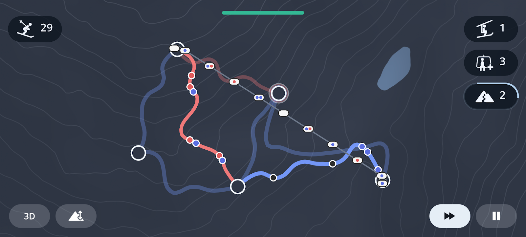
Alpine Lines is a peculiar kind of game. It is plain in structure and minimal in style, and it is placed on a row of snowy hills. You tie gondola stations together on a marked map in such a way that skiers can go between them. The concept is simple to understand and initially it does not demand a lot of you. This however does not last. The system grows. Increasing numbers of skiers come, and lines start to form. What appeared to be orderly, needs to be adjusted.
You have to switch tracks and re-strategize your plan in case you want things to continue. It appeals to the aspect of the mind that concerns itself with order and problem solving. The game is strain free in most devices since it has modest requirements. It is also free to play and it does not bother you with adverts.
3. Key Launcher
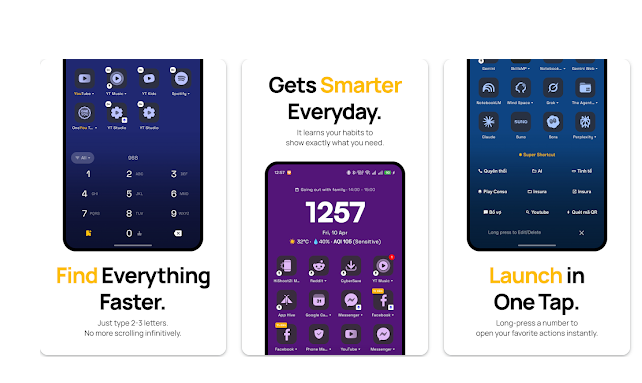
Key Launcher is not exactly similar to the others. The app is inspired by the T9 keypad, which were the numbered keys that were present on older phones. This may appear at first to be a minor and even uninspiring thought. It could be implying nothing more than nostalgia. However, the design is more than that. It takes advantage of this layout to alter your phone navigation. This will not be appropriate to all. But it does provide a definite effort to reconsider the launcher, rather than to dress up what already exists.
Firstly, the home screen keypad is a fast way of searching. It is based on the old T9 approach and allows you to find apps with just a handful of taps. It is straightforward and does not need much consideration after being learned. Under this mere surface, there are other functions too. The application has a personal vault, a collection of shortcut keys, similar to speed dial, and a distraction-reduction mode.
The difference between Key Launcher and other products is its limited scope. It seeks to reduce the number of steps you make on your phone. Nearly all the actions are simplified to their utmost. Meanwhile it permits a reasonable amount of modification, to those who are willing to change its behaviour. The application is initially free but not indefinitely. There are those that are limited and those that open temporarily. You have to pay for the premium version in order to use it to its full capacity and without interruption.
4. Sea of Stars

Sea of Stars was initially released on PC and consoles in 2023. Ever since, mobile players have been forced to wait. That is no longer the case. The game is an RPG. You play one of two characters, Valere or Zale. They are united in fighting a foe called the Fleshmancer.
The images are distinct and well-crafted. The level of detail in each area is not commonly found on mobile. Warfare is turn-based, predictable and slow. Controllers are also supported and this enables a more comfortable mode of playing. There is, though, no trial. You have to pay upfront in order to play.
5. Gradient Weather
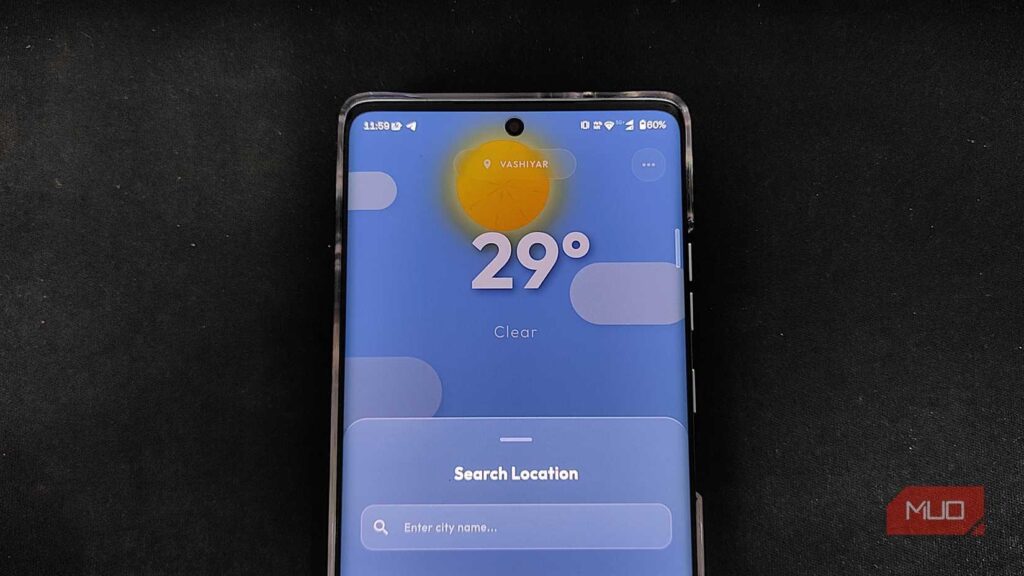
Gradient Weather is, simply put, one of the more pleasing weather apps I have witnessed in recent years. The colours change with the weather itself, thus the appearance is not just to show off. The app uses a collection of small and simple widgets to display its information. The necessities are displayed at the top. You can see the temperature and feel it in a glance. Beneath that, there are the hourly and seven-day forecasts in small rows, each providing a brief idea of the future. The day section at the bottom is larger and brings together various indicators.
There is also a convenient alert system in the app. You are able to make your own conditions and be notified when they are fulfilled. It also has a map displaying weather patterns, and an option to add reports. This final addition makes it a bit social, but secondary to its primary task.
Conclusion
With the market full of unmemorable releases, the shortlist of May shows that Android is not out of ideas that feel, at least, purposeful. With the strangely productive nostalgia of Key Launcher to the subtly sleek Gradient Weather, one gets the feeling that utility and design are slowly learning to co-exist once again. And there is LibrePods, with the somewhat subversive task of making ecosystems bend to user requirements. Not all this will appeal to all and that is just the point. Diversity is the oldest asset of Android, though.
FAQs
1. What makes Key Launcher different from regular Android launchers?
Key Launcher also abandons flashy grids, instead using a T9-style keypad, allowing you to search apps like it’s 2007, but smarter. It eliminates redundant processes and is speedy.
2. Is Gradient Weather just another pretty weather app?
Yes and no. It is beautiful, and the colours change with the forecast, yet it also provides the necessities without flaunting.
3. What kind of game is Alpine Lines?
Alpine Lines begins as a relaxing puzzle in the snowy hills, and then, without much commotion, it becomes a logistical nightmare, in a good sense. You tie up ski trails, cope with increasing numbers, and attempt to keep things under control.
4. Why is LibrePods getting attention now?
LibrePods is not new, but it is easier to find it in the Play Store. It introduces the features of Android-based Apple-style AirPods without technical acrobatics. Concisely, it allows Android users to borrow some Apple tricks, no oath of loyalty to an ecosystem.