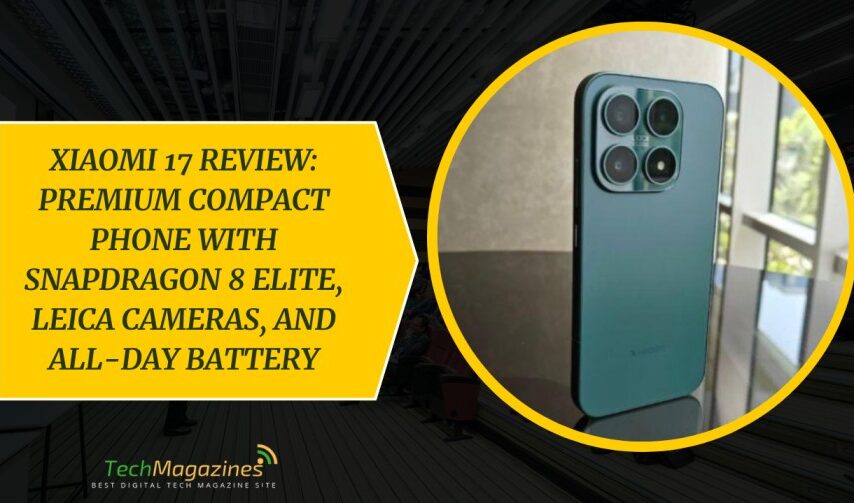

The compact Android smartphones market has grown significantly in the previous year. What was once a niche has attracted almost all the major brands and each has its own version of a smaller flagship. Xiaomi is not a stranger to this strategy, though. It has been doing so over the years, launching a smaller flagship with its more luxurious phone.
The Xiaomi 17 plays that role this year. The phone has a 6.3-inch screen, a camera system co-created with Leica, and one of the most potent chipsets ever on the market, the Qualcomm Snapdragon 8 Elite Gen 5. On paper, it is a serious hardware, designed to live up to the expectations of its class.
The Xiaomi 17 is priced at Rs 89,999 and targets people who desire the features of a high-end flagship but do not want the inconvenience of a bigger size. Whether it actually fulfills that purpose, however, is a matter that can only be determined by examining its claims and looking at its performance.
Xiaomi 17 Design Choices and Display Quality
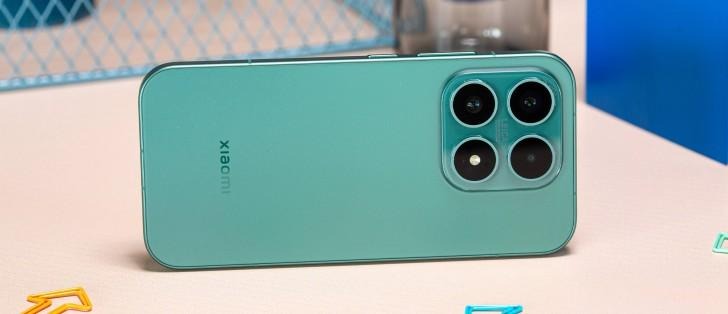
The Xiaomi 17 is small, but does not feel diminished. The 6.3-inch dimensions are large enough to be used with a single hand, and without straining. The sides are rounded and the aluminium frame is solid. The form and the camera unit are reminiscent of the previous compact Xiaomi flagships, but there are slight modifications here. It is heavier than it should be considering the size of the phone. It weighs 191 grams. The matte finish is clean and prevents smudges. But it has a problem of its own. The surface is slippery and the grip is not as secure as it should be.
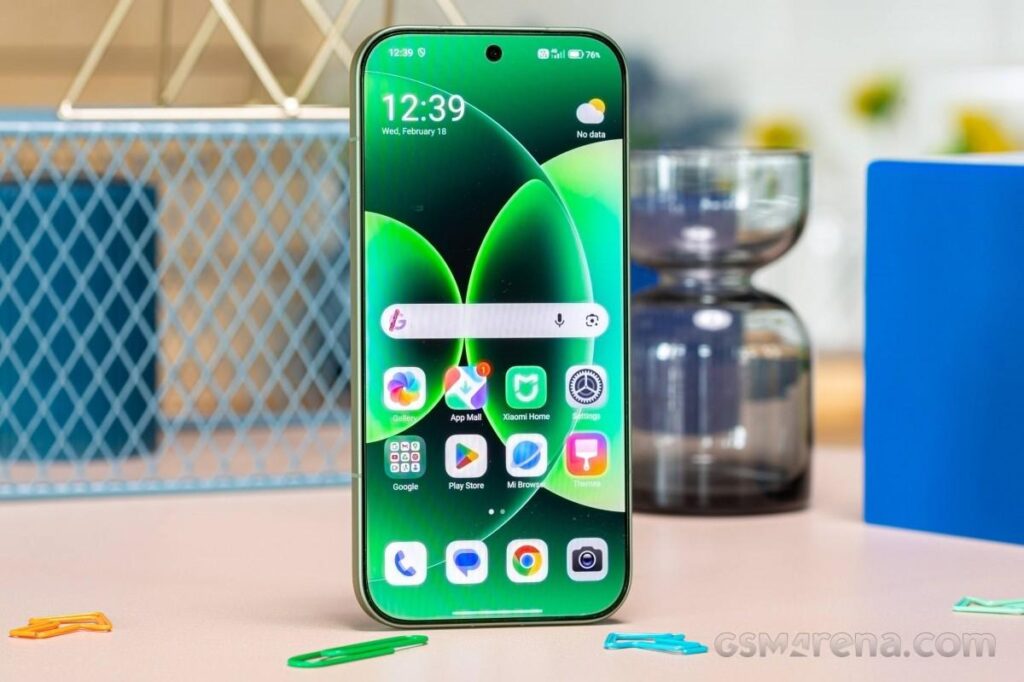
It is on the display that Xiaomi opts to make its mark. It has a 1.5K 6.3-inch LTPO AMOLED display, which has a brightness of up to 3500 nits. It is similar in size to such phones as the iPhone 17 and Samsung Galaxy S26. The screen remains clear under intense sunlight. You are able to read, type or take photographs without straining. It works without any noise.
The visual experience is good. The 12-bit panel is HDR10+ and Dolby Vision, and it is evident in action. I was watching Netflix content, such as a movie titled War Machine, which is based on colder tones. The screen makes rich blacks and stable contrast. Colours are bright, but not forced. It is measured, and this is not always true at this level.
Audio Output and Multimedia Experience
The phone also has stereo speakers with Dolby Atmos, as well as, Hi-Res and Hi-Res Wireless audio. It is well-defined and has an acceptable volume. Separation is different, and the stage is free enough to be used by the majority. But it has no weight. The bass lacks a lot of force. This can be through the smaller body. It can also be an option. In any case, it does not spoil the experience. It performs its role, albeit not as well as its competitors.
Xiaomi 17 Camera Performance Breakdown
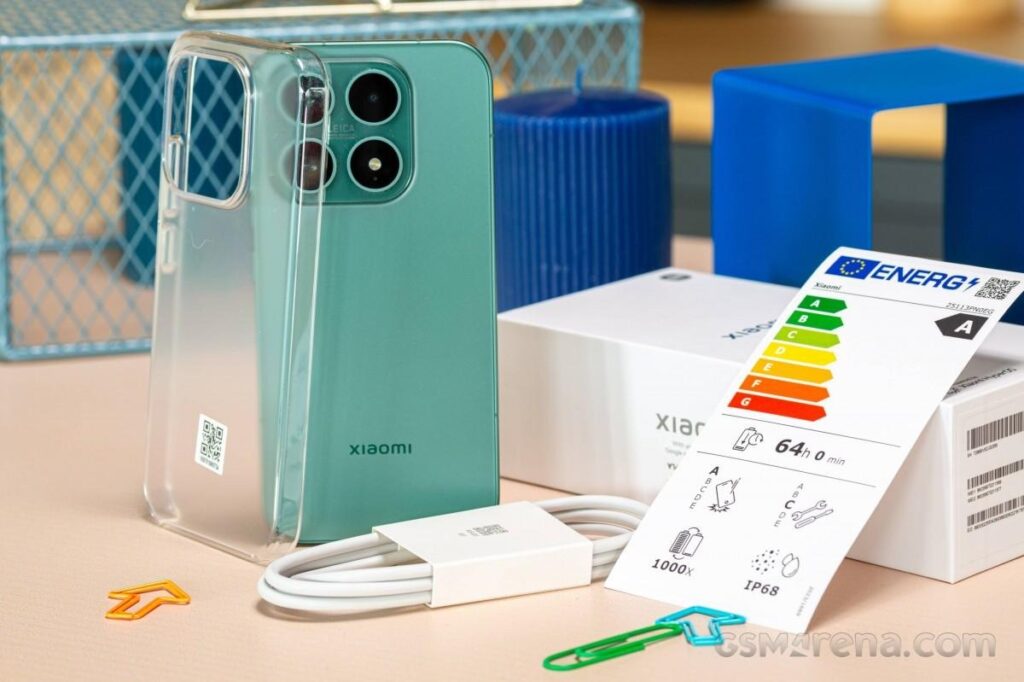
One of the primary reasons to consider this phone is the camera. It is not a post-hoc. It is always good to prepare the hardware before resorting to results. The main camera is a 50-megapixel, which is based on the Light Fusion 950 sensor of Xiaomi. It has an aperture of f/1.7 and OIS. The telephoto unit also has a 50-megapixel sensor, with f/2.0 aperture and OIS, and it has a maximum optical zoom of 2.6x. The ultra-wide is no exception. It is a 50-megapixel sensor with an aperture of f/2.4 and a field of view of 102 degrees. These figures are definite and they create a certain expectation.
The system works well in use. The most prominent camera is the main one. It generates high-resolution images and maintains its findings. I used the Leica Authentic mode most of the time. And there is Leica Vibrant, that does it differently. It drives colours forward and increases the dynamic range. Leica Authentic does the contrary. It is tilted into shade, restrains colour, and includes a small vignette. It makes a mere photograph appear more thoughtful in most instances.
The camera is clear in the day. Pictures are crisp. The dynamic range is well-preserved and the contrast is kept in check. Xiaomi does not have the rough, excessive appearance of its competitors, including the Samsung Galaxy series and the Google Pixel series. The shutter is fast. Moving objects are not blurred, and they are defined.
Telephoto, Low-Light, and Ultra-Wide Limitations
The results vary in low light, but not excessively. The primary camera takes care of shadows and takes care of lens flare. Colours are fixed and do not wander. It loses detail and there is some noise present, but this is normal. It does not mar the picture. It remains within reasonable bounds.
The telephoto lens is more interesting. It is very appropriate in the portraits, which is consistent with the Leica tuning. There is clarity of face and the background recedes in a pleasing way. There is, here and there, a little fault. During sunny outdoor shots, the highlights may get out of control and become blown out.
The sensor produces a 2x crop that is crisp. The optical zoom of 2.6x does not strain the detail. The image is still usable in daylight, albeit with minimal loss, at 5x. This range becomes soft in low light. The detail is somewhat lost, but not so much as to render it useless. The ultra-wide camera works its magic, but it is not outstanding. It is the least strong in the set.
On the positive side, it maintains colours near the primary sensor. Distortion along the edges remains within control. The limits are exhibited at night. It has a hard time concentrating. Images turn soft. The details are blurred and noise is more apparent than it is supposed to be.
Speed, Software, and Everyday Usage
The phone has Qualcomm Snapdragon 8 Elite Gen 5 as its internal operating system. Little need be said on the obvious. Apps open at once. The transition between them is easy. In everyday life, it runs along easily. Benchmarks are no different. The phone scores 3.2 million in AnTuTu. It is near 9000 in multi-core in Geekbench. It achieves a maximum loop score of approximately 6000 in the 3DMark Wild Life Extreme Stress Test and has a stability of approximately 70 per cent.
BGMI and Genshin Impact are games that can be played on high settings. But there is a limit to the smaller body. The heat accumulates with time. The cell becomes hot. Not to an alarming extent, but to an extent. This is most evident in long play or in long takes.
The device is powered by HyperOS 3, which is based on Android 16. It maintains its speed even when carrying heavier loads. The appearance and feel can be customized. Themes, fonts, and transitions can be changed in the system. The lock screen has a number of options, and the always-on display can replicate the entire wallpaper. The phone is also tilted towards newer features. It has AI-assisted writing and photo editing tools and live speech translation. They do not make the experience any different, but they fit in quite well.
Software Issues, Bloatware, and Ecosystem Integration
But there is one weakness that is noticeable. The AI eraser tool does not necessarily do its job well. It is able to erase objects, although it usually leaves a noticeable blur. The outcome appears distorted. I got better results with Google Photos.
This is not the only problem with the software. Bloatware is still there even at this price. Applications such as Agoda and the Indus Appstore are installed automatically. They do not contribute much. In certain applications, vibration feedback may malfunction. Native widgets do not work at times. These can be small but they disrupt usage.
The system demonstrates its power in case you already use Xiaomi devices. The connection between devices is effective with HyperOS 3. I tried it on the Xiaomi Pad 8 and a MacBook. The tablet can receive calls. Xiaomi Share allows files to be transferred between devices with minimal effort. You can even call the phone at a distance with the help of the laptop. It is fuss-free and so it is worth mentioning.
Xiaomi 17 Battery Life and Charging Speed
Xiaomi 17 has a 6,330mAh battery, which is very big considering the size of the phone. It can be sustained the entire day without any strain. I took a lot of pictures, played games, and even did some light editing on the Edits app. It managed to get through the day with ease. Sometimes charge was left till the next morning. It is not typical in small phones. Charging is quick. The 100W wired support charges the phone to full in approximately 45 minutes. Even half an hour of charge is sufficient to get out and not worry.
Who Should Actually Buy the Xiaomi 17?
It is easy to like the Xiaomi 17. It gets a lot of things right. You have a mini flagship that has a good display, good main and telephoto lenses, long battery life and stable performance. But there are boundaries. The ultra-wide camera is weaker. The software does not have a finishing touch. The competition is close and the price is high. It competes with such phones as Samsung Galaxy S26, iPhone 17, and Oppo Find X9. Both make a similar assertion.
So, should you buy it? It is reasonable to those who appreciate its size and balance. However, it can be a bit expensive at Rs 89,999. Waiting to see the price drop, or considering other alternatives before making a decision may be more prudent. Ultimately, the Xiaomi 17 is akin to that overachiever who almost excels in all subjects, but still forgets to do homework every now and then. It brings it to where it counts the most; crisp display, reliable cameras, robust performance, and surprisingly long battery life in its size.
It costs you 89,999, and it will require you to think twice. Nevertheless, the Xiaomi 17 is a strong contender should you be in the market to get a powerful phone that is not a tablet. Worth it? Yes, but perhaps after a slight reduction of price, and a measure of patience.