
Consumer electronics is a category that includes devices that we use in everyday life to perform household tasks and provide comfort. Among them are TVs, refrigerators, washing machines, microwave ovens, irons, and small appliances like hair dryers or food processors.
Home appliances are getting smarter every year. Internet connection functions at the highest level, and the possibility of controlling via smartphone with software such as a smart camera or photo AI editor facilitates daily activities and makes it more efficient. Computers, laptops, and tablets have become indispensable in work, education, and everyday communication as well. Thanks to them, we have access to global information and can work remotely, as well as communicate with people at a distance and even conduct business online. In this article, we will tell you about the relationship between AI technology and consumer electronics.
AI in daily life: relation of the innovation and daily electronic devices
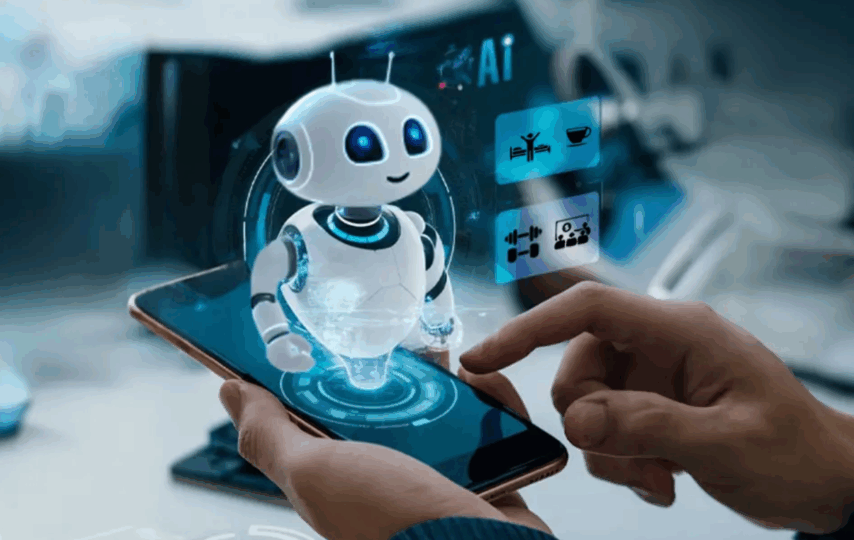
AI and machine learning are technologies that have been implemented in electronics these days. They make devices smarter and help consumer electronics adapt to users’ needs. As a result, they increase their productivity and autonomy. Artificial intelligence has become an important technical component of smartphones, cars, appliances, and home medical equipment.
Energy-saving technologies
Intelligent energy-saving systems for residential buildings include the development and production of integrated solutions to optimize energy consumption in apartments and private houses.
In the context of global warming and scarcity of natural resources, energy-saving technologies may become a critical factor in the progress of current electronics. Modern developers create devices that have minimal energy consumption. They are equipped with the function of working from renewable energy sources. For instance, solar panels have become a technical part of many devices and appliances.
Local power systems and back-up power supply may go hand in hand with the development of portable solar panels and low-capacity wind generators for homes. Intelligent UPS units for some important home systems can become decisive as well.
Have you heard of intelligent year-round greenhouses for country homes? They relate to this technology as well. It includes the design and development of automatic climate support systems for greenhouses, which operate at temperatures up to -40°F.
The Internet of Things: how is IoT improving domestic activity
IoT, together with AI technology, allows devices to exchange data over the Internet. For instance, any smart home with advanced consumer electronics can be controlled via a single mobile application even at a distance. Users can control electricity, heating, home security, and other household systems. Besides, the Internet of Things has been implemented in industry, in which it helps specialists to optimize production processes at corporations of any segment.
Experts in IoT development tend to implement artificial intelligence algorithms in solving problems of controlling objects and smart devices over the internet. The use of artificial intelligence in image recognition and voice command management has become a typical function of such devices. AI automates processes of managing many fields of daily activity.
Flexible electronics
In recent years, technologies of flexible electronics have become one of the most promising areas in science and technology. Modern technologies allow the creation of electronic devices of small size with flexible screens.
Wearable electronics
They are integrated into clothing and accessories and equipped with artificial intelligence programs. Wearable electronics — that’s the name of this innovation. Flexible displays and miniature chipsets open the possibility to create even more compact and lightweight devices. Wearable electronics have huge computing resources.
Smart fabric has become a very successful technology as well. Hundreds of companies are developing this concept. The leaders were such corporations as Nike, France Telecom, Textronics Inc., Sensatex, and Philips Consumer Electronics. The market for this industry reaches several billion dollars today. Both daily activities and the public healthcare industry need this technology widely.
The functionalities of wearable electronics include not only household applications but also other fields, such as identification, personal security, medical monitoring of body condition, leisure, the industrial sector, public transport, and even fashion.
OLED displays
An OLED plays an important role in the development of flexible electronics for the consumer sector. The flexibility of organic materials allows the creation of screens that can be curved or folded without compromising their functionality. It makes them a perfect option for implementation in the development of screens for electronic devices. OLED displays have no need for a backlight, unlike liquid crystal screens. Each pixel emits light independently. This makes it possible to significantly reduce the energy consumption of these devices.
We have no doubt that many of our readers have a TV with early OLED technology in their homes. Today, each of these TVs is fitted with artificial intelligence that can perform any specific tasks for the owner of consumer electronics.
The digital transformation of society is due to the need to keep pace with technological progress. The training of neural networks has become a useful direction in this field. Deep learning of the neural network can give us an understanding of real-world processes to simulate digital helper processes. In the future, artificial intelligence technology can make everyday life even more comfortable and personalized.
Conclusion
Electronics remains one of the most dynamic industries in current digital development. It affects all aspects of the daily life of the modern human. The achievements of experts in the field of digitalization and development make it possible to improve the quality of life, make it more comfortable and safer, and open new horizons for development at all levels of activity.
Business, work, education, and everyday communication have become accessible and effective for people of any wealth and status. The prospects of consumer electronics have become truly limitless. In the future, we are sure to see even more amazing innovations that will help us at home and work.