

A client’s website went live three weeks ago. The contact form works, the team has access, and the client has started asking about a new feature. Meanwhile, the final invoice is still unpaid. When you follow up, the reply is vague: “We thought there were still a few things to finish.”
A payment demand letter gives you a chance to make that conversation specific. Identify the milestone you billed for, show how you calculated the balance, and ask the client either to pay or to explain what they dispute. For software projects, that often starts with separating the work you agreed to deliver from the requests that arrived after launch.
Find the Milestone That Triggered the Invoice
Open the signed proposal or statement of work and find the payment terms. Look for the event that makes the final installment due. It might be delivery to staging, written acceptance, a production launch, or a handover. Those events can happen on different dates.
Suppose your agreement says the final invoice is due 14 days after launch. Your deployment record shows the site went live on October 5, and your handover email went out on October 7. Keep both dates in your records, but use October 5 to calculate the due date in this example. If the agreement instead ties payment to written acceptance, a deployment log shows when the site went live; it doesn’t establish when the client accepted it.
Next, check the invoice against your payment history. If the project fee was $4,000 and the client already paid $2,500, state that the remaining balance is $1,500. Include the invoice number and credit any payments received since you last followed up.
Separate an Unfinished Deliverable From a New Request
Read the client’s complaint against the original scope. “The contact form doesn’t deliver messages” is specific enough to investigate. “We’d like a second form for wholesale inquiries” is a different request if the original scope called for only one form. The same email can contain both.
Ask the client to name any deliverable they believe is incomplete. If they identify a defect in the agreed work, acknowledge it and explain how you’ll investigate or respond. If they’re asking for something outside the original scope, point to the relevant section of the proposal and discuss the new request separately. That gives you a clearer record than saying, “Everything is finished,” when the two sides mean different things by finished.
Keep a few useful records close at hand: the relevant scope excerpt, the invoice, and the message or deployment record that supports the date you’re using. You can summarize those in the letter. There’s no need to send an entire chat history or attach files containing credentials, access tokens, or customer data.
Write a Request the Client Can Act On
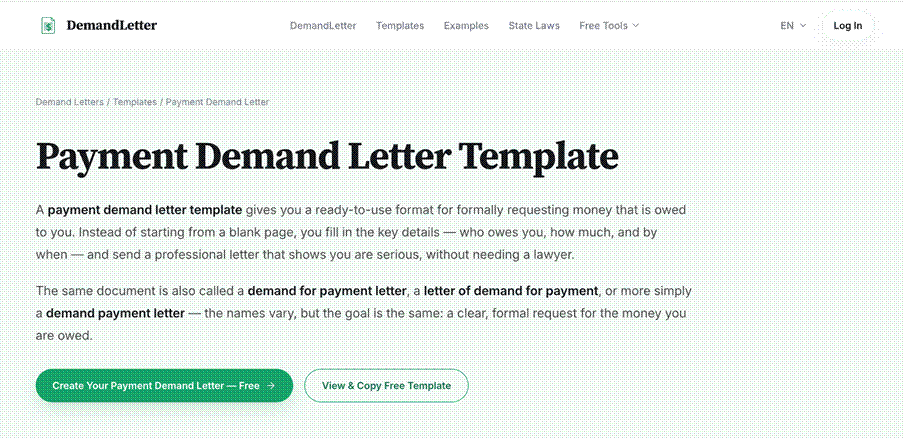
A payment demand letter template from DemandLetter.ai can help structure the request. Replace the sample language with your project facts, and give the client a clear way to pay or respond.
For the website project, the core paragraph could read:
Invoice WEB-104 covers the final installment for the website launched on October 5. The agreed project fee was $4,000, and we received $2,500 in prior payments, leaving a balance of $1,500. Under our agreement, that balance was due October 19. Please pay by November 6 using the instructions on the attached invoice. If you dispute the balance or believe an agreed deliverable is incomplete, please identify the item by that date so we can review it.
The original due date and your requested response date serve different purposes. Label them clearly. If you don’t recognize a fee or deduction in the client’s records, ask for the details so you can reconcile it. Avoid adding charges you haven’t verified under the agreement and applicable rules.
Send It to Someone Who Can Resolve It
The person who requested the website may have approved the work but never received the invoice. Check whether the agreement specifies a notice address or delivery method. If it does, follow those instructions. Send a copy to the appropriate billing contact if you have one, and save the exact letter, invoice, and any replies.
Keep the payment conversation separate from access to the project. Disabling a live site or withholding credentials can create a separate dispute. If you’re considering changing access or suspending a service, check the agreement and get legal advice where needed before acting.
Frequently Asked Questions
Can I send a payment demand letter if the client paid a deposit?
Yes. Show the project total, credit the deposit and any other payments, and request only the outstanding balance. Include the invoice number so the client can match the request to their records.
Should I attach my entire software project agreement?
Usually, start with the invoice and any short excerpt that explains the payment milestone. Keep the full agreement available if the client raises a specific question about scope or timing.
What if the client says they’re still waiting for a fix?
Ask which feature is affected, what they expected to happen, and what happened instead. Compare the issue with the agreed scope before deciding how to respond. A specific issue gives both sides something they can check.
A useful payment demand letter makes the next step clear: the client can pay, point out a discrepancy, or identify the work they believe is still outstanding. Write it so they can do any of those without having to reconstruct the project from old emails.