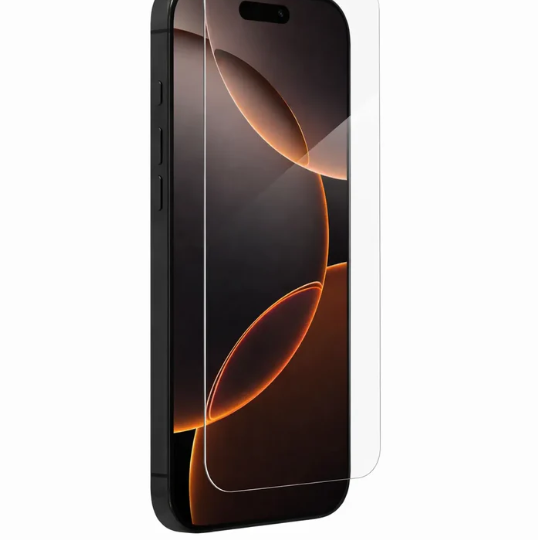

It usually starts as something you don’t even notice. A faint line along the edge. A small chip near the corner. You run your finger over it once and think nothing of it. You don’t think twice until the next few days, when this small problem grows and grows until your screen protector looks worn out far too quickly.
If you’ve used an iPhone 16 Pro screen protector, chances are you have had this problem at least once.
Edge cracks are frustrating, not just because they ruin the look of your device, but because they show up even when you’ve been careful. No dramatic drops, no major accidents, just everyday use. So why does it happen so often?
Why Edges Are the Most Vulnerable
To understand edge cracks, you need to look at how screen protectors are built.
The edges of tempered glass are naturally the weakest points. They absorb the most stress – from minor impacts, pressure in your pocket, or even repeated touches while swiping. Over time, this stress accumulates, and if the glass isn’t engineered well, it begins to give in.
Cheaper protectors are particularly prone to this. They often lack proper reinforcement along the edges, making them more susceptible to chipping and cracking under conditions that should ideally be harmless.
Even something as simple as placing your phone face down on a slightly uneven surface can create enough pressure to start micro-damage.
Installation Mistakes That Lead to Cracks
Sometimes, the problem begins the moment you apply the screen protector.
A slight misalignment, trapped dust, or uneven pressure during installation can create tension points along the edges. These weak spots don’t show up immediately but become visible after a few days of use.
An iPhone 16 Pro screen protector needs to sit perfectly on the display – no gaps, no lifted edges, no stress points. Even minor imperfections during application can significantly shorten its lifespan.
This is why installation tools and proper technique matter more than most people realise.
Everyday Habits That Make It Worse
An edge crack doesn’t always come from an impact. In fact, your daily habits are more to blame than you might think.
Keeping your phone in tight pockets with your keys or coins, careless placement on a hard surface, or even using a hard phone case that presses against your phone can all cause damage.
Temperature fluctuations are another cause. Going from air-conditioned buildings to the heat outside can cause slight expansion in your phone case. Over time, this can cause weakly constructed glass to break down, especially on the edges.
None of these actions feels extreme. But combined, they create the perfect conditions for cracks to develop.
Why Quality Changes the Outcome
This is where we can see the distinction between basic and well-engineered products.
A good quality screen protector is engineered to be durable around the edges, spreading out stress and damage, and performing better in real-world use.
Brands like RhinoTech approach this with a deeper focus on long-term performance. The RhinoTech Genuine Tempered Glass – Engineered by Corning™ is built to withstand everyday use without compromising durability or clarity.
With 5x shock resistance and rigorous real-life testing, it’s designed to absorb impact more effectively, reducing the chances of cracks starting at the edges. The glass maintains structural integrity even under repeated stress, unlike most generic options.
There’s also attention to smaller details that add up over time. The oleophobic surface reduces friction during use, while dust-free installation and an applicator kit help ensure that the protector is applied correctly from the start, minimising hidden stress points.
Small Choices That Make a Big Difference
Avoiding edge cracks isn’t about being overly careful. It’s about making smarter choices from the beginning.
Start with proper installation. Use the provided tools, ensure the surface is clean, and take your time aligning the glass correctly. A well-applied protector lasts significantly longer.
Next, pay attention to your phone case. Avoid cases that press tightly against the edges of the screen protector, as this constant pressure can lead to chipping.
And finally, invest in a product that’s designed for real-life conditions—not just basic protection.
An iPhone 16 Pro screen protector should be able to withstand everyday use for weeks without showing signs of wear.
Protection That Lasts Longer
Cracks on the edge of the screen may seem like a trivial problem, but they often signal deeper quality compromises.
When a screen protector fails at the edges of the screen, it’s not just about appearance; it’s about reduced overall protection. And eventually, it leads to replacement, inconvenience, and added cost.
This is where brands like RhinoTech stand out by focusing on durability that goes beyond the surface. With thoughtful engineering, anti-microbial glass for everyday hygiene, and features like fog marking for authenticity, the approach feels more complete.
Because in the end, protection shouldn’t feel temporary. It should last, perform consistently, and stay invisible while doing its job.