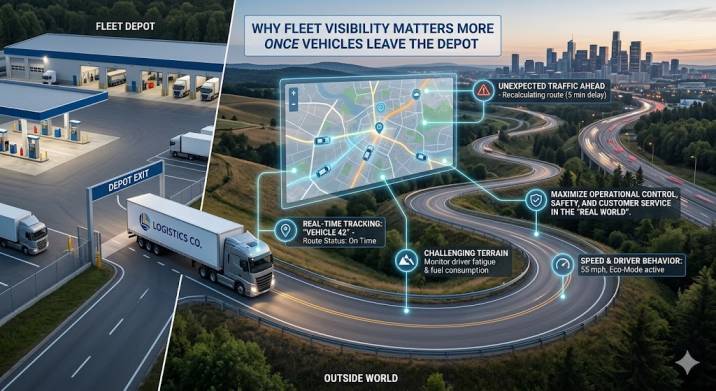

A fleet can look perfectly organised at the start of the day. Vehicles are fuelled, schedules are set, drivers have their instructions, and jobs are lined up in neat order. The real test begins once those vehicles leave the depot.
That’s when plans meet traffic, weather, customer delays, breakdowns, route changes, urgent jobs and human decision-making. For many businesses, this is also where visibility drops sharply. Managers know what was supposed to happen, but not always what’s happening now. That gap can quietly drain productivity, increase risk and frustrate customers.
This is why modern vehicle fleet asset management software has become so valuable. It gives businesses a clearer view of their vehicles, assets and operational performance after the depot gate closes, when control is hardest but most needed.
The Depot Is Only the Starting Point
A well-run depot matters. Pre-start checks, maintenance routines, driver briefings and dispatch planning all create the foundation for a productive day. But fleets don’t generate value while sitting in the yard. They generate value on the road, on-site, between jobs and during the countless small decisions made throughout the day.
Once vehicles are mobile, managers need to know more than where each asset is. They need to understand whether vehicles are being used efficiently, whether drivers are following safe practices, whether routes are working, and whether jobs are likely to be completed on time.
Without that visibility, teams often operate reactively. A customer calls asking where their delivery is. A vehicle sits idle longer than expected. A driver takes a longer route. A maintenance issue appears without warning. By the time the business finds out, the cost has already been incurred.
Real-Time Information Reduces Guesswork
Fleet management without proper visibility often relies on phone calls, manual updates, spreadsheets and assumptions. That might work for a small operation with a handful of vehicles, but it becomes unreliable quickly as the fleet grows.
Real-time fleet visibility replaces guesswork with usable information. Managers can see vehicle locations, movement patterns, utilisation, idle time and job progress. This doesn’t just help with day-to-day supervision; it improves decision-making across the entire operation.
For example, if a nearby vehicle can handle an urgent task, dispatch can respond quickly instead of sending someone from across town. If a route is consistently causing delays, it can be reviewed. If certain vehicles are underused, the business can reconsider allocation rather than investing in unnecessary additional assets.
Small improvements like these compound over time. Less wasted fuel, fewer missed windows, better asset use and reduced administrative back-and-forth can all make a measurable difference.
Visibility Supports Safer Driving
Fleet visibility isn’t only about productivity. It’s also a safety tool.
Once drivers leave the depot, their behaviour directly affects risk. Speeding, harsh braking, fatigue, unauthorised stops and inefficient driving habits can all create safety concerns. Without visibility, these issues may only come to light after an incident, complaint or insurance claim.
With clearer fleet data, businesses can identify risky patterns earlier. Managers can support drivers with coaching, adjust schedules that may be encouraging rushed behaviour, and create a stronger culture of accountability. The goal isn’t to watch drivers for the sake of it.
It’s to reduce risk, protect people and make expectations clearer.
For industries where vehicles operate in high-risk environments, remote areas or around heavy equipment, this visibility becomes even more important. Knowing where vehicles are and how they’re being used can help teams respond faster when something goes wrong.
Customers Expect Better Updates
Customer expectations have changed. People are used to tracking deliveries, receiving accurate arrival windows and getting updates when plans change. “The driver is on the way” is no longer enough if the customer still has no idea whether that means ten minutes or two hours.
Fleet visibility helps businesses communicate with more confidence. Service teams can provide accurate ETAs, notify customers earlier about delays and reduce the number of calls needed to chase basic status updates.
This matters because poor communication often feels worse to customers than the delay itself. If someone knows what’s happening, they can plan around it. If they’re left waiting with no information, frustration builds quickly.
For service businesses, logistics providers, utilities, construction companies and field teams, better visibility often translates directly into better customer experience.
Asset Utilisation Becomes Easier to Measure
Many businesses own or lease expensive vehicles and equipment without having a precise understanding of how often those assets are actually used. Some vehicles may be overloaded with work, while others sit idle. Some may travel excessive distances due to poor allocation. Others may be retained simply because no one has the data to prove they’re unnecessary.
Once vehicles leave the depot, utilisation data becomes critical. It shows which assets are working hard, which ones are underperforming, and where operational planning needs adjustment.
This can influence major business decisions, including whether to buy, sell, lease, replace or redeploy vehicles. It also helps maintenance planning. A vehicle that appears fine on paper may be accumulating more wear than expected, while another may not need replacement as soon as assumed.
Better visibility turns fleet assets from a fixed cost into something that can be actively managed.
Faster Responses When Plans Change
No fleet plan survives the day untouched. Jobs run late. Roads close. Vehicles break down. Customers cancel. Priorities shift.
The businesses that handle these changes best are the ones that can see their fleet clearly and respond quickly. Visibility gives dispatchers and managers options. They can reassign work, redirect vehicles, contact customers, check driver availability and minimise disruption before a small issue becomes a bigger one.
Without visibility, teams often lose time trying to find out what’s happening before they can even begin solving the problem. That lag affects productivity, customer trust and staff stress.
The Best Fleet Decisions Happen After Dispatch
Fleet management doesn’t end when the schedule is sent out. In many ways, that’s when the most important decisions begin.
Once vehicles leave the depot, businesses need accurate, timely information to manage safety, efficiency, customer expectations and asset performance. Visibility gives managers the ability to act earlier, plan better and understand what’s really happening beyond the depot.
For growing fleets, this isn’t just a technology upgrade. It’s an operational advantage. The clearer the view once vehicles are on the road, the better the business can control cost, reduce risk and deliver a more reliable service.