
Consistent and reliable strapping is crucial for maintaining productivity and product security in a packaging operation. However, weather conditions can significantly impact your banding machine’s performance, potentially leading to costly delays and product damage. So, how do weather conditions affect portable banding machine performance?
Extreme temperatures and humidity levels can reduce strapping efficiency by up to 40%. Cold weather makes plastic straps brittle and prone to breaking, while high humidity can cause strap slippage and weaken adhesive properties.
While this answer covers the basics, you need more information about specific weather conditions and their unique effects on different types of strapping materials. Understanding these details will help you take preventive measures and choose the right materials for your climate, potentially saving thousands in lost productivity and damaged goods.
How Different Weather Conditions Impact Specific Strapping Materials
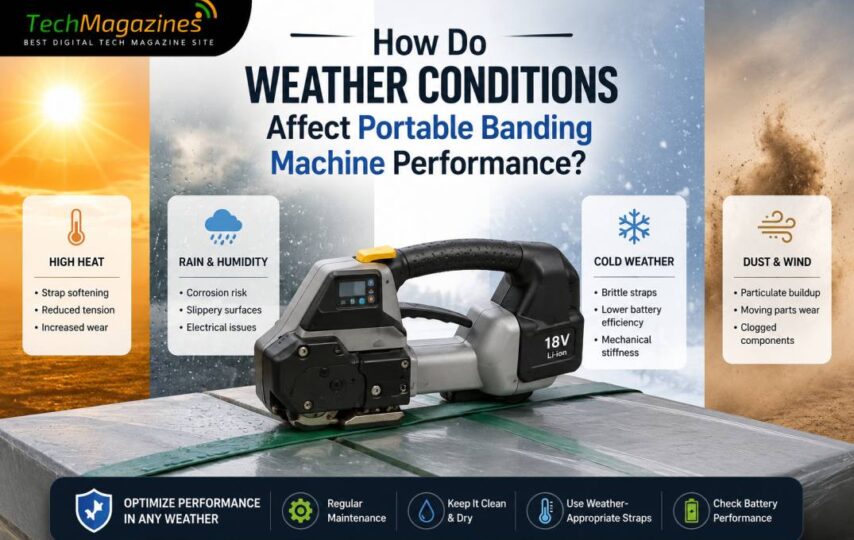
In cold weather below 40°F (4°C), polypropylene strapping becomes stiff and brittle, increasing the risk of strap failure during tensioning. Steel strapping maintains its strength in cold conditions but can develop surface rust in humid environments. Polyester strapping offers the best all-weather performance, maintaining flexibility down to 0°F (-18°C) and resisting moisture damage, though it comes at a higher cost.
High humidity above 80% can cause paper-core deterioration in plastic strapping rolls, leading to feeding issues and machine jams. Additionally, moisture can interfere with the heat-sealing process, resulting in weak joints that may fail during transport or storage.
What Temperature Range Is Ideal For Portable Banding Machine Operation?
The optimal temperature range for most portable banding machines is between 65-85°F (18-29°C) with relative humidity between 45-65%. Strapping materials maintain ideal flexibility and adhesion properties within these parameters while machine components operate at peak efficiency.
Operating outside these ranges requires adjustments to machine settings. For every 10°F drop below 65°F, tension settings may need to be reduced by 5-10% to prevent strap breakage. Conversely, in high temperatures above 85°F, cooling periods between operations may be necessary to prevent overheating of sealing mechanisms.
How Can You Protect Your Banding Machine From Adverse Weather Effects?
The storage location plays a crucial role in maintaining machine performance. When not in use, keep portable banding machines in climate-controlled areas, and allow equipment to acclimate to operating temperatures for at least 30 minutes before use.
Installing portable dehumidifiers in storage areas can help maintain optimal humidity levels. For machines that must operate in challenging environments, consider using protective covers during operation. Companies like Felins provide specialized equipment solutions and maintenance guidance for harsh conditions, including strategies for setting up more frequent maintenance schedules to check for moisture-related wear and tear.
What Maintenance Steps Should You Take During Different Seasons?
Seasonal maintenance is critical for preserving the banding machine’s performance. In spring and summer, clean cooling vents weekly to prevent overheating and inspect sealing mechanisms more frequently as higher temperatures can cause accelerated wear. Check tension springs monthly, as heat can affect their elasticity.
During fall and winter, focus on moisture prevention by thoroughly drying the machine after each use and applying manufacturer-recommended lubricants to prevent rust. Additionally, inspect electrical components more frequently, as temperature fluctuations can cause condensation buildup that may lead to shorts or corrosion.
How Can You Modify Operating Procedures For Extreme Weather?
Adjust your workflow to maximize efficiency and minimize equipment strain when operating in extreme conditions. In hot weather above 90°F (32°C), implement 10-minute cooling breaks every two hours of operation. Use shorter running cycles and reduce strap tension by 15-20% to prevent heat buildup in the sealing mechanism.
For cold weather operations below 40°F (4°C), warm the machine for at least 45 minutes before use, running it at low tension for the first few cycles. Consider using a portable heater directed at the strapping material feed area to maintain flexibility. If possible, schedule intensive banding operations during the warmest part of the day to maximize efficiency and reduce strain on equipment and materials.
Taking Action To Weather-Proof Your Operation
Start by documenting the typical temperature and humidity conditions in your work environment over the next week using a digital thermometer/hygrometer – this baseline data will help you determine if you’re operating within the optimal 65-85°F range for your portable banding machine. Once you have this information, you can make informed decisions about equipment placement, maintenance schedules, and whether you need to invest in climate control solutions for your workspace.