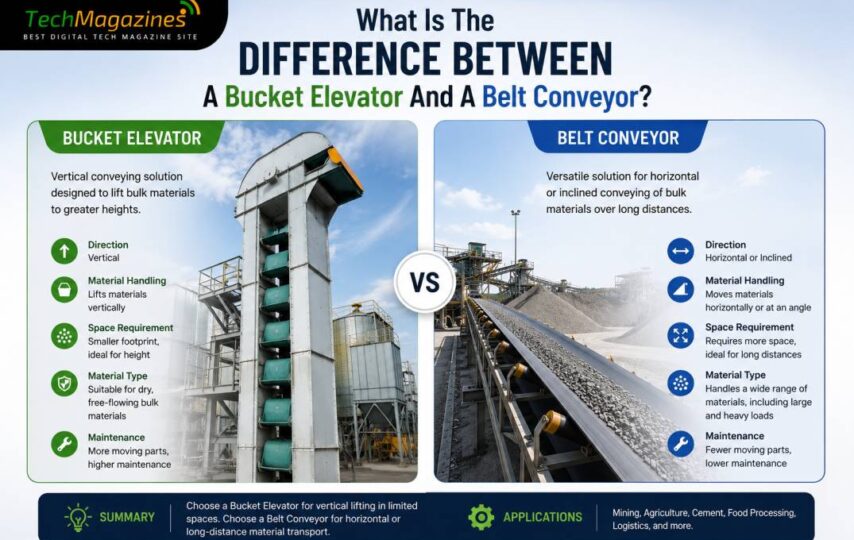

Choosing the right equipment is crucial for efficiency and productivity when it comes to material handling in industrial settings. One common dilemma is deciding between a bucket elevator and a belt conveyor. So, what is the difference between a bucket elevator and a belt conveyor?
The main difference is that bucket elevators move materials vertically using a series of buckets, while belt conveyors transport materials horizontally or at an incline using a continuous belt.
While this brief answer gives you a basic understanding, there’s more to consider when choosing between these two systems. Factors such as material type, space constraints, and specific operational requirements can greatly influence the best option for your needs.
How Do You Choose Between A Bucket Elevator And A Belt Conveyor?
Selecting the right material handling equipment depends on various factors. Bucket elevators are often the go-to choice for vertical transportation of materials. They excel at efficiently moving dry, free-flowing materials like grains, pellets, or powders upwards. Bucket elevators are ideal when lifting materials to significant heights within a small footprint.
On the other hand, belt conveyors shine in horizontal or slightly inclined material transport. They’re versatile and can handle various materials, from bulk solids to packaged goods. Belt conveyors are excellent for covering longer distances and can be configured to navigate curves or changes in elevation.
Consider your space constraints, the type of material you’re handling, the distance and direction of transport, and your throughput requirements. A bucket elevator might be your best bet if you need to move materials vertically in a confined space. A belt conveyor could be the more suitable option for longer horizontal runs or gentler inclines. For an alternative solution that combines vertical elevation with a compact footprint, you can visit www.ryson.com to explore vertical spiral conveying systems that handle materials continuously without the traditional constraints of standard elevators or belts.
What Are The Advantages And Disadvantages Of Bucket Elevators?
Bucket elevators offer several advantages in material handling. They’re highly efficient for vertical lifting, and capable of moving materials to great heights while occupying minimal floor space. This makes them invaluable in facilities with limited horizontal area. Bucket elevators also excel at handling fragile materials, as the buckets can be designed to minimize product damage during transport.
However, bucket elevators do have some limitations. They’re generally more complex than belt conveyors, which can lead to higher maintenance requirements and potential downtime. The enclosed nature of bucket elevators can also make them more challenging to clean, which might be a concern in industries with strict hygiene standards.
Additionally, bucket elevators are primarily designed for vertical transport. If your material flow involves significant horizontal movement, you might need to combine a bucket elevator with other conveying systems, potentially increasing complexity and cost.
What Are The Key Maintenance Considerations For Belt Conveyors?
Proper maintenance is crucial for ensuring the longevity and efficiency of belt conveyors. One of the primary focus areas is the conveyor belt itself. Regular inspections for wear, tears, or misalignment are essential. The belt tension should be checked and adjusted periodically to prevent slippage or excessive strain on the motor.
Rollers and idlers supporting the belt also require attention. These components should be lubricated according to the manufacturer’s recommendations and replaced when they show signs of wear. Debris around rollers can accumulate, leading to increased friction and potential belt damage, so keeping the system clean is vital.
The drive system, including the motor and gearbox, also needs regular maintenance. This involves checking for unusual noises, vibrations, or temperature increases that might indicate developing problems. Proper lubrication of these components is crucial for smooth operation and longevity.
Lastly, don’t forget about the conveyor frame and supports. Inspect for any signs of corrosion, loose bolts, or structural issues. Addressing these promptly can prevent more serious problems and ensure the safe, efficient operation of your belt conveyor system.
What Are The Safety Considerations When Operating Bucket Elevators?
Safety is paramount when operating bucket elevators. One of the primary concerns is the risk of dust explosions, particularly when handling dry, combustible materials like grain or certain chemicals. Proper dust collection systems should be installed to mitigate this risk, and regular cleaning schedules must be maintained to prevent dust accumulation.
Another crucial safety aspect is guarding against entanglement hazards. The moving parts of a bucket elevator, such as the belt and pulleys, can pose significant risks if not properly shielded. Adequate guards should be in place, and workers should be trained never to attempt maintenance or adjustments while the elevator operates.
Overloading is another potential safety issue. Exceeding the bucket elevator’s designed capacity can lead to mechanical failures or even structural collapse. It’s essential to adhere to the manufacturer’s specified load limits and implement systems that prevent overfilling.
Regular inspections and maintenance are vital for safe operation. This includes checking for worn or damaged components, ensuring all safety devices function correctly, and verifying that emergency stop mechanisms are easily accessible and operational.
How Can Belt Conveyors Be Optimized For Energy Efficiency?
Energy efficiency is a growing concern in industrial operations, and belt conveyors offer several opportunities for optimization. One of the most effective ways to improve energy efficiency is using high-efficiency motors and drives. Variable frequency drives (VFDs) can be particularly beneficial, allowing the conveyor speed to be adjusted based on load, potentially saving significant energy during periods of lower demand.
Belt selection also plays a crucial role in energy efficiency. Low-friction belts can reduce the power required to drive the conveyor, while lighter-weight belts decrease the overall load on the system. Additionally, maintaining proper belt tension can prevent unnecessary energy consumption caused by slippage or excessive friction.
The layout and design of the conveyor system can also impact energy efficiency. Minimizing the number of transfers and optimizing the conveyor path can reduce energy requirements. Using gravity to assist material flow can sometimes significantly decrease power consumption.
Regular maintenance is key to maintaining energy efficiency. Well-lubricated bearings, properly aligned components, and clean, debris-free systems all contribute to smoother operation and lower energy use. Implementing a predictive maintenance program can help identify and address issues before they lead to increased energy consumption or system failures.
Lastly, consider incorporating regenerative braking systems for conveyors on a decline. These systems can recover energy from the descending load and feed it back into the power system, improving overall energy efficiency.
Looking Ahead
Now that you understand the differences between bucket elevators and belt conveyors and their respective advantages and considerations, it’s time to evaluate your specific material handling needs. Take a close look at your facility’s layout, the type of materials you’re handling, and your vertical and horizontal transport requirements. With this knowledge, contact a reputable material handling equipment supplier to discuss your unique situation and get expert advice on the best solution for your operations.