
Introduction
Across Canada, farms, construction firms, and industrial yards face a shared problem: where to store large equipment out of the weather. Permanent buildings demand permits, foundations, and significant capital, and they cannot be moved once built. A peak ceiling storage shelter offers a faster, lower-cost alternative that combines a steel frame with a tensioned fabric cover. Understanding the engineering behind these structures helps managers and purchasers judge whether one suits their site, their budget, and the snow and wind loads they expect.
How a Fabric Storage Shelter Works
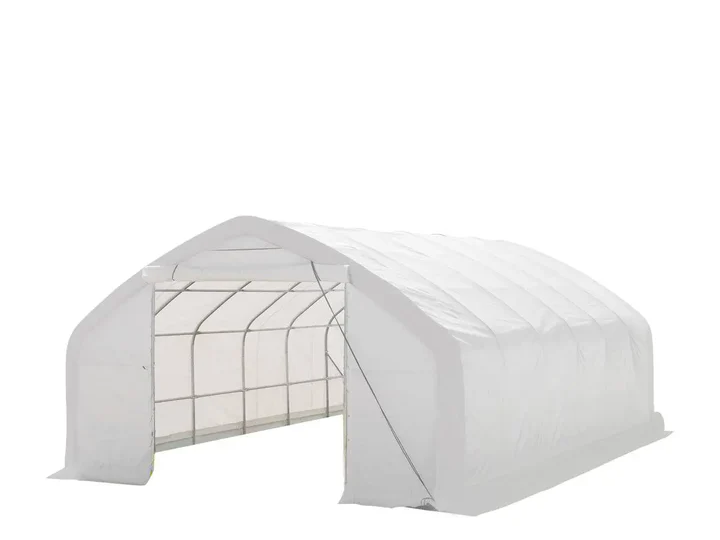
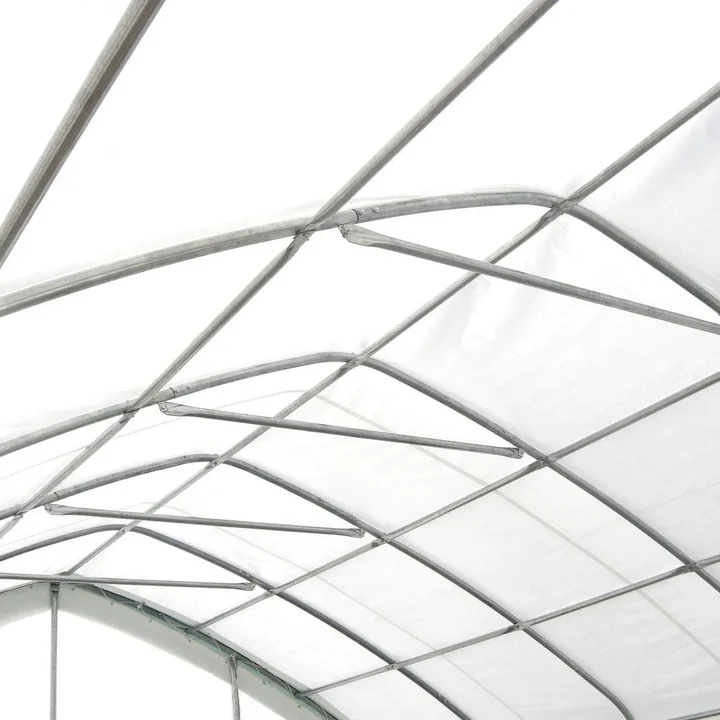
A fabric shelter pairs a galvanized steel frame with a tensioned cover made of polyvinyl chloride fabric. The frame carries the structural loads, while the cover sheds rain, snow, and ultraviolet radiation. Tensioning keeps the fabric taut so that wind cannot loosen or flap it. Because the trusses span the full width, the interior stays free of internal posts, which leaves clear room for vehicles and machinery to move.
The peaked roof is the defining feature. Its steep slope sheds snow and rain rather than letting them pool. A flat or shallow roof collects snow, and accumulated weight is a common cause of shelter failure in northern climates. Designers set the slope angle to balance two demands, since a steeper roof sheds snow well but also presents a larger surface to the wind.
Why Design Affects Safety and Service Life
A shelter is only as strong as its weakest connection. Frame spacing, cover weight, and anchoring all affect how the structure withstands wind and snow.
• Truss spacing distributes roof loads across the frame
• Cover weight, measured in ounces per square yard, resists tearing and ultraviolet damage
• Anchoring transfers wind uplift into the ground or slab
Structural Foundations
Frame and Trusses
The frame uses galvanized steel tubing formed into trusses and purlins. Closer truss spacing increases load capacity. A twenty by thirty foot shelter uses several trusses set at regular intervals to spread weight evenly across the structure. The galvanizing protects the tubing from rust, which matters because the frame is expected to outlast several covers.
Cover Material
The cover is commonly a seventeen ounce per square yard polyvinyl chloride fabric. The material is treated to resist ultraviolet degradation, which would otherwise make the fabric brittle and prone to cracking. Heavier fabric lasts longer but adds cost and weight. Seams are usually heat-welded rather than stitched, because welded joints keep water out and last longer than sewn ones.
Performance Factors
Several conditions affect how a shelter performs once it is installed in the field:
• Local snow load, which rises sharply in Canadian winters
• Wind exposure, higher on open ground than in sheltered yards
• Foundation type, whether concrete slab, gravel, or compacted soil
• Quality of the anchoring hardware
A grain producer on the open Prairies, for example, needs heavier anchoring than a contractor storing tools in a sheltered urban lot, because wind speeds across flat farmland are higher and more sustained.
Safety Practices
Safe use of a fabric shelter depends on careful installation and regular upkeep rather than on the structure alone.
• Anchor the frame to the foundation with correctly sized bolts
• Remove snow from the roof during heavy storms
• Inspect frame bolts and cover tension at least once a year
• Examine the fabric for tears, abrasion, or ultraviolet damage
• Keep door tracks clear so they open and close freely
Shelter Types and Applications
Fabric structures come in several configurations to match different needs:
• Peak ceiling shelters for tall machinery and drive-through access
• Round-style shelters for general storage
• Container-mounted shelters that span between shipping containers
• Open-sided livestock shelters for ventilation
Common uses include machinery storage, hay protection, vehicle parking, and temporary workshops.
Advantages and Limitations
Advantages:
• Lower cost than a permanent building
• Faster installation than conventional construction
• Portable design allows relocation
• Galvanized frame resists corrosion
Limitations:
• Requires a level foundation and separate anchor hardware
• Fabric cover needs replacement after several years
• Snow must be cleared manually in heavy storms
• Not certified for every engineered load condition
Industry Outlook
As land and construction costs rise across Canada, demand for affordable covered space continues. Fabric technology keeps improving, with stronger coatings and better tensioning systems extending service life. For operations that need large, flexible storage without the expense of a permanent structure, the peak ceiling storage shelter remains a practical choice for modern covered storage systems.