
Roofing prices in Los Angeles can swing fast. One bid looks reasonable, the next is thousands higher, and homeowners or property managers are left wondering whether the gap comes from labor, material quality, or plain markup. The good news is that finding affordable roofing materials doesn’t have to mean settling for cheap products that fail early.
The better approach is to understand what drives cost, which materials suit the building, and where money quietly leaks out of a project. In a market shaped by heat, sun exposure, local code, and a wide mix of home styles, smart buying matters as much as the material itself.
What “affordable” really means
Affordable is not the same as lowest sticker price. A bundle of shingles that costs less up front can turn into a bad deal if it wears out early, creates warranty issues, or forces extra labor during installation. A slightly higher-priced material may actually save money if it installs cleanly, lasts longer, and fits the roof without a lot of specialty trim.
That’s especially true in Southern California, where roofs face strong UV, occasional heavy rain, and in some areas wind that punishes weak systems. A low-cost option that’s wrong for the slope or structure stops being affordable pretty quickly.
Why prices vary so much
Local buyers are often surprised by how many factors affect cost beyond the product label:
- Material type: Asphalt shingles are usually less expensive than clay tile, slate, copper, or many metal systems.
- Roof design: Valleys, penetrations, steep pitches, and complex layouts require more cutting and more accessories.
- Code requirements: Some projects need cool-roof rated products, specific underlayments, or upgraded ventilation.
- Supply timing: In-demand colors and profiles can cost more or take longer to source.
- Accessory count: Flashings, fasteners, sealants, insulation, and edge metal add up faster than most buyers expect.
That last point gets missed constantly. A roof is a system, not just the visible surface.
Budget-friendly options by property type
For most homes, asphalt shingles remain the practical value pick. They span a broad range of price points and performance levels and install more easily than heavier specialty materials.
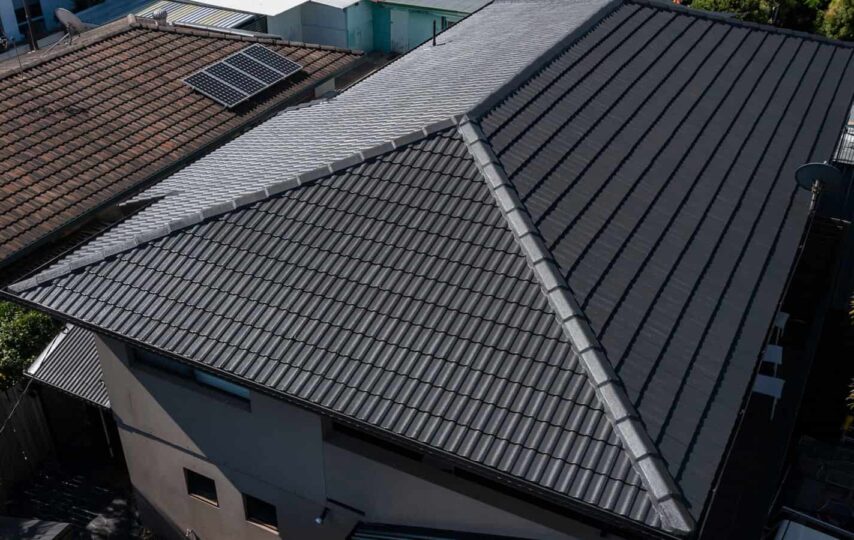
Where tile fits the architecture, concrete tile is often a more budget-friendly path than clay while still delivering the profile owners want. Because tile is heavier and more specialized, the roof structure and installation details need careful review.
For apartments, additions, garages, and low-slope commercial roofs, modified bitumen and similar systems can make sense. Going cheap here is one of the fastest ways to invite leaks, so value should be measured by performance, not price per roll.
How to save without cutting corners
The smartest savings come from planning, not bargain hunting:
- Match the material to the roof. A simpler system that suits the structure is usually cheaper to install and maintain.
- Buy the full system together. Underlayment, flashing, ventilation, and fasteners should work with the main covering.
- Order the right quantity. Enough to cover normal cutting waste and stay within one color lot, without paying for material you won’t use.
- Ask about comparable tiers. A different line in the same category may perform well at a better price.
- Use a supplier who can source broadly. Access to multiple manufacturers lets you compare real options instead of whatever’s on hand.
Questions worth asking before you buy
A good supplier should explain tradeoffs clearly: Is this product right for the slope and building type? Does it meet local code or cool-roof rules? What accessories does a proper installation require? Is it regularly stocked or a special order? Are there lower-cost alternatives with similar performance?
Independent suppliers are often the most helpful here, since they work with both contractors and walk-in buyers. Southern California resources like LA Roofing Materials, a family-owned supplier serving the region for decades, tend to know which products hold up locally and which “deals” cost more once they’re on the roof.
Spotting a false bargain
If a price seems unusually low, check what’s missing. It may be discontinued stock, a mismatched system, limited color availability, or a shorter service life. Ask whether warranty terms change based on installation method, and whether replacement pieces will be easy to get later. On visible LA rooflines, sun-faded patchwork repairs stand out fast, so a small saving now can become a bigger cosmetic and financial problem later.