

The 3-minute rule is a built-in safeguard that governs how an HVAC system handles its compressor. Once the compressor switches off, the controls usually keep it idle for roughly three to five minutes before allowing it to start again. The delay is tied to the thermostat’s request for cooling and is managed through timed operating intervals.
Instead of permitting the compressor to cycle on and off whenever the temperature changes, the system enforces a minimum pause between restarts to ensure steadier and safer operation. The pause exists for a practical reason. It stops the system from restarting the moment it has switched off. If the compressor came back to life too soon, the unit would cycle far more often than it should.
That puts extra strain on its moving parts and makes the whole system work less efficiently. Air conditioners already face enough wear in normal use. Frequent cycling can also leave a home in an awkward state. The air may feel cool, yet remain damp. Temperatures may also vary from one room to another instead of staying even.
Why Compressors Need a Waiting Period Before Restarting
The compressor sits at the heart of an air conditioning system. Its job is to keep the refrigerant moving through the sealed circuit. It draws in refrigerant as a low-pressure gas and squeezes it into a high-pressure state. That change allows the condenser coil to release heat outdoors. The refrigerant then returns inside the system, where it absorbs heat from the home and helps deliver cooler air through the vents. The compressor carries most of the workload. Its condition and performance play a large part in how well the entire air conditioner operates.
Cooling Systems That Work Without a Compressor
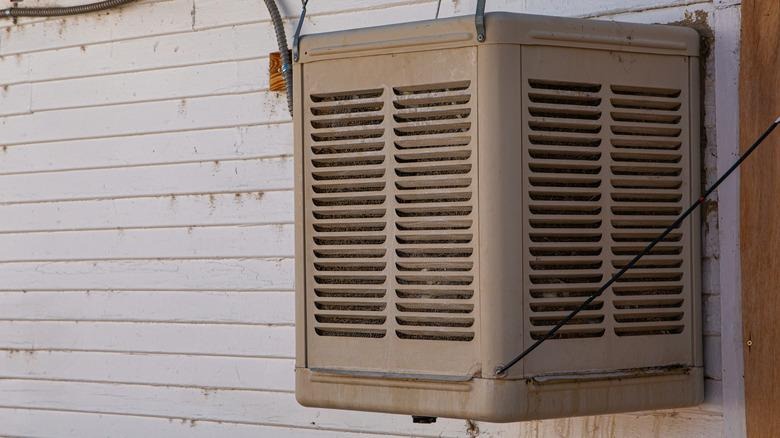
Evaporative coolers take a different path. Many people know them as swamp coolers. They do not depend on refrigerant or a compressor. Instead, they cool air through the simple act of water evaporation. Outside air passes across water-soaked pads and loses heat before it enters the house. The system keeps drawing in fresh air instead of waiting through timed compressor cycles. It also uses less electricity than a conventional air conditioner in many cases. But it needs a steady supply of water to work well. It also performs best where the climate is hot and dry.
Absorption heat pumps and cooling systems follow another method. They do not rely on compressors either. You are more likely to find them in large homes or commercial buildings than in ordinary houses. These systems use a heat source, such as natural gas, to drive an ammonia-and-water cycle that carries heat away. A small pump keeps the solution moving and begins the process again. As the cycle continues, heat leaves the building and the indoor space grows cooler.
Conclusion
When your air conditioner appears to be ignoring your frantic thermostat adjustments, keep in mind that it’s not being stubborn, it’s obeying your orders. The 3 minute rule exists to help your cooling system last longer, be more efficient and to keep your compressor safe. You might be patient for a few minutes on a hot afternoon, but it’s better than spending money on a costly compressor repair.
Whether you use an air conditioner, evaporative cooler, or other cooling system, knowing how it works helps you to use it wisely. The best way to outsmart the heat is to let your cooling system cool at its own speed, not by constantly reducing the temperature. After all, your air conditioner deserves a 3-minute coffee break.
FAQs
1. What is the 3-minute rule for air conditioners?
The 3-minute rule is an inbuilt time delay that prevents the compressor of an air conditioner from turning on immediately after it is switched off. This brief delay prevents the compressor from being unnecessarily stressed, optimizes the use of the compressor, and extends the life of the compressor. It’s like your AC taking a nap before it resumes its chilling duties.
2. Why does my air conditioner take a few minutes to start cooling?
Your AC may take a while to start up after you change the temperature setting on the thermostat, which means that it is likely operating on the 3-minute rule. The system intentionally delays the start of the compressor so that it does not start and shut down in quick succession, or it may damage the internal components. It’s better to be patient now than have to pay a lot more for repairs later.
3. Can I bypass the 3-minute delay on my AC?
A delay is incorporated into the controls of the system to safeguard the compressor. It may be necessary to go around it, which could lead to more wear and less efficiency. Sometimes the quickest way to cool air is just to wait a few additional minutes.
4. Do all air conditioners have a 3-minute delay?
Many modern air conditioning systems have a compressor delay, but the length of time may differ between brands and models. The objective is the same regardless of the length of time, whether it’s three minutes or slightly longer: To protect the compressor and to ensure reliable, efficient operation.
5. Are evaporative coolers affected by the 3-minute rule?
No. Evaporative coolers do not have a compressor or refrigerant, so there is no need for a timed restart delay. Rather, they use water evaporation and continuous air flow to cool the air. Remember, they do best in hot, dry climates, not where the air is already like soup.