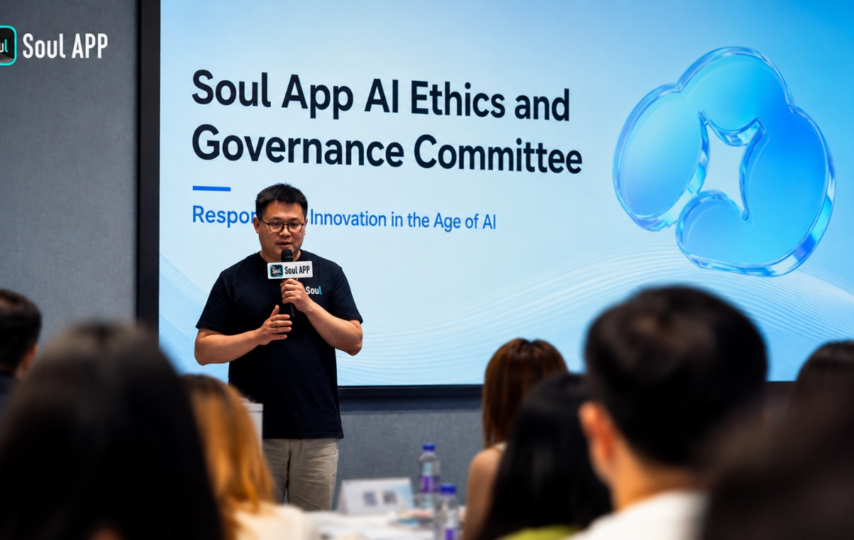

Chinese AI social platform Soul App established an AI Ethics and Governance Committee on June 23, 2026, bringing together internal teams and seven external experts from internet governance, ethics, sociology, youth studies and law.
“How can AI be integrated more deeply into interactive settings? What core capabilities does that require? And where should its boundaries be drawn? These are questions Soul has continued to consider,” said Zhang Lu, founder and CEO of Soul App.
As AI systems take on more humanlike voices, expressions and responses, AI-generated content can also be used to create false identities, produce persuasive scam messages and sustain deceptive interactions. Risks may emerge gradually over a long exchange rather than in a single sentence. Emotion-recognition models may also misread a user’s state, while humanlike responses can blur the distinction between AI and human interaction. These risks are particularly important for minors, as their interactions with AI may affect their social understanding and emotional development.
Yin Yuwei, an external member of the committee and secretary-general of the Safety Working Committee at the Shanghai Artificial Intelligence Industry Association, noted that the 2026 World Artificial Intelligence Conference and High-Level Meeting on Global AI Governance would continue to focus on AI safety, ethics and governance.
Soul had already begun addressing these risks before establishing the committee. Zhang Lu said the company had worked on data security, privacy protection, safeguards against excessive AI use and upgrades to its governance mechanisms.
At the technical level, Soul has built an AI-powered governance system around an “AI-versus-AI” approach. It combines dynamic data collection, AI analysis, automated decision-making and execution to identify harmful AI-generated content that may spread quickly or be difficult to detect.
Interactions with AI virtual characters go through a two-stage safety review. User inputs are screened before reaching the model, while outputs are reviewed by an independent AI safety model and additional content review policies. For multi-turn conversations, contextual semantic analysis identifies risks that develop across an exchange rather than reviewing each sentence in isolation.
Soul also clearly labels AI virtual characters and keeps an “AI-generated content” notice visible in interaction interfaces. Users are prompted to take a break after two hours of continuous conversation.
In May 2026, Soul added provisions on AI-generated content, AI interactions and AI virtual characters to its community rules. Its protections for minors include enforcing a strict prohibition on providing virtual human services to minors and operating a dedicated ‘Teen Mode’ to ensure age-appropriate experiences.
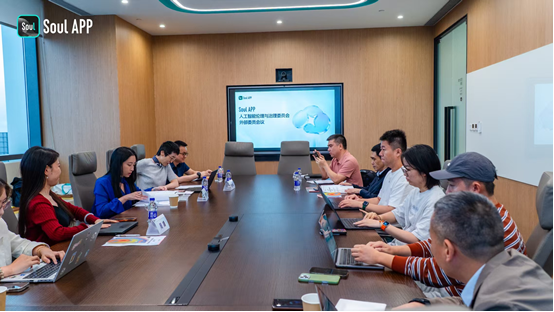
The new committee moves this work beyond technical safeguards and product rules. AI ethics is a systemic challenge involving legal standards, social impact, user rights and youth protection. By inviting experts from universities, research institutions and industry organizations, Soul aims to bring different perspectives into its rulemaking and ethics reviews, and to explore broader solutions through cross-disciplinary discussion. Its remit includes pre-launch ethics reviews, internal training, and oversight of ethics-related incidents.
At the first meeting, committee members provided feedback on a draft set of guidelines for AI ethics reviews at Soul App and received detailed briefings on existing and planned AI-related products and features.
Li Qingchuan, director of the Shanghai Youth Research Center, said AI characters should retain clear cues that distinguish them from humans, or carry prominent labels, so that younger users remain aware they are interacting with AI. He also called for clear correction mechanisms so that inaccurate assessments do not cause further harm.
The governance framework is closely connected to Soul’s technical direction. Tao Ming, CTO of Soul App and chair of the committee, described Soul as an AI ecosystem company focused on emotional perception and interaction, with models and applications developed together.
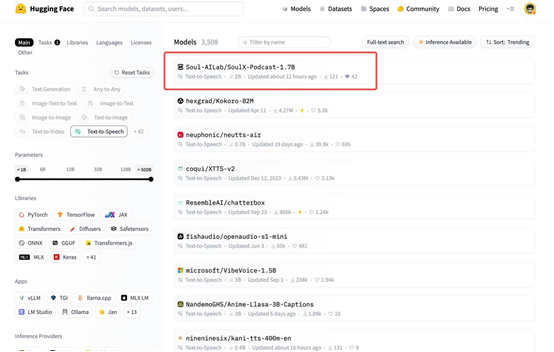
Soul began systematic generative AI research and development in 2020 and later launched its self-developed SoulX model. In 2026, it open-sourced models including SoulX-FlashTalk, SoulX-Singer and SoulX-FlashHead.
The committee adds institutional review, cross-disciplinary expertise and broader external input to this technical foundation, connecting model development, practical applications and AI governance.