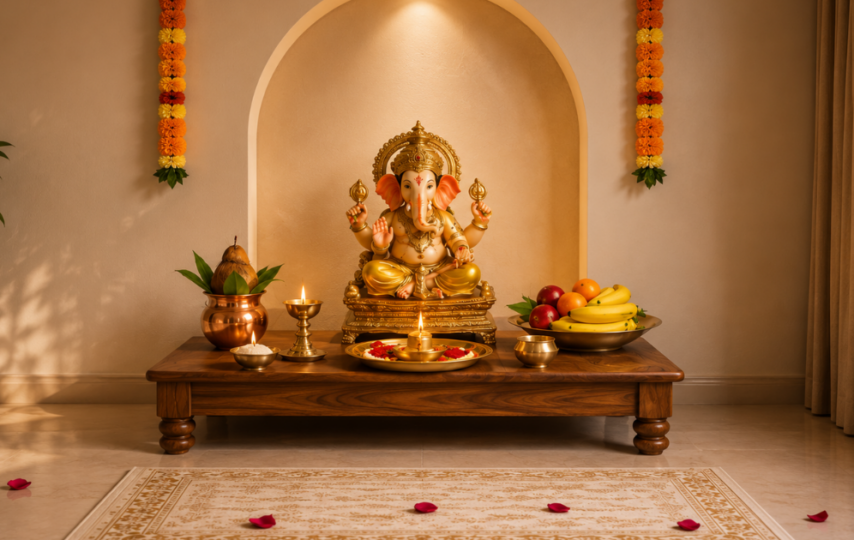

Introduction: Bridging Sacred Traditions and Modern Aesthetic Spaces That Elevate Daily Calm
Every home with a pooja corner has one thing in common, regardless of the room’s size or budget. The space matters more than what fills it. A sacred corner isn’t really about how much gets displayed. It’s about whether the space actually invites someone to sit down for a few quiet minutes each morning, which is a very different thing from simply looking presentable.
Modern homes, especially smaller apartments, have made this harder in some ways. There isn’t always a spare room to dedicate entirely to prayer the way older homes often had. But that’s pushed a genuinely useful shift too, toward compact, well thought out corners that do more with less, rather than a cluttered shelf that never quite feels settled.
Setting a Sacred Foundation for a Balanced and Inviting Prayer Space
Direction matters in most traditions, and it’s worth checking what applies to your own household before settling on a spot, since the guidance varies by region and family practice. Beyond that, a few practical things make a real difference regardless of tradition. Natural light, even a small amount from a nearby window, tends to make a corner feel more alive than one tucked into a windowless space lit only by artificial bulbs.
A wooden pooja chowki design gives the whole setup a stable, grounded base to build from, and choosing one sized properly for the corner, not too large, not so small it looks like an afterthought, sets the tone for everything placed on top of it. Cleanliness matters more here than in almost any other part of the home too. A space that’s easy to wipe down and keep tidy actually gets used daily, while an elaborate setup that’s a hassle to maintain tends to get neglected within a few months.
Blending Traditional Spiritual Elements with Contemporary Decor
There’s no real conflict between honouring tradition and living in a home with a more contemporary look throughout. A pooja corner can use clean lines and a simple wooden or marble finish while still holding every element a traditional setup calls for, brass diyas, a small bell, the usual ritual items passed down through a family.
The trick is restraint rather than compromise. Keeping the surrounding area uncluttered, without unnecessary extra shelving or decor competing for space, actually makes the traditional pieces stand out more clearly than they would in a busier, more maximalist setup. A sacred corner doesn’t need to look different from the rest of the home to feel different. It just needs to feel calmer.
Selecting and Placing Your Ideal That Inspires Positive Energy
Size is one of the more common mistakes families make when choosing a murti or main deity piece for the space. A small ganesh murti price often makes for an easier fit in compact apartments than people initially assume, and a smaller piece placed thoughtfully, at the right eye level and with enough room around it to feel unhurried, tends to suit a modest corner far better than an oversized one that overwhelms the space.
Placement height matters just as much as the piece itself. Positioned too low, a murti can feel like an afterthought tucked below the eye line. Set at a comfortable, respectful height, roughly at chest level for someone kneeling or seated, the whole corner reads as intentional rather than squeezed in wherever there happened to be room.
Styling Your Sacred Space with Colors, Lighting, and Natural Accents for a Serene Divine Glow
Warm lighting does more for a sacred corner than almost any other single change. A soft, warm bulb, or a small string of fairy lights tucked along the back of the shelf, gives the space a gentle glow that feels closer to candlelight than a harsh overhead beam ever could. Colour plays a similar role. Soft golds, warm ivories, and the occasional deep red or maroon accent tend to suit a prayer space better than cooler, sharper tones.
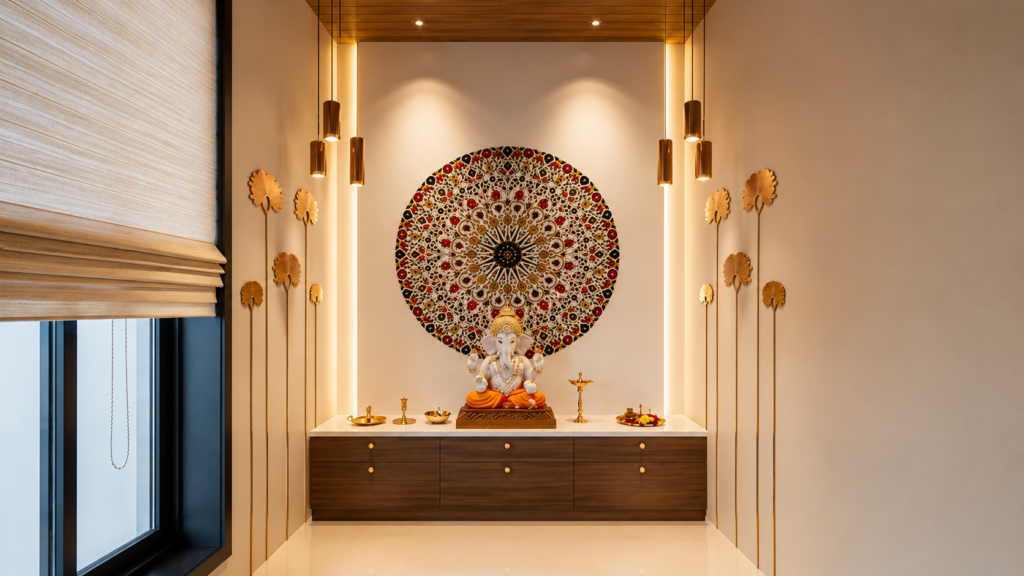
Fresh elements bring the corner to life in a way static decor never quite manages. A small vase of marigolds, tulsi leaves, or seasonal flowers, changed regularly rather than left to wilt, keeps the space feeling genuinely tended rather than simply decorated once and forgotten.
Conclusion: Keeping Your Spiritual Corner Harmonious All Year Round That Fosters Mindful Living
A sacred corner isn’t a one time project, and treating it that way is usually where things go wrong. Dust settles, flowers wilt, small items shift out of place, and a five minute tidy once a week keeps the whole space feeling cared for rather than gradually forgotten. It’s a small habit that pays off far more than any single decorating decision.
What actually makes a pooja corner work, in the end, isn’t the price of the pieces inside it. It’s whether the space genuinely invites a quiet moment each day, in a home that otherwise moves fast. Get that part right, and everything else, the finish, the lighting, the layout, tends to fall into place around it.