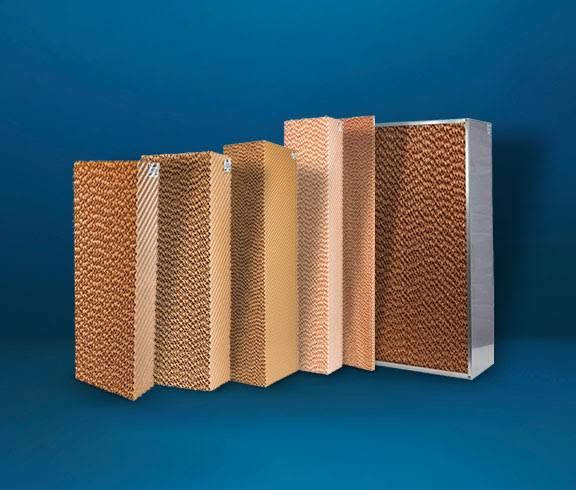

Evaporative cooling systems depend on several components working together, but the cooling media play an especially important role in overall performance. The media provides the surface where warm incoming air interacts with water and undergoes the evaporation process that lowers its temperature. When the media is clean, properly saturated, and correctly sized, the system can move cooled air efficiently throughout a commercial or industrial space. Damaged, clogged, or poorly maintained media can restrict airflow and reduce the system’s ability to lower temperatures. Understanding how evaporative cooling media affects performance can help facility managers maintain efficiency, improve reliability, and get more value from their cooling equipment.
What Is Evaporative Cooling Media?
Cooling media is the material inside an evaporative cooler that absorbs and distributes water while allowing air to pass through it. As warm outdoor air moves through the wet media, some of the water evaporates and absorbs heat from the passing air. The resulting cooled air is then distributed throughout the facility by the system’s fan or blower. Media is typically designed with channels, grooves, or textured surfaces that increase the amount of contact between air and water. Greater contact can improve evaporation when airflow, water distribution, and environmental conditions are properly balanced.
Different cooling systems may use different types, thicknesses, and configurations of media. Some materials are designed for high-volume commercial and industrial applications, while others are intended for smaller or less demanding equipment. The appropriate choice depends on factors such as airflow requirements, climate, equipment specifications, water quality, and expected operating hours. Installing media that does not meet the system manufacturer’s requirements may negatively affect cooling performance. Facility operators should therefore view cooling media as an engineered system component rather than a simple replaceable pad.
Cooling Efficiency Starts With Effective Evaporation
The primary purpose of cooling media is to create the conditions needed for efficient evaporation. A properly functioning medium holds enough water to stay consistently wet without preventing air from flowing through it. As hot air travels across the wet surfaces, heat transfers from the air to the water, causing some of that water to evaporate. The amount of cooling achieved depends partly on how much effective air-to-water contact occurs inside the media. When that interaction is reduced, the temperature drop produced by the system may also decrease.
Uniform water distribution is essential to this process. If sections of the media remain dry, incoming air can pass through those areas without receiving the intended evaporative cooling effect. Excessive water flow can also cause problems if it interferes with airflow or creates uneven system operation. Pumps, distribution lines, water troughs, and related components must therefore work correctly to keep the entire media surface appropriately saturated. Consistent wetting helps the cooling system deliver more predictable results across changing outdoor temperatures.
Media Condition Can Affect Airflow
An evaporative cooling system must move a large volume of air to cool a commercial or industrial building effectively. Cooling media naturally create some resistance as air passes through them, and the system is designed to accommodate that resistance. Problems can occur when dirt, minerals, debris, or biological material begins accumulating on the media surfaces. These contaminants can narrow air passages and increase resistance, forcing the fan to work harder to move the required volume of air. Reduced airflow can eventually result in weaker cooling and less effective air distribution throughout the facility.
Several signs may indicate that restricted media is affecting airflow, including:
- Reduced air volume from supply outlets
- Uneven cooling across different areas
- Longer system operating periods
- Visible mineral buildup on cooling media
- Dry or damaged sections of media
- Unusual fan or motor performance
- Noticeably weaker cooling during normal weather conditions
Restricted airflow should not automatically be attributed to the media because fans, belts, motors, filters, ductwork, and ventilation openings can also contribute to the problem. However, media inspection is an important part of diagnosing evaporative cooling performance issues. A qualified technician can evaluate the complete system and determine whether cleaning, adjustment, repair, or media replacement is appropriate. Correcting restrictions helps restore the airflow that the equipment was designed to provide.
Water Quality Makes a Difference
Water quality can significantly influence the condition and service life of evaporative cooling media. As water evaporates, minerals dissolved in the water do not evaporate with it and can remain behind inside the cooling system. Over time, these minerals may form scale on media surfaces and within water distribution components. Heavy deposits can interfere with water absorption, block airflow pathways, and reduce evaporative efficiency. Facilities operating in areas with hard water may therefore require especially careful water management and maintenance.
A properly managed water system can help control mineral concentration and extend the useful life of cooling components. Depending on the equipment, this may involve periodic water discharge, reservoir cleaning, filtration, water treatment, or automated controls. The exact approach should follow equipment manufacturer recommendations and account for local water conditions. Facility managers should avoid using chemicals or cleaning products that have not been approved for their specific system. An appropriate water management strategy supports both cooling performance and equipment longevity.
Media Thickness and Design Influence Performance
The physical design of cooling media also affects system operation. Thicker media can provide more surface area for evaporation, but it may also create greater resistance to airflow. Manufacturers balance these factors when specifying media dimensions and fan performance for a particular cooling unit. Channel angles and structural patterns may also influence how water and air travel through the material. Substituting a different type of media without considering these characteristics can alter the system’s intended performance.
This is why replacement media should generally match the equipment specifications. A material that physically fits inside the unit is not necessarily appropriate for its airflow and cooling requirements. Incorrect density, dimensions, material composition, or channel configuration may result in inefficient evaporation or unnecessary pressure resistance. Facility managers should consult equipment documentation or experienced service professionals before changing media types. Properly matched components help the entire evaporative cooling system operate as designed.
Maintenance Helps Preserve Cooling Performance
Routine inspections can prevent relatively minor media problems from becoming significant performance issues. Technicians should look for scale accumulation, sagging, damaged edges, blocked channels, uneven water distribution, and deterioration of the material. Water pumps and distribution systems should also be checked to make sure the entire media surface receives adequate water. Cleaning schedules will vary according to operating hours, environmental conditions, equipment type, and water quality. Facilities that operate cooling equipment continuously during hot weather may require more frequent attention than systems used occasionally.
Preventive maintenance also gives businesses an opportunity to identify related equipment issues. A technician inspecting the media may discover clogged distribution lines, malfunctioning pumps, worn belts, deteriorating seals, or problems with the fan system. Correcting these issues early can prevent declining performance and unexpected equipment downtime. Maintenance records can also help facility managers track media replacement intervals and recurring water-quality problems. A proactive approach makes it easier to maintain consistent system performance from season to season.
When Should Cooling Media Be Replaced?
Cooling media does not last indefinitely, and replacement eventually becomes necessary. There is no universal replacement schedule because media life depends heavily on water quality, maintenance practices, environmental contaminants, equipment usage, and material construction. Visible deterioration is one indicator, but a decline in system performance may also signal that the media is reaching the end of its useful life. Extensive mineral buildup that cannot be effectively removed can restrict airflow and prevent proper wetting. Physically damaged or deteriorated media should also be evaluated for replacement.
Facility managers should watch for changes rather than relying only on a fixed calendar interval. If airflow or cooling capacity begins declining despite normal fan, pump, and ventilation operation, the condition of the media should be examined. Uneven saturation, collapsed sections, significant scale, or persistent blockages can all affect cooling performance. Replacement should use media that meets the specifications of the particular evaporative cooling unit. Correct installation is equally important because gaps or poor fitting can allow untreated air to bypass the wet media.
FAQ About Evaporative Cooling Media
What does evaporative cooling media do?
Evaporative cooling media create a large wet surface that allows warm air and water to interact. As water evaporates, heat is removed from the incoming air before that air is distributed through the facility.
How often should cooling media be replaced?
There is no single replacement schedule for every system. Replacement frequency depends on water quality, operating hours, maintenance, environmental conditions, and the type of media being used.
Can dirty cooling media reduce airflow?
Yes. Dirt, scale, and debris can block passages through the media and increase resistance to airflow. This may reduce cooling performance and place additional demands on the fan system.
Can cooling media be cleaned instead of replaced?
In some situations, light deposits or debris can be removed according to manufacturer-approved maintenance procedures. Severely scaled, damaged, deteriorated, or misshapen media may need replacement instead.
Does thicker cooling media provide better cooling?
Not necessarily. Thickness influences evaporation and airflow resistance, so media should match the specifications of the cooling equipment. Installing thicker media without considering system design can negatively affect airflow.
How does hard water affect cooling media?
Hard water contains minerals that can accumulate as water evaporates. These deposits may coat the media, restrict passages, interfere with water distribution, and eventually reduce cooling efficiency.
Getting the Best Performance From Your Cooling System
Cooling media may appear to be a relatively simple component, but their condition directly influences several important aspects of evaporative cooling operation. Effective media supports uniform water distribution, adequate airflow, efficient evaporation, and consistent temperature reduction. Poorly maintained or incorrectly selected media can restrict airflow and prevent the system from delivering its intended cooling capacity. Regular inspections, appropriate water management, and timely replacement can help businesses protect overall equipment performance. Following the manufacturer’s specifications is also essential when selecting replacement materials.
Maintaining evaporative cooling media should be part of a broader preventive maintenance strategy for any commercial or industrial evaporative cooling system. Fans, pumps, motors, water distribution equipment, controls, reservoirs, and exhaust systems must all function properly alongside the media. Facility managers who monitor the entire system are more likely to identify developing problems before they lead to significant cooling loss or downtime. Professional inspections can help determine whether the media requires cleaning, replacement, or adjustments to water distribution. With proper care and correctly matched components, businesses can maintain strong airflow, dependable cooling, and efficient system operation throughout the hottest periods of the year.