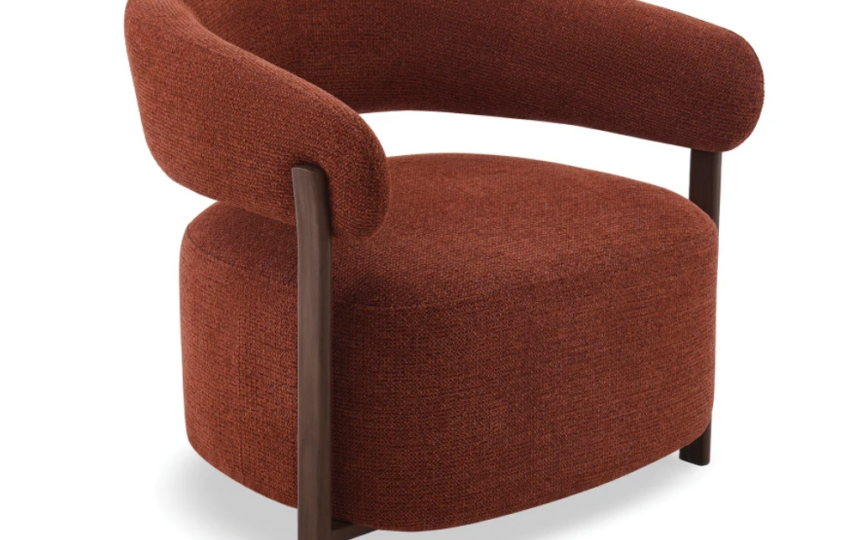

There was a time when the sofa did almost all the heavy lifting in a living room. Choose the biggest one you could fit, point it towards the television, add a coffee table and perhaps squeeze an armchair into whatever space remained. The room was functional, but the smaller pieces were often treated as supporting cast.
That approach is changing. More people are using individual chairs as design features in their own right, with designer lounge chairs bringing shape, colour and personality into spaces that might otherwise feel a little too coordinated. A well-chosen chair can create a reading corner, break up a long room or simply give the eye somewhere interesting to land.
The trick is finding one that earns its space rather than becoming an expensive place to throw clothes.
A Little Contrast Can Rescue a Safe Room
Many living rooms are built around sensible choices. Neutral sofa. Timber coffee table. Pale walls. Maybe a restrained rug underneath. Nothing clashes, but nothing particularly surprises you either.
This is exactly where an accent chair can be useful. Because it occupies less visual space than a sofa, you can afford to take slightly more chances with it. A curved silhouette in a room full of straight lines can change the mood immediately. So can a richer fabric, unexpected colour or sculptural frame.
Contrast doesn’t have to mean something loud. A cream boucle chair beside a dark leather sofa may provide enough difference. A timber-framed chair can bring warmth into a room dominated by upholstery, while a low, generously proportioned design can soften an otherwise formal layout.
The chair’s job isn’t necessarily to shout. It just needs to stop the room feeling as though everything arrived in the same furniture delivery.
Matching Furniture Isn’t the Same as Coordinating It
Matching lounge suites once made decorating relatively simple. Sofa, armchairs and sometimes even ottomans arrived upholstered in exactly the same fabric with exactly the same proportions.
There’s nothing inherently wrong with that, but it can make a room feel more like a showroom set than a home assembled over time.
Mixing styles creates a more relaxed result. A contemporary sofa can sit comfortably beside a mid-century-inspired chair. Upholstered seating can be paired with exposed timber or metal frames. Colours can relate without being identical.
The easiest way to keep a mixed room cohesive is to repeat one or two details elsewhere. Perhaps the timber in the chair echoes the dining table across the room. Maybe its upholstery picks up a shade from the rug or artwork. These small connections allow pieces to feel related without requiring them to match.
The Empty Corner Problem
Almost every home has one: a corner that feels too empty to leave alone but too awkward for substantial furniture.
Putting a random side table there rarely solves the problem. Neither does adding another plant simply because you don’t know what else to do with the space.
A lounge chair can give that corner a genuine purpose. Add a floor lamp and small side table and suddenly it becomes somewhere to read, have a morning coffee or sit away from the main sofa.
Bedrooms can benefit from the same idea. An unused corner beside a window can become a quiet sitting area without requiring much floor space. In larger bedrooms, a chair can also make the room feel less dominated by the bed.
The difference is that you’re not filling space for the sake of it. You’re creating another way to use the room.
Comfort Still Gets the Final Vote
A dramatic chair that nobody wants to sit in eventually becomes sculpture.
That may be fine if sculpture is what you wanted, but most people expect furniture to do both jobs. Comfort can be difficult to judge from appearance alone, particularly with modern chairs that play with unusual angles and proportions.
Seat depth is worth considering carefully. Deep lounge chairs are excellent for curling up with a book but can feel awkward for shorter people who prefer their feet firmly on the floor. Very low seating has a relaxed appearance, although it might not be ideal for anyone who finds getting in and out of low furniture difficult.
Arm height, back angle and cushion firmness matter too. Two chairs that look almost identical can feel completely different once you sit in them.
There’s no single correct level of comfort. The right choice depends on how the chair will actually be used.
One Chair Can Change the Flow of Conversation
Furniture arrangement influences how people behave more than we usually notice.
A room where every seat faces a television naturally encourages everyone to look in one direction. Add a chair angled towards the sofa and the space immediately feels more conversational.
This can be particularly effective when entertaining. Rather than lining guests up along one long couch, separate chairs give people their own space while creating a more sociable arrangement.
Swivel chairs offer another option in open-plan rooms, allowing the person sitting there to turn between the living area, kitchen or view outside. That flexibility can make sense in homes where one room serves several purposes throughout the day.
You Don’t Need a Pair
There’s an instinct in interior design to buy things in twos. Two lamps. Two bedside tables. Two matching armchairs.
Symmetry can be beautiful, but it isn’t compulsory.
A single chair can often have more character because it feels deliberately chosen rather than part of a matching set. It also works better in rooms where two chairs would overcrowd the floor plan.
If the room does need additional seating, the second chair doesn’t necessarily need to be identical. Two different designs can work together if they share a similar visual weight, material or colour relationship.
The overall room matters more than whether every individual item has a twin.
Give the Room Something Worth Looking At
Living rooms are increasingly less formal than they once were. They’re places for working, reading, talking, watching television and occasionally doing all four within the same afternoon. Furniture that offers flexibility while adding character makes sense in that environment.
A statement chair is particularly good at doing both. It can fill an awkward corner, create a new seating zone and introduce a design idea you might not be brave enough to use across an entire sofa.
And when the rest of the room is deliberately restrained, one interesting chair may be all it takes to stop the space feeling predictable.