
Most people have at least one old phone sitting in a drawer. It may still turn on, but it no longer gets used every day. At some point, keeping it starts to feel pointless, especially if the device still has value.
Selling an old phone can be a smart move, but safety matters. A phone can hold personal photos, messages, banking apps, passwords, saved cards, work emails, and account access. If you rush the process, you may lose data, expose private information, or deal with payment problems.
The safest way to sell a phone is to prepare it properly, choose a trusted selling method, and avoid risky shortcuts.
Back Up Everything You Still Need
Before selling your phone, make sure your important data is backed up. This includes photos, videos, contacts, notes, messages, files, and app data.
If you are moving to a new phone, check that your data has transferred correctly before resetting the old one. Open your photo gallery, contacts, banking apps, authenticator apps, and messaging apps on the new device to make sure nothing important is missing.
Do not wait until the phone is packed or posted. Once the device is erased, recovering forgotten data can be difficult.
Remove Personal Accounts Before Resetting
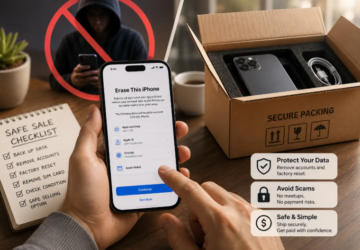
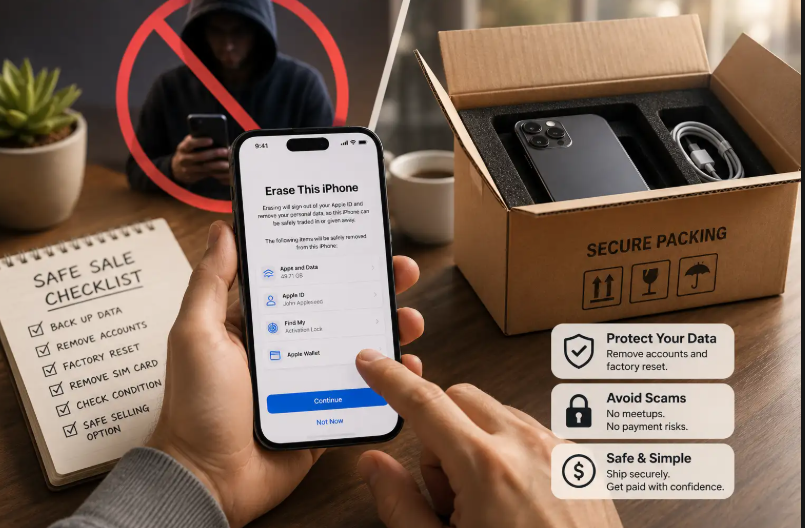
A factory reset is important, but it should not be the first step. Before resetting the phone, remove your Apple, Google, or Samsung account where required.
Account locks can stop the next person from using the device. They can also delay assessment if you are selling through an online phone buyer.
For iPhones, turn off Find My iPhone and remove the device from your Apple Account. If you are planning to sell iPhone devices online, this step is especially important because Activation Lock can create problems after the phone leaves your hands.
For Android phones, remove your Google account before resetting. If it is a Samsung phone, also check whether your Samsung account is still connected.
Remove SIM Cards, eSIMs, and Memory Cards
Many people remember to reset the phone but forget the SIM card. Before selling, remove your physical SIM card from the device.
Suppose your phone uses an eSIM, transfer or remove it before sending the phone away. Your mobile provider can usually help if you are unsure.
Some Android phones may also have a microSD card. Check the SIM tray, storage settings, and phone case before packing the device. A small card can hold personal files, photos, and documents.
Check the Phone Condition Honestly
Condition affects value, so it is better to be clear from the start. Look over the phone carefully before submitting details or creating a listing.
Check the screen, back glass, camera lenses, charging port, buttons, speakers, microphone, battery performance, Wi-Fi, Bluetooth, and network connection. Also look for cracks, scratches, dents, water damage signs, or charging problems.
A damaged phone may still have value, but choosing a better condition than the phone really is can lead to problems later. Honest details help avoid disputes, revised offers, or unhappy buyers.
Choose a Safer Selling Method
There are a few ways to sell an old phone. Private marketplaces can work, but they often involve messages, negotiation, payment risks, and meetups with unknown buyers.
A structured online phone buyer can be safer for people who want fewer risks and a clearer process. A service such as ReUse Mobiles can help users check device details, confirm condition, and sell through a more organised process.
If your main goal is to sell your phone without handling private messages or meeting strangers, an online process can be easier to manage.
Be Careful With Private Buyers
Private selling may give you control over the asking price, but it also comes with extra responsibility. You need to check the buyer, confirm payment, arrange a safe meeting place, and protect yourself from scams.
Be careful with buyers who pressure you to act quickly, offer more than the asking price, send fake payment screenshots, or ask for unusual delivery arrangements. These are common warning signs.
If you meet someone in person, choose a public place, avoid late-night meetups, and do not hand over the phone until payment is confirmed. Cash or cleared payment is safer than relying on screenshots.
Pack the Phone Properly If Posting
If you are posting the phone, pack it carefully. A phone can be damaged in transit if it is sent loose in a thin envelope.
Use padding around the screen, corners, and camera area. A small box or padded satchel is usually safer than a basic envelope. If you are including a charger or cable, pack it so it does not press against the screen.
Take photos of the phone before sending it. Capture the front, back, sides, and any visible damage. This gives you a record of the condition before the device leaves your hands.
Avoid Selling Before You Are Ready
Do not sell the phone until your new device is fully set up. This is especially important if you use banking apps, work apps, authenticator apps, email accounts, or two-factor authentication.
Some apps need approval from the old phone before they work on the new one. If you reset too early, you may lock yourself out or need extra support.
A good rule is simple: keep the old phone until your new phone has everything working properly. Once you are confident, you can reset and prepare the old device for sale.
Think About What Comes After Selling
Selling an old phone often happens when someone is upgrading. But buying brand new is not the only option.
If you need a replacement device, comparing refurbished phones can be a practical way to keep costs down while still choosing a tested device.
It also helps keep usable technology in circulation for longer, instead of letting old devices sit unused.
Use an Online Process If You Want Less Risk
For many people, the safest option is a clear online selling process. It avoids public meetups, reduces back-and-forth messages, and gives you a more structured way to provide device details.
If you are comparing ways to sell phone online, make sure the process explains how the device is assessed, when payment is made, and what happens if the final offer changes after inspection.
A safe process should be clear before you send the phone. You should know what condition details are required, how shipping works, and what your options are if the phone is assessed differently.
Make Safety Part of the Sale
Selling a phone you no longer use should not feel risky. The safest approach is to back up your data, remove accounts, reset the device, check the condition honestly, and choose a selling method that suits your comfort level.
If you want full control, a private sale may suit you. If you want fewer messages, less negotiation, and no meetups, an online phone buyer may be the better option.
The phone may no longer be useful to you, but it can still have value for someone else. Preparing it properly helps protect your data, reduces stress, and makes the selling process easier from start to finish.