

Controlled Unclassified Information (CUI) requires moderate confidentiality. That is the answer most training quizzes expect when they ask about the system and network configuration required for CUI. CUI is government information that is not classified but must be safeguarded or have its distribution controlled by law, regulation or government-wide policy.
The program began with Executive Order 13556. NARA issued its implementing rule, 32 CFR Part 2002, on September 14, 2016. NARA’s Information Security Oversight Office (ISOO) maintains the official CUI Registry.
The Short Answer Is “Moderate Confidentiality”
Under 32 CFR 2002.14, CUI Basic must receive protection at no less than the moderate confidentiality impact level, following FIPS Publication 199. FIPS 199 has three levels: low, moderate and high. “Basic” is a CUI handling category, not a fourth level. “Enhanced” and “advanced” are not levels in this scale.
Moderate applies when a loss of confidentiality could seriously harm an organisation’s operations, assets or people. Confidentiality matters because CUI rules control who may see the information. A disclosure can cause harm even when the material is not classified.
An agency may raise CUI Basic’s level within its own systems or through a written agreement. CUI Specified categories may carry extra handling rules under their governing laws or regulations.
How “Moderate” Becomes Real Configuration
Inside Federal Agencies
Federal agencies use FIPS 200 and the moderate baseline in NIST SP 800-53 as their starting point. They then tailor the applicable controls to address the risks associated with each system.
Contractors, Universities and Other Nonfederal Organizations
For nonfederal organizations, NIST SP 800-171 generally provides the framework for protecting CUI that their systems process, store or transmit.
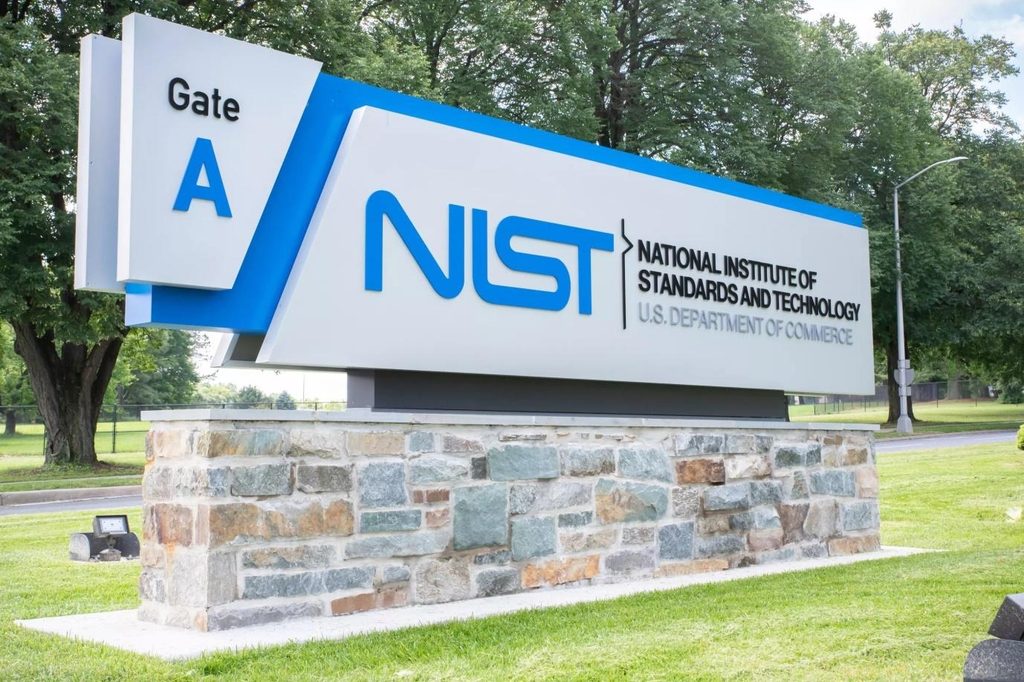
The standard has changed between revisions. Revision 2 contains 110 requirements across 14 families. Finalised on May 14, 2024, Revision 3 reduces that number to 97 requirements grouped into 17 families. It introduces three new families: Planning, System and Services Acquisition, and Supply Chain Risk Management. Another change allows the agency that owns the CUI to establish organisation-defined parameters.
Fewer requirements do not mean weaker security. The reduction largely comes from consolidating existing requirements.
Defense contractors need to pay particular attention to version control. A DoD class deviation issued May 2, 2024, keeps contractors covered by DFARS 252.204-7012 on Revision 2 until the deviation is rescinded. Before adopting a different version, check the contract.
What a CUI-Ready Network Actually Looks Like
NIST SP 800-171 Revision 2 turns the practical system and network configuration required for CUI into a set of specific security measures. These cover everything from user permissions to incident reporting.
- Access controls: Only approved users, processes and devices should get access. Apply the principle of least privilege. An employee responsible for invoices, for example, should not automatically have access to engineering files.
- Multifactor authentication: A password alone should not unlock sensitive access. Require additional verification for privileged accounts and network access by non-privileged users.
- Encryption: Whenever cryptography protects CUI, use FIPS-validated cryptography. This applies to information stored on systems as well as data being transmitted.
- Boundary protection: Keep a close watch on network traffic. Monitor and control communications at the external network edge and at important internal boundaries.
- Audit records: Logging activity is only half the job. Organisations must retain and review audit records so unauthorised actions can be traced back to a user.
- Configuration management: Establish and document secure baseline settings. Disable unnecessary ports, services and programs rather than leaving unused entry points available to attackers.
- Malicious-code protection: Protective software must be in place and kept up to date. Outdated tools offer little reassurance against newer threats.
- Incident response: Organisations need a working process to detect, contain and report security incidents. A response plan gathering dust in a binder will not be much use during an actual attack.
- Written records: Document the CUI environment in a System Security Plan (SSP). Any remaining security gaps should appear in a Plan of Action and Milestones (POA&M), along with the steps planned to address them.
Defense Contractors: DFARS 7012 and Where CMMC Stands
For defense contractors, DFARS 252.204-7012 sets out the security obligations for systems handling covered defense information. It requires them to implement NIST SP 800-171 on covered systems. When an external cloud provider stores covered defense information, that provider must meet security requirements equivalent to the FedRAMP Moderate baseline.
Incident reporting also comes with a firm deadline. Contractors must notify the Department of Defense, also known as the Department of War, within 72 hours of discovering a cyber incident.

The Cybersecurity Maturity Model Certification (CMMC) program was introduced to assess contractor compliance. Its program rule, 32 CFR Part 170, took effect in December 2024. The acquisition rule followed on November 10, 2025, launching Phase 1 with self-assessments.
The next stage was supposed to raise the bar. Phase 2, scheduled to begin on November 10, 2026, would have required third-party Level 2 certification. However, the department suspended the transition on July 13, 2026, and started a 60-day review.
A September 3 class deviation subsequently instructed contracting officers to remove third-party CMMC assessment requirements from contracts. By late October 2026, the review’s recommendations had not been published, and the department had not announced a restart date.
One important distinction remains: The pause does not remove contractors’ existing obligations under DFARS 7012 or NIST SP 800-171 Revision 2. Phase 1 self-assessments also continue.
Conclusion
“Moderate” sounds like a middle setting on a switch. Set it halfway and carry on. The word hides the work. A confidentiality failure can cause serious harm, so an organisation must show its safeguards work.
The system and network configuration required for CUI lives in that daily evidence. A review may ask who opened a file, what happened on the network and when the response began. A contractor may have to explain a gap long after the person who created it has left the company. The label fits on one training slide. The proof takes more space.