


OPPO’s Find X10 Series is scheduled to arrive on the global market on October 21, with Mallorca, Spain, chosen as the venue for its launch. The company is placing photography at the centre of the launch. Developed around what OPPO calls a “Hasselblad True-to-Life Camera”, the new range brings together upgraded camera hardware and the LUMO True Image Engine, its latest imaging system.
Borderless Design Blends Premium Materials with Camera-Inspired Styling
The stated purpose is to reproduce colour, detail and tone with greater fidelity to the scene being photographed. The exterior has received attention as well. Rather than depart from the restrained appearance of previous Find X models, OPPO has developed a new construction method called Borderless Design. Here, One-Piece Sculpted Glass extends into the camera housing, reducing the visual separation between the two surfaces.
This gives the rear panel a more continuous appearance and makes the protruding camera assembly seem less pronounced. Premium materials and carefully finished details complete the design. The Find X10 Pro Max in Luna White takes a different sort of inspiration: the shape and finish of traditional cameras. Its silver-coloured LUMO Camera Island has a matte metallic surface and accommodates the new True Color Camera and a dual-flash system.
The surrounding details include finely textured knurling and Hasselblad’s recognisable matte orange ring. A second texture appears across the rear panel, where smooth matte glass meets a restrained, fabric-like pattern. Together, these surfaces create a two-tone finish. The design, however, is only one part of the upgrade; OPPO has also made substantial changes to the imaging hardware.
Dual 200MP Cameras Take Centre Stage in the Find X10 Lineup
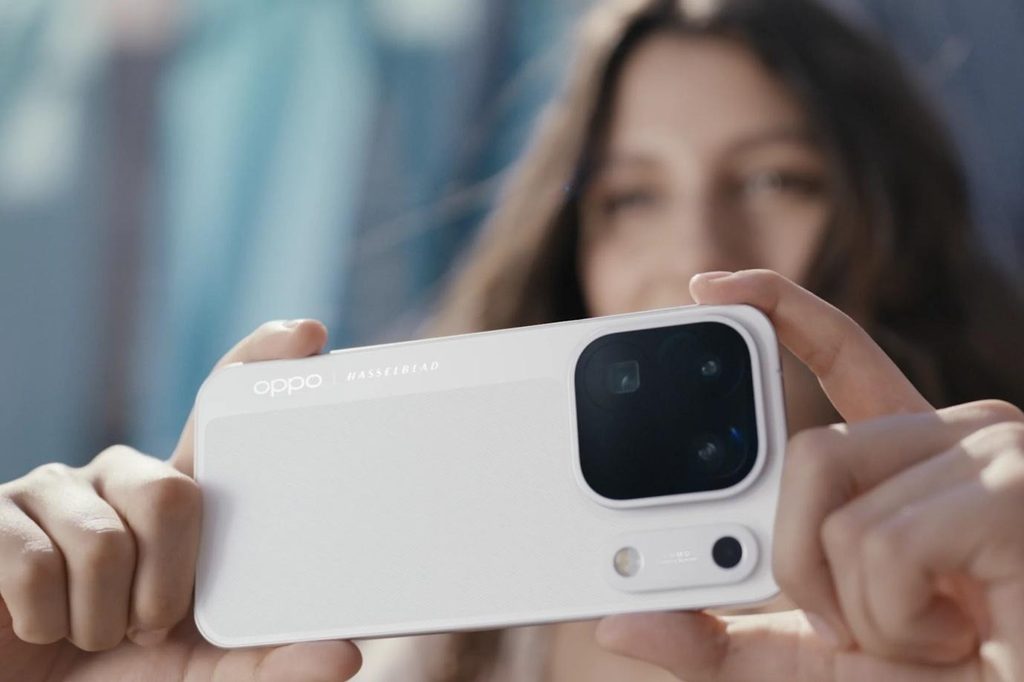
OPPO has given the Find X10 two 200MP cameras, developed alongside Hasselblad. The Pro Max takes a different approach to the same idea. It equips all three of its principal rear cameras with 200MP sensors. The ultra-wide, main and telephoto units each receive the same resolution. OPPO describes this arrangement as a first for the smartphone industry.
8,000mAh Batteries and AI-Powered Features Complete the Upgrade
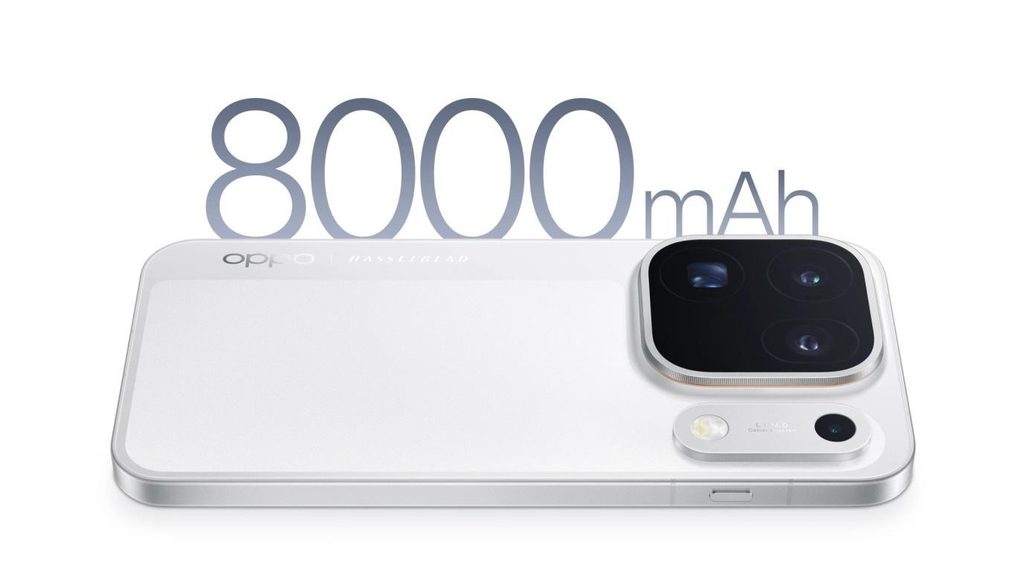
OPPO has also fitted both phones with an 8,000mAh silicon-carbon battery. The company expects this capacity to provide enough power for roughly two days of normal use. Longevity matters as well. According to OPPO, the battery should preserve more than four-fifths of its original capacity after five years of typical use. Actual results will depend on charging habits and how heavily each phone is used.
On the software side, ColorOS 17 introduces changes to both the interface and the way users interact with their devices. Living Flow Design brings a revised visual style and smoother interactions. AI Mind Pilot adds another layer through Agent Mode. The feature lets the phone’s AI work with locally stored files and photographs in response to a single instruction. OPPO intends it to handle tasks that would otherwise require several manual steps.
October 21 Launch to Reveal Pricing and Global Availability
The launch event should answer the remaining questions. OPPO will announce the full hardware details, pricing and market availability in Mallorca, Spain, on October 21. It has also indicated that the presentation will include further details about the new features.
LUMO True Image Engine Targets More Natural-Looking Photos

A high-resolution sensor cannot, by itself, guarantee a good photograph. The software must also interpret the information it receives. For this task, OPPO has developed the latest version of its LUMO True Image Engine. The system combines the company’s imaging technology with Master Mode’s approach to colour reproduction. It also draws on the colour measurements supplied by the True Color Camera.
The intended result is a photograph that does not sacrifice realism for visual impact. Skin tones should look convincing, small details should survive processing, and the relationship between light and shadow should remain natural. In other words, the software aims to preserve what was there when the photograph was taken, rather than impose an exaggerated appearance on the scene.
4K and 8K Recording Expand Creative Possibilities

OPPO has extended the improvements to video. The Find X10 Pro Max records at up to 4K resolution and 120 frames per second, or 8K at 30 frames per second, using any of its three rear cameras. The standard Find X10 offers both recording modes through its two 200MP cameras.
Another addition, Open Gate Capture, gives creators more control after filming. It records across the sensor’s full imaging area, leaving more room to alter the composition later. Editors can produce horizontal videos, vertical clips and other aspect ratios from the same footage. This reduces the need to settle on one format while recording and leaves more decisions for post-production.
MediaTek’s Latest Chipsets Promise Faster, More Efficient Performance
The Find X10 series uses MediaTek’s latest high-end processors, with different chips for the two models. OPPO has selected the Dimensity 9600M for the standard Find X10. The Pro Max will use the Dimensity 9600 Pro, a 2nm processor that puts the phone among the first devices to adopt this technology. MediaTek’s newer design aims to increase computing power without demanding as much energy.
Final Words
OPPO is clearly intent on making smartphone photography more about capturing reality, than creating a colourful fantasy with the Find X10 series. The 200MP cameras, Hasselblad support of imaging, the sophisticated video features and the elegant design indicate a bold step to set a new standard. These phones appear to be capable of doing a lot more than taking pretty photos of your meal, thanks to an 8,000mAh battery, new MediaTek chips and AI-enhanced features.
However, the impressive specs and smooth promises are just half the equation. The performance of the camera, battery life, usability, and cost will all be the deciding factors as to whether or not the Find X10 series will find its way into consumers’ pockets. The October 21 launch will give a better idea of OPPO’s plans for the global market. Until then, it’s understandable that excitement is being felt, but it’s good to have a healthy dose of scepticism. After all, megapixels can grab the headlines, but real-world performance will win customers.