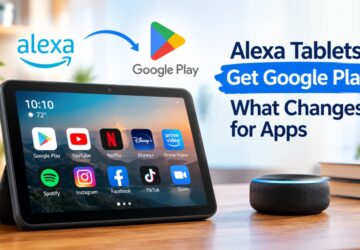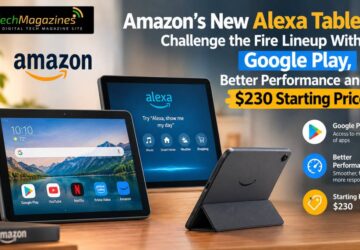
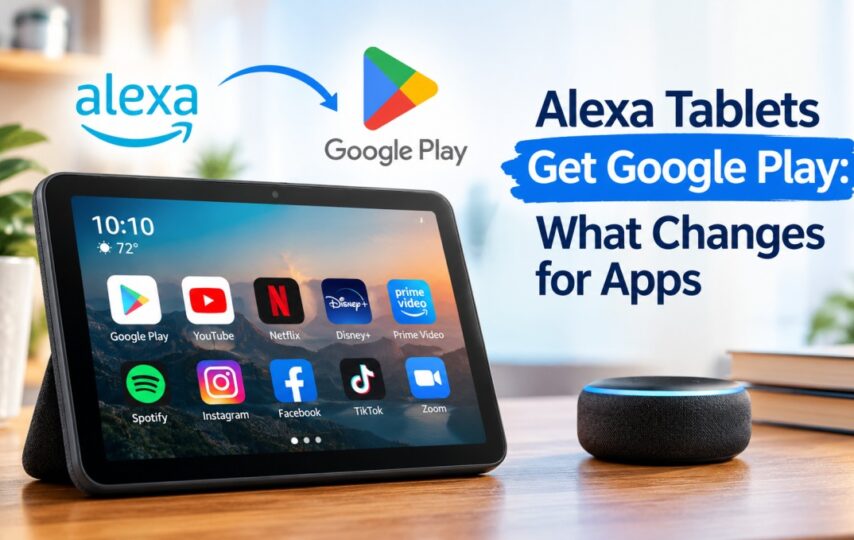

Amazon spent a decade building Fire OS into a walled garden. Locked bootloader. Appstore-only distribution. No Google Mobile Services, which meant no Gmail, no Maps, and no Play Store unless you sideloaded your way around it. That era just ended. On October 8, Amazon unveiled a new lineup of Alexa tablets that feature personalized intelligence from its Alexa+ AI assistant and full access to the Google Play Store, including three models, starting at $230.
That’s not a spec bump. It’s a philosophy reversal. For years, buying a Fire tablet meant accepting a smaller, curated app catalog in exchange for a cheap screen. Now the cheap screen comes with the real thing attached.
What Google Play Access Actually Unlocks
Think about what’s been missing from budget Android tablets for the last ten years. Not raw power. Plenty of $200 slates run decent chipsets. What’s been missing is trust from the app developers who gatekeep their own distribution.
Banking apps. Streaming platforms with strict DRM requirements. Anything that checks for Google Play Integrity API signals before it lets you log in. Fire OS tablets failed those checks constantly, because without GMS baked in, the device couldn’t prove it hadn’t been tampered with. Developers who cared about fraud, licensing, or compliance just blocked the whole device category. Now that barrier is gone on Amazon’s side.
Real-money and skill-based gaming apps sit in exactly this bucket. They’re some of the pickiest software out there about device integrity, because state gaming regulators require it. A sportsbook app in New Jersey or a daily fantasy platform in Michigan won’t even render a login screen on a device it can’t verify. Google’s recent policy shift opening its Play Store to more real-money gaming apps only matters if the hardware underneath can actually pass Play Integrity checks, and budget Fire tablets historically couldn’t. The new Alexa models can. That’s the quiet headline buried under the Alexa+ branding: millions of budget tablet buyers are about to gain access to an entire category of apps that treated their old hardware as untrustworthy by default.
Browser-based play is still the more common route for state-licensed casino products, since most regulated operators built their platforms as progressive web apps long before native Play Store listings became viable everywhere. Players comparing state-specific legal options, the kind tracked on a Detroit Metro Times site covering Minnesota’s regulated market, will likely keep using mobile browsers on these tablets rather than waiting on native app rollouts. A quick one-sentence note for anyone following that link: gambling carries real financial risk, so treat any regulated platform as entertainment with a budget, not income.
The bigger shift is structural. Once a device proves it can run Play Protect certified software, the floodgates open to everything that cares about certification, not just gaming.
Three Models, Three Different Buyers
Amazon split the lineup by use case instead of just screen size. 9to5Google’s breakdown of the pricing tiers shows a clear entry, mid, and premium split, with the $230 base model clearly aimed at replacing the old Fire HD line rather than competing with an iPad.
That’s the smart part. Amazon isn’t trying to beat Apple on the high end. It’s trying to stop losing the low end to cheap Android tablets from Lenovo, Samsung, and a dozen generic manufacturers that already shipped with Play Store support. For years, the only reason to buy a sub-$250 Android tablet with Google services was literally anyone except Amazon. Not anymore.
Android Police’s hands-on coverage notes the mid-tier model picks up a faster chipset and more RAM than its Fire-era predecessor, which matters more than it sounds. App compatibility isn’t just a software permission question. Heavier apps, the kind that run real-time video decoding or do on-device fraud checks, need actual processing headroom. A tablet that can open the Play Store but chokes running anything demanding from it is a half-measure. Early specs suggest Amazon didn’t cut that corner this time.
Why This Took So Long
Short answer: money. Amazon’s entire tablet business model for over a decade ran on steering users toward its own Appstore, its own Prime Video, its own everything. Opening the gate to Google Play means losing a cut of in-app purchases and ad revenue that used to flow exclusively through Amazon’s pipes.
So why now? Pressure from two directions. First, consumers increasingly expect Google services as table stakes, not a premium feature. Second, GSMArena’s technical comparison against the old Fire tablet line shows how far behind Fire OS had fallen on raw capability, not just software openness. Amazon was losing the budget tablet war on both fronts at once. Closing the Play Store gap was the fix that cost the least engineering effort for the biggest perception shift.
BGR argued the Play Store access alone finally gives people a real reason to buy an Alexa tablet instead of settling for one. That’s a fair read. A $230 tablet that runs the full Android app catalog is a genuinely different pitch than a $230 tablet that runs whatever Amazon’s curation team approved that quarter.
What Developers Should Actually Watch
Three things, not ten.
First: Play Integrity signals from these devices need real-world validation. Amazon says GMS is fully baked in, but developers who build anything sensitive, banking, identity verification, licensed gaming, should test against actual retail units before assuming compatibility. Specs on paper and certification in practice aren’t always the same thing.
Second: screen size and input method still matter for app design. A tablet isn’t a phone. Apps built assuming portrait-only phone layouts look broken on a 10-inch landscape-first device. If this lineup sells well, expect more app teams to finally prioritize proper tablet layouts instead of just stretching phone UI.
Third: pricing pressure cascades. When a $230 device suddenly competes on software parity with a $350 device, the $350 device needs a new reason to exist. Expect Samsung and Lenovo to respond within two or three product cycles, not years.
Frequently Asked Questions
Does every app in the Google Play Store now work on Alexa tablets? Most should, since the devices carry full Google Mobile Services certification rather than a stripped-down compatibility layer. Some apps with strict hardware requirements, like specific camera features or high-end GPU demands, may still flag the device as unsupported depending on how the developer configured their Play Store listing.
Will old Fire tablets get Google Play access through a software update? Amazon hasn’t announced retroactive support, and the architecture difference is significant since GMS integration happens at a much deeper OS level than a simple app update can reach. Existing Fire tablet owners will most likely need to buy new hardware to get native Play Store access.
Are these tablets good enough for demanding apps like video editing or gaming? The mid and premium tiers carry stronger chipsets than previous Fire models, based on early spec sheets, making them workable for moderate gaming and basic editing. Anyone doing heavy 4K editing or graphically intense gaming should still look at dedicated Android tablets built specifically for that workload.
Does this mean Amazon is giving up on its own Appstore? No. The Amazon Appstore remains preinstalled and still gets preferential placement in the tablet’s interface. Google Play runs alongside it rather than replacing it, giving users a choice Amazon previously didn’t offer on its own hardware.
How does Play Store access affect app pricing on these tablets? Developers distributing through Google Play pay Google’s standard commission structure rather than Amazon’s, which can shift pricing slightly on in-app purchases. For most consumers browsing free or ad-supported apps, the difference is invisible at checkout.
Amazon waited a decade to make this move, and the timing lines up with a broader industry trend toward open app ecosystems rather than closed hardware gardens. Budget tablets just stopped meaning compromised software. Whether Amazon keeps that promise through its next two or three hardware cycles is the thing actually worth watching.