
Image credit: David Paul Morris/Bloomberg News
Google’s latest effort to alter the nature of search by means of artificial intelligence is likely to leave the company with an audience more firmly enclosed within its own system than at any previous time. And when millions of eyes can be held in one place, the temptation to turn them toward advertisements becomes almost irresistible. The result is a fresh crop of AI-driven adverts, prepared in advance for the age which Google itself is busy inventing.
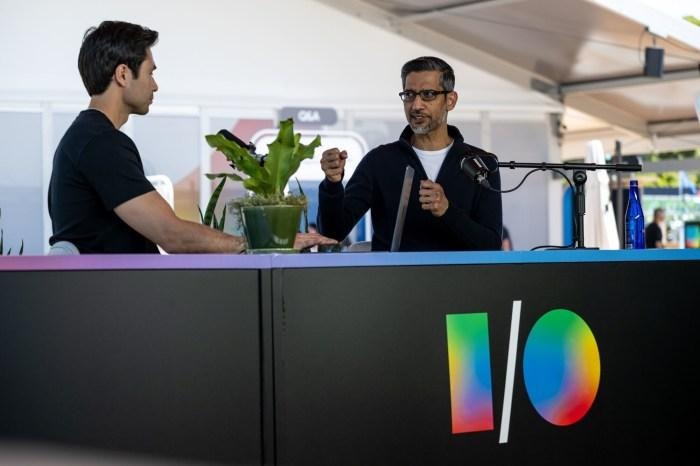
The announcements from the company’s I/O conference continued on Wednesday with the presentation of what executives described as “a new generation of ads.” Earlier in the week Google had already declared that its search engine was receiving what Elizabeth Reid, head of Search, referred to as the largest alteration in more than twenty-five years.
At the centre of the change is the deeper insertion of Gemini 3.5 Flash into both Search and the newly expanded AI Mode. The engine is meant not merely to answer questions, but to foresee the user’s intention before it has been fully expressed, and then present long, polished replies generated by the machine itself.
Google Wants Search Users to Stay Inside Its Expanding AI Ecosystem
This does not mean that AI Mode will at once replace the ordinary search page. Google still intends to keep the familiar list of results in front of most users. Yet the machine now presses its own answers beside those results, and wherever an AI Overview appears, the user receives another invitation to continue deeper into AI Mode. A richer version of the system can also be summoned directly from the search bar itself.
It is here that Google strengthens its hold. The machine searches on the user’s behalf. It selects what matters and arranges the material in such a way that fewer people feel the need to leave the page. The purpose is plain enough. A man who stays inside Google’s walls sees more of the company’s profitable material, though the company naturally prefers to call these things “helpful results.”
Conversational Ads Become Part of the AI Answers
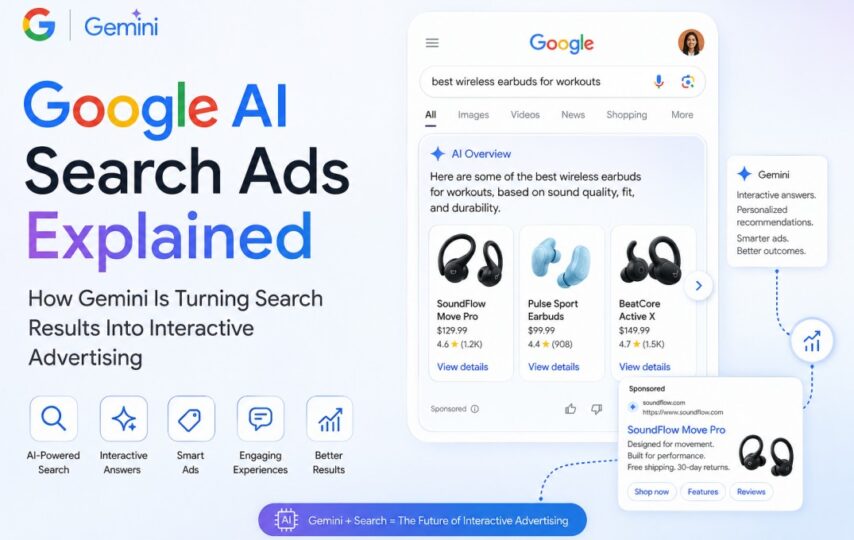
The advertisements follow the same pattern. Google says they will be “more helpful” than before. They come under two fresh names: Conversational Discovery ads and Highlighted Answers. The titles sound harmless. Their function is not.
Conversational Discovery ads work in a simple enough way. Gemini answers a question, then slips advertisements into the reply itself. Google says the system will tailor those ads to the search and draw attention to products it judges relevant. A man may ask how to make his house smell cleaner. The machine could suggest a cheap remedy. A little baking soda and water would do it. Vinegar might do it as well. But there is greater profit in persuading him that he requires an electric wax melter, a reed diffuser, or some other costly object placed before him by a paying company.
AI Recommendations Begin Blurring the Line Between Advice and Advertising
Highlighted Answers follow the same principle in a slightly different form. Google says that “high-quality” and “highly relevant” advertisements may appear among the recommendations produced by AI Mode. It did not explain who decides what counts as relevant or high-quality. The company merely stated that it relies on standards much like the ones already used in its advertising system. The same auction machinery remains in place. Money still determines which messages people see first.
Google also explained that approved brands will appear at the end of AI-generated recommendation lists. The feature remains under test for now. The company says it wants these insertions to feel natural and useful to the user. Such words have become common in the language of the large technology firms. They usually mean that the advertisement should resemble ordinary information closely enough that the reader no longer notices the difference.
Traditional Google Search Is Slowly Changing Shape
The ordinary Google search page is not disappearing, despite the alarm that followed the company’s announcements this week. Yet this does not mean the old search engine will remain untouched. Google intends to push more artificial intelligence into those pages as well, and with it will come a larger quantity of advertising woven directly into the results.
In the months ahead the company plans to introduce AI-driven shopping advertisements powered by Gemini. These tools will search out products judged “relevant” to the user and then produce short explanations meant to persuade him that a particular item suits his needs. Google also says advertisers will gain the power to place what it calls a “smart brand agent” inside the advertisement itself.
Google’s Future Ads Will Talk Back to Customers
The thing amounts, in practice, to a small conversation box embedded in the page. A user asks questions and receives instant replies drawn from a company’s website. Google describes this as a practical interaction that can turn into a valuable sales lead. The phrase is neat enough. Its meaning is plain. The advertisement no longer waits quietly at the side of the page. It speaks directly to the customer and tries to hold his attention for as long as possible.
Google also announced an expansion of its Direct Offers programme. The system allows retailers to present discounts and personalised bargains through Gemini itself. The object is clear enough. Companies gain another method of steering people toward a purchase while keeping them inside Google’s own enclosed system from beginning to end.
AI Advertising Expands While Organic Results Fade Further Back
Companies that wish to make use of these new advertising systems will find themselves pushed toward Google’s AI Max and Performance Max tools. The arrangement suits Google well enough. As advertisers move further into the new AI-centred version of Search, the company continues to collect its share at every stage of the process.
Google also insists that the public welcomes these changes. According to the company, people increasingly prefer AI experiences delivered through its services, even in cases where those experiences appear whether they were requested or not. The Chocolate Factory further assures us that advertisements do not influence what it calls organic results. This may be technically true. Yet the ordinary results now sit behind an expanding curtain of machine-written material through which the user must pick his way before reaching the thing he originally searched for. And among this clutter there now stand even more advertisements than before.
Final Words
Google’s big AI experiment is becoming more like a shopping mall than a search engine with a chatbot at the front. The company says that these new ads powered by artificial intelligence are supposed to be “helpful,” but when Silicon Valley says that, someone is trying to sell you a scented candle you didn’t ask for.
Google’s old blue-link version isn’t going away yet, but it’s definitely taking a backseat. Search once enabled people to get away into the broader internet. Google is increasingly making sure that they never leave the walls.