

For several months there had been hints of a partnership between ASUS and Xreal, and now the thing itself has appeared at last. The ROG Xreal R1 smart glasses, first spoken of early in the year, opened for pre-orders on May 15. ASUS describes the device as something more than a mere attachment to the ROG Ally handheld.
According to the company, the purpose was to join the hardware and software so closely that the user would experience them as a single machine rather than separate parts awkwardly fitted together. Xreal contributes the augmented-reality technology on which the arrangement depends.
A Massive Virtual Display Packed Into Lightweight Smart Glasses
The glasses are built around a Sony 0.55-inch micro-OLED panel, though the wearer is meant to perceive an image equal to a virtual screen measuring 171 inches across. The refresh rate climbs to 240Hz, a figure that ASUS repeatedly emphasises in its advertising. The company claims the display reduces blur and uneven motion to the smallest degree possible, so that games appear fluid and immediate instead of strained or uncertain. The intention is plainly to persuade the user that he is carrying a full gaming display before his eyes, while still holding only a portable machine in his hands.
Users can alter the brightness, the size of the display, the aspect ratio, and other settings while they play. The changes happen at once and require little effort. ASUS also claims that the glasses cover ninety-five percent of the user’s central field of vision. The intention is obvious enough. The screen is meant to occupy the eye so completely that outside distractions begin to fall away.
Electrochromic Lenses Attempt to Replicate the Cinema Experience
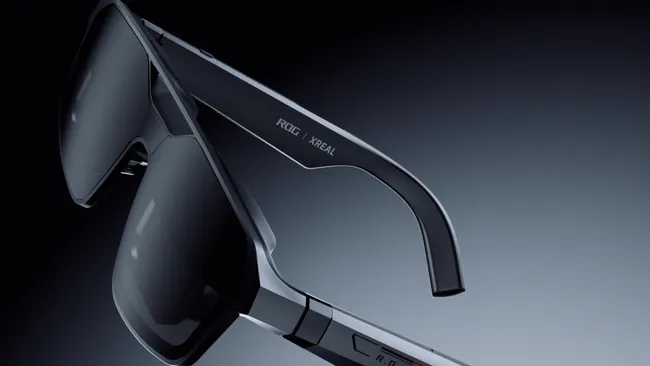
The device also carries what ASUS calls Electrochromic Lens technology. The phrase sounds more elaborate than the thing itself. When the wearer looks away, the lenses turn clear. When his gaze returns to the display, the space around the image darkens again. It is a simple trick, but a useful one. The glasses attempt to hold the player’s attention in the same manner that a darkened cinema fixes attention on the screen.
ASUS Adds Desktop-Style Gaming Features to the AR Setup
Good equipment matters in gaming as much as it does in any other mechanical pastime. ASUS has therefore added what it calls the ROG Control Dock. Linked with the DisplayWidget Center, it allows the user to alter the virtual screen through a keyboard and mouse instead of fumbling through awkward menus. There are other additions as well. AI-assisted crosshairs and similar features aim to give the whole arrangement the feel of a proper desktop machine, though it rests inside a pair of spectacles.
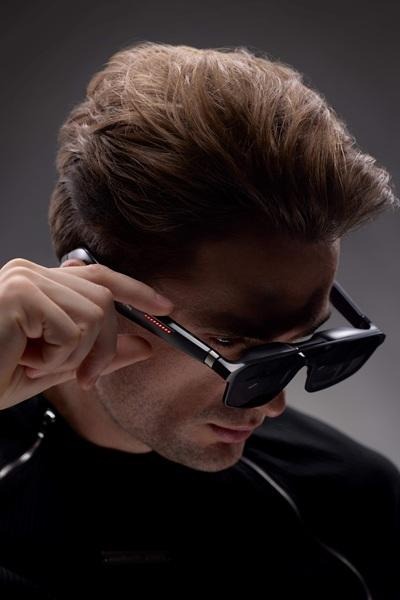
Perhaps the strangest feature is the real-time conversion from 2D to 3D. Ordinary games can acquire a greater sense of distance and physical scale without any special modification. ASUS plainly hopes that this effect will persuade players they have stepped beyond the flat screen altogether and into something nearer to a physical world.
Users may fasten the display to one position or allow it to follow their movements without interruption. Other controls adjust the darkness around the screen and increase the frame rate when required. ASUS and Xreal have also turned to Bose for the sound system. They believe strong audio matters as much as clear visuals. The companies claim the speakers help players detect distant footsteps, gunfire, and explosions with greater precision. The aim, plainly enough, is to sharpen the player’s sense of being inside the game rather than merely watching it.
ROG Xreal R1 Price, Availability, and ASUS Launch Plans
The ROG Xreal R1 glasses are now open for pre-order through Best Buy at a price of $849. ASUS says the official Xreal store will begin taking orders on May 17 at 3 a.m. Eastern Time. The device first drew attention during CES 2026, where ASUS and Xreal made little attempt to hide their ambitions. These glasses do not pretend to serve every purpose. They are built chiefly for gaming.
The display remains fixed within the lens, yet the projected image attempts to create the impression of a much larger world beyond it. ASUS promises controls and responsiveness close to that of a full desktop machine. Whether the claim proves true remains to be seen. Even so, the companies are clearly betting that many players will welcome a new method of gaming, one that places the screen directly before the eyes and shuts out much of the ordinary world around it.
Final Words
The ROG Xreal R1 glasses come with the confidence that only a blockbuster game trailer or sports car can muster. This isn’t just a gaming accessory ASUS and Xreal are selling. They’re attempting to persuade gamers that a pair of glasses can be an alternative to the well-known monitor on the desk. The promise to make mundane gaming more like science fiction, Bose-powered sound and a 240Hz virtual display cannot be missed. The experience will either be revolutionary or very costly eyewear depending on the player wearing it. Nevertheless, the effort is worthy of note. The ROG Xreal R1 could be the boldest of all the miniaturization, speed and weirdness of gaming hardware in years.