

Imagine turning on your television and finding that you play the lead in every programme. The detective has your face, the astronaut speaks in your voice, and the hero of a romantic comedy looks remarkably familiar.
The idea for a Google AI TV channel comes from a patent application published by the US Patent and Trademark Office on November 19, 2026. Google has made no announcement about bringing such a service to the market. For the moment, the whole thing exists on paper. That paper makes for rather strange reading.
What Google actually filed
The document bears the title “Creating a Channel of Video Experiences Tailored to a User.” It was filed by Google LLC on May 13, 2025, and made public on November 19, 2026, under application number US 2026/0370899 A1.
Two inventors are named in the document: Aravind Reddy Ayuluri and Prameela Kavya Thummuru. They describe a television feature called “My Channel.”
Patentlyze, a website that tracks patent developments, picked up the filing, which subsequently received coverage from 404 Media.
There is a legal distinction worth making here. The document is an application for a patent rather than a patent that has already been granted. Much of what it describes is written in terms of what the proposed system could do.
How My Channel would work
In one of the drawings, a television menu carries the heading “John’s Channel.” Among the choices are a comic crime story and an adventure involving science fiction. The personal channel sits alongside familiar tabs such as Home, Apps and Library.
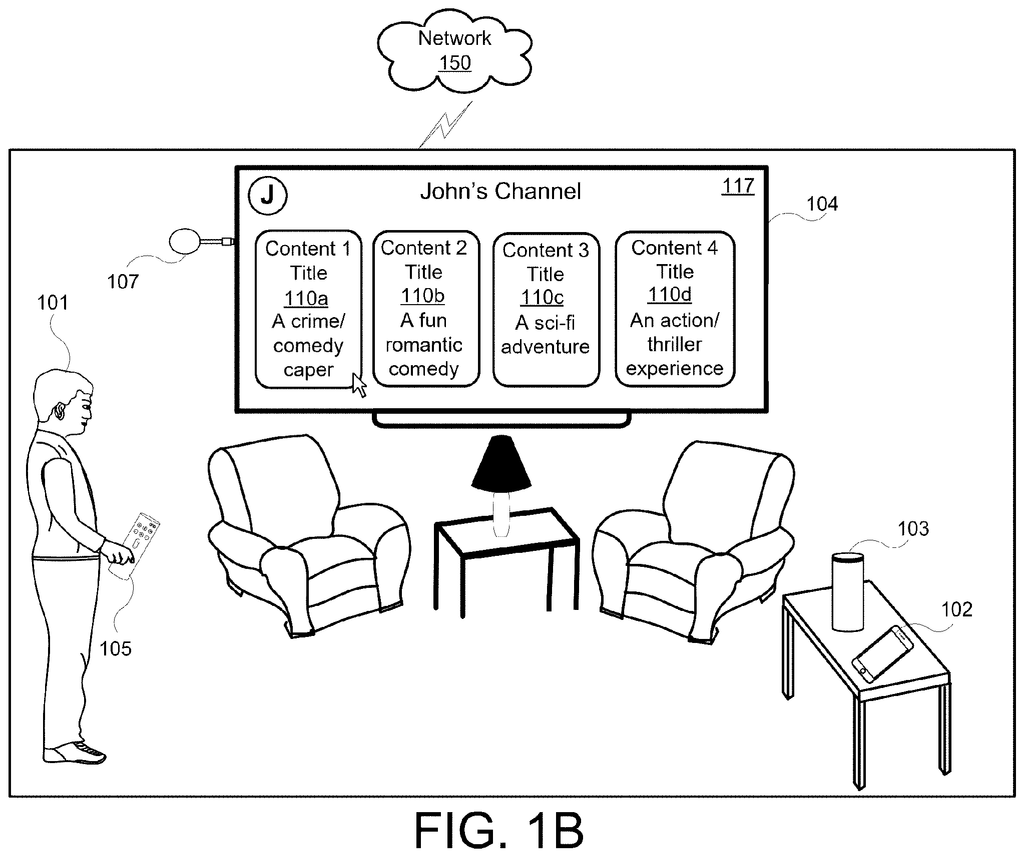
Where does the entertainment come from? Instead of searching a catalogue for suitable films, the system creates them.
A Google server prepares instructions for a large language model, which produces a video and deposits it in a personal content repository from which the television can stream it.
The instructions could draw on a considerable amount of information:
- Programmes and genres the viewer has watched
- Time spent watching particular content
- Location obtained through GPS or an IP address
- Device language and the viewer’s age group
- Presence of household members younger than 13 or older than 65
Another language model could supply material from the news, sporting results and popular topics on social media.
Viewers could request new videos themselves, or the server could produce them at weekly, monthly or annual intervals. As Claim 6 states:
“The prompt is generated without input from the user.”
Your face, your voice, your story
“Stick to the user as the protagonist for the whole video.”
These are instructions from a sample template in the application. The proposed Google AI TV channel could construct a digital likeness of the viewer using their photographs and video recordings.
It could reproduce their voice, too. Recordings made when speaking to the television’s built-in assistant or issuing voice commands could provide the material for synthesising the main character’s speech.
The filing illustrates the idea with cricket. During a World Cup, someone who has been watching batting highlights might receive a short video in which they appear among the spectators, cheering for India.
The possibilities extend beyond sport. The same viewer could find themselves caught up in a romantic comedy one evening and playing a character in a futuristic adventure or an amusing criminal escapade the next.
And yes, there are ads
Even a television programme made exclusively for one person could have commercial interruptions.
Several claims in the application concern the transfer of the newly created videos to an advertising server. A component described as an “advertising stitcher” would attach one or more targeted advertisements before the viewer’s chosen entertainment begins.
The information collected to determine what sort of story a person might enjoy would also help determine which advertisements to show them.
The audience, in this peculiar arrangement, would consist of the same individual whose interests helped furnish the script.
What the filing says about privacy
How much would a viewer have to surrender to get a starring role?
The document mentions possible settings through which people could decide when information about them is gathered, or prevent its collection altogether. Geographical information could be made less precise by limiting it to a city, ZIP code or state.
When certain details are unavailable, the instructions sent to the model could contain empty fields or default values in their place.
The application, however, describes no specific procedure for obtaining permission to reproduce a person’s appearance or generate speech in their voice. The privacy safeguards discussed in the document are also absent from the patent claims themselves.
Google has made no public statement addressing these matters or explaining how consent would work.
Rejected, for now
According to Patentlyze, a patent examiner has issued a final rejection of the application.
That need not be the end of it. Google still has the option of appealing the decision or making changes to the claims in an effort to secure a patent.
Even if the Google AI TV channel application eventually succeeds, it would tell us little about the likelihood of seeing the feature on our television sets. Companies regularly seek patent protection for inventions that never become commercial products.
Final Thoughts
In 2023, Netflix released an episode of Black Mirror called “Joan Is Awful.” Part of the show’s sixth season, it concerned a woman who discovers that a streaming service has turned her own life into television entertainment.
The premise belonged to a familiar kind of satire in which an ordinary technological convenience is pushed far enough to become absurd.
Three years later, reading Google’s patent application gives one the peculiar sensation that somebody watched the episode, mistook it for a business proposal and decided that the fictional streaming service had overlooked a perfectly good opportunity to sell advertising space.