Technology has dramatically transformed the way products are designed, manufactured, and improved. Among the most revolutionary innovations are 3d scanner 3d printed technologies and the handheld 3d scanner. Together, these tools are reshaping industries by making product development faster, more accurate, and cost-effective. From engineering and healthcare to architecture and education, businesses are using advanced scanning and printing technologies to improve productivity and reduce waste.
In this article, we’ll explore how these technologies work, their benefits, applications, and why they are becoming essential tools for professionals worldwide.
What Is a 3D Scanner?
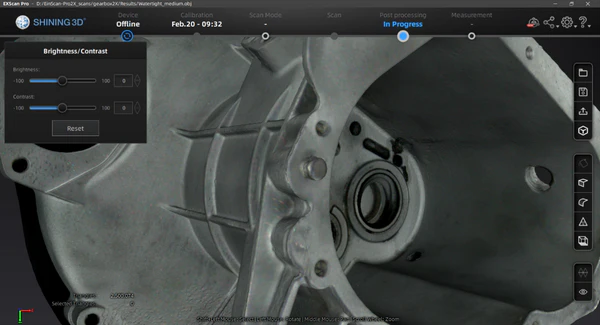
A 3D scanner is a device that captures the exact shape, size, and surface details of a physical object. It collects thousands or even millions of measurement points, creating a digital 3D model that can be edited, analyzed, or reproduced.
When paired with 3d scanner 3d printed workflows, scanned models can be converted into printable files, allowing users to recreate physical objects with exceptional precision.
Unlike traditional measuring tools, modern scanners complete complex scanning tasks within minutes while maintaining impressive accuracy.
Understanding the 3D Scanner 3D Printed Process
The 3d scanner 3d printed workflow combines two advanced technologies into one efficient production process.
The typical process includes:
- Scan the physical object using a 3D scanner.
- Convert the scan into a digital CAD model.
- Edit or optimize the design if needed.
- Export the file for 3D printing.
- Print a new physical model using a compatible 3D printer.
This streamlined process eliminates manual measurements and significantly reduces production errors.
What Is a Handheld 3D Scanner?
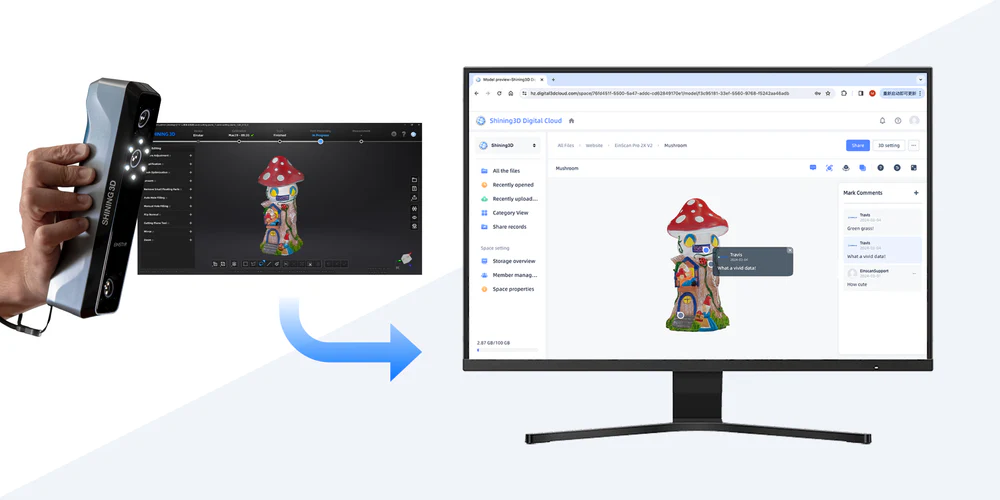
A handheld 3d scanner is a portable scanning device designed for flexibility and convenience. Instead of placing an object inside a fixed scanner, users simply move the scanner around the object to capture every detail.
Modern handheld scanners are lightweight, easy to operate, and capable of scanning objects of various sizes—from small mechanical parts to vehicles and even human bodies.
Because of their portability, handheld scanners have become popular in industries where mobility and speed are essential.
Advantages of Using a Handheld 3D Scanner
There are many reasons professionals prefer a handheld 3d scanner over traditional scanning equipment.
Portability
Users can scan objects anywhere without moving them to a laboratory or workstation.
Fast Data Collection
Complex shapes can be scanned in minutes, saving valuable production time.
High Accuracy
Advanced sensors produce highly detailed digital models suitable for manufacturing and inspection.
User-Friendly Operation
Most handheld scanners include intuitive software that simplifies scanning and model generation.
Versatility
They work on products of different sizes and materials, making them useful across multiple industries.
Benefits of 3D Scanner 3D Printed Technology
The combination of 3d scanner 3d printed technology offers numerous benefits.
Faster Product Development
Designers can quickly scan prototypes, make improvements, and print updated versions without starting from scratch.
Reduced Manufacturing Costs
Digital workflows minimize material waste and reduce expensive production errors.
Improved Quality Control
Manufacturers compare scanned models against original CAD files to identify defects before mass production.
Reverse Engineering
Old or discontinued parts can be scanned and reproduced accurately using 3D printing.
Custom Manufacturing
Businesses can create personalized products tailored to customer requirements.
Applications Across Different Industries
Manufacturing
Factories use 3d scanner 3d printed systems for inspection, rapid prototyping, and replacement part production.
Automotive Industry
Engineers scan engine components, body panels, and mechanical parts for redesign and testing.
Healthcare
Doctors use handheld 3d scanner technology to create customized prosthetics, dental models, and surgical guides.
Architecture
Historic buildings and monuments can be scanned digitally for restoration projects.
Aerospace
Aircraft manufacturers rely on accurate scanning to inspect complex components and improve production quality.
Education
Universities and research institutions use scanning technology for engineering, archaeology, and scientific research.
Why Businesses Prefer Handheld 3D Scanners
Businesses appreciate the flexibility provided by a handheld 3d scanner.
Instead of transporting heavy equipment or products, technicians simply carry the scanner to the worksite. This reduces downtime while increasing productivity.
Portable scanners are especially useful in construction sites, factories, museums, and outdoor locations where traditional scanners may not be practical.
How 3D Printing Complements Scanning
Scanning creates the digital model, while printing transforms that model into a real object.
The 3d scanner 3d printed workflow enables businesses to:
- Duplicate damaged components
- Create functional prototypes
- Manufacture customized products
- Preserve historical artifacts
- Produce low-volume replacement parts
- Accelerate product innovation
This seamless integration has become one of the biggest drivers of Industry 4.0.
Choosing the Right Handheld 3D Scanner
Selecting the right handheld 3d scanner depends on several factors.
Accuracy Requirements
Industrial applications demand higher precision than educational projects.
Object Size
Some scanners perform better with small components, while others handle larger structures.
Software Compatibility
Ensure the scanner supports common CAD and 3D printing formats.
Scanning Speed
Faster scanners improve productivity for commercial use.
Budget
Choose a scanner that balances features with your business needs.
Future of 3D Scanner 3D Printed Technology
The future of 3d scanner 3d printed solutions looks extremely promising.
Artificial intelligence, cloud computing, and automation are making scanning systems smarter and more efficient. Future scanners will automatically recognize objects, improve mesh quality, and reduce editing time.
Meanwhile, 3D printers continue to evolve with stronger materials, higher precision, and faster production speeds.
Together, these innovations will transform manufacturing, healthcare, education, and engineering for years to come.
Common Challenges
Despite their advantages, there are still a few challenges.
Highly reflective or transparent surfaces may require special preparation before scanning.
Large-scale industrial projects often generate massive data files that require powerful computers for processing.
However, ongoing technological improvements continue to reduce these limitations every year.
Conclusion
The combination of 3d scanner 3d printed technology with the handheld 3d scanner has completely changed how products are designed, manufactured, and improved. Businesses across numerous industries are adopting these technologies to increase efficiency, reduce costs, and produce highly accurate products.
Whether you’re creating prototypes, performing quality inspections, reverse engineering parts, or manufacturing custom products, modern scanning and printing solutions offer unmatched flexibility and precision. As technology continues to advance, organizations that invest in these tools will be better prepared for the future of digital manufacturing and innovation.