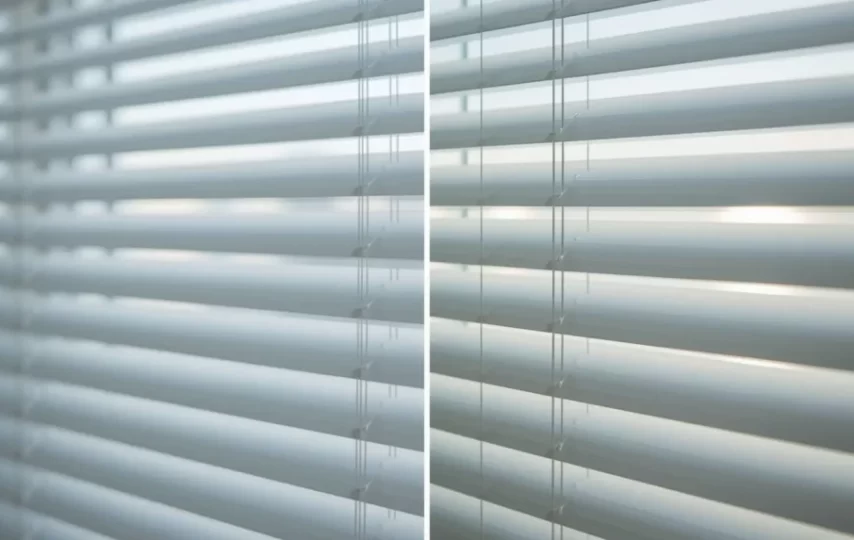

The angle of your blinds may seem like a small detail, but it can make a noticeable difference in how much light enters a room, how much glare you experience, and how easily people can see through your windows. Homeowners choosing custom blinds and shutters often focus on color, material, and style, but slat direction is just as important for day-to-day comfort. Adjusting the tilt of horizontal blinds allows you to manage natural light without necessarily closing the window covering completely. Understanding how different slat positions work can help you create a room that feels brighter, more private, and more comfortable throughout the day.
Why Blind Slat Direction Matters
Horizontal blinds typically have slats that can be tilted upward, tilted downward, or positioned nearly flat. Each position changes the path that sunlight takes as it enters the room and changes the viewing angle through the window. Because sunlight shifts throughout the day, the most effective slat direction may also change between morning, afternoon, and evening.
Slat direction matters for privacy for the same reason. A person outside your home sees the window from a particular angle, and changing the slats can interrupt that line of sight. The goal is often to find the right balance between allowing natural light inside and preventing an unobstructed view of the room.
Tilting Blind Slats Up for More Privacy
Tilting horizontal blind slats upward is often an effective choice when privacy is the priority. With the inside edge of the slats angled upward, the openings between them are directed more toward the ceiling than straight toward the room. That positioning can make it harder for someone standing outside at ground level to see directly inside.
Upward-tilted slats can be particularly useful in rooms located on the first floor or facing a sidewalk, neighboring property, or busy street. Some daylight can still enter, but it is redirected upward rather than traveling directly into the room. This can create softer illumination while reducing both visibility and harsh direct sunlight.
Situations where upward-facing slats may be useful include:
- Bedrooms facing a neighboring house
- First-floor bathrooms
- Living rooms near sidewalks or streets
- Home offices requiring daytime privacy
- Windows exposed to strong direct sunlight
- Rooms where you want natural light without a clear outside view
However, slats do not provide absolute privacy unless the blinds are fully closed. Small gaps may still allow limited visibility depending on the angle, lighting conditions, window height, and position of the viewer.
Tilting Blind Slats Down for More Daylight
Tilting the slats downward can allow more light to travel deeper into a room. In this position, the interior edge of the slats angles toward the floor, allowing sunlight to enter through the openings and travel downward. This can make the space feel brighter without requiring you to raise the blinds completely.
The tradeoff is that downward-facing slats can sometimes provide less privacy, particularly during the day when someone outside has a favorable viewing angle. This is especially important for windows located at eye level. Depending on the height of the window and the viewer, the openings may provide a clearer line of sight into the room.
Downward slats can work well when maximizing daylight is more important than privacy. For example, homeowners may prefer this position in second-story rooms, kitchens overlooking private backyards, or windows that do not face neighboring properties.
How Slat Direction Helps Reduce Glare
Glare occurs when excessively bright light enters your field of vision or reflects from a surface such as a television, computer monitor, polished countertop, or glass table. Direct sunlight can make screens difficult to see and may create uncomfortable brightness in living rooms and workspaces. Adjusting the angle of your blinds can reduce glare while preserving some natural light.
Instead of closing the blinds completely, try tilting the slats until direct sunlight is redirected away from the screen or seating area. Upward-facing slats can send more light toward the ceiling, where it becomes more diffuse before illuminating the rest of the room. This often creates more comfortable ambient light.
The ideal angle depends on where the sun is positioned relative to the window. East-facing windows may require more adjustment in the morning, while west-facing windows often experience stronger glare later in the day. South-facing windows can receive substantial sunlight for longer periods, depending on season and surrounding structures.
Best Slat Direction for Computer Screens and TVs
Home offices are one of the places where blind slat direction makes the biggest practical difference. A window positioned behind or beside a computer monitor can create reflections and contrast that make the screen uncomfortable to view. Completely darkening the room may solve the glare problem, but it also removes valuable daylight.
Tilting the blinds upward can often redirect incoming light toward the ceiling rather than allowing it to strike the monitor directly. You can then fine-tune the angle until reflections are minimized. If the sunlight is coming from above or from an unusual direction, a slightly downward tilt may work better.
Television rooms benefit from similar adjustments. If sunlight hits the screen during a particular time of day, changing the slat angle may prevent the reflection without requiring the blinds to remain fully closed for hours.
Daytime Privacy Versus Nighttime Privacy
Lighting conditions have a major impact on privacy. During the day, a bright outdoor environment and darker indoor space often make it harder for someone outside to see through a window. Properly angled blinds can further interrupt the view while still admitting daylight.
At night, the situation reverses. Interior lights make the inside of your home brighter than the outside, which can make occupants and furnishings much easier to see through uncovered portions of a window. Tilting the blinds may help, but fully closing them generally provides greater privacy than leaving noticeable gaps between slats.
For bedrooms, bathrooms, and other privacy-sensitive areas, homeowners may want window treatments that close securely rather than depending only on slat positioning. Custom-fitted products can also help minimize excessive gaps around the sides of the window treatment.
Window Height Changes the Best Slat Position
The height of the window influences which direction provides the most privacy. On a first-floor window, a person outside may be viewing the blinds straight ahead or slightly upward. Angling the slats upward often blocks that line of sight effectively.
Second-story windows are different because people outside are generally looking upward. Depending on the window’s position, downward-facing slats may sometimes obscure more of the interior from that viewing angle. This is why there is no single slat direction that works perfectly for every window.
A useful approach is to stand outside and look toward the window from the areas where privacy matters most. Have someone inside adjust the slats until you identify the angle that best limits visibility while maintaining the amount of daylight you want.
Consider the Direction Your Windows Face
Window orientation can help determine how frequently you need to adjust your blinds. Because the sun moves across the sky throughout the day, different sides of a house experience different lighting patterns. Understanding those patterns can make glare management easier.
In general:
- East-facing windows receive stronger direct sunlight in the morning.
- West-facing windows often experience intense afternoon and evening sunlight.
- South-facing windows may receive substantial sunlight throughout much of the day.
- North-facing windows generally receive softer, more indirect natural light in the Northern Hemisphere.
These differences can influence both comfort and privacy. A west-facing home office, for example, may feel comfortable most of the day but develop serious screen glare late in the afternoon. Adjustable blinds let you respond to those changing conditions without completely blocking the window.
Material and Slat Size Also Affect Light Control
Slat direction is only one part of the equation. The width, thickness, and opacity of the slats also influence how much light passes through a window covering. Wider slats generally require fewer individual pieces to cover the window, which can create a cleaner appearance and different viewing angles compared with narrower slats.
Material matters as well. Wood, faux wood, aluminum, and other blind materials interact differently with light and can create different visual effects. Opaque slats block direct light more completely, while the finish of the material may influence how much light reflects into the room.
This is one advantage of choosing custom blinds and shutters rather than relying solely on standard-sized window treatments. Measurements, materials, slat dimensions, and operating styles can be selected with the room’s specific lighting and privacy needs in mind.
Combining Blinds With Other Window Treatments
Some homeowners want maximum flexibility rather than depending on one window covering for every situation. Layering blinds with curtains, drapery, or other treatments allows you to adjust privacy and light throughout the day. Blinds can handle routine light control while secondary coverings provide additional privacy or room darkening when needed.
For example, you might keep blinds partially tilted during daylight hours and close curtains at night. In a bedroom, blinds can provide daytime privacy while heavier drapes help block early morning sunlight. Layered treatments can also add texture and visual depth to the room.
FAQs About Blind Slat Direction
Which way should blinds face for the most privacy?
For many first-floor windows, tilting horizontal slats upward can provide greater daytime privacy because it reduces the direct viewing angle from outside. The best direction still depends on window height and the viewer’s position.
Which direction is best for reducing glare?
Tilting slats so direct sunlight is redirected away from screens and reflective surfaces usually works best. An upward tilt often helps by sending light toward the ceiling.
Should blinds face up or down at night?
For nighttime privacy, closing the blinds as fully as possible is generally more important than choosing a partially upward or downward angle. Interior lighting can otherwise make the room easier to see from outside.
Can people see through tilted blinds?
Sometimes. Visibility depends on slat angle, window height, lighting conditions, and the viewer’s location. Fully closing the slats provides greater privacy than leaving them partially open.
Do blinds need to be completely closed to stop glare?
Not necessarily. Often, adjusting the slats until direct sunlight is redirected away from your eyes, television, or computer screen is enough to significantly reduce glare.
Does the direction a window faces affect blind positioning?
Yes. East-facing windows may need more adjustment in the morning, while west-facing windows often require additional glare control in the afternoon. Sun exposure also changes seasonally.
Are custom blinds better for privacy?
Custom-fitted blinds can provide better coverage because they are sized specifically for the window. A more precise fit can reduce excessive gaps around the treatment and give you more effective control over light and visibility.
Get Better Control Over Privacy and Natural Light
Blind slat direction gives you a simple way to change how a room feels without raising or lowering the blinds every time the sun moves. Tilting slats upward can often improve privacy and soften incoming light, while tilting them downward may allow more daylight into the space. The right choice ultimately depends on the location of the window, the direction it faces, the time of day, and how much privacy the room requires.
When selecting custom blinds and shutters, think beyond appearance alone. The right slat size, material, fit, and operating design can make it easier to manage glare, protect privacy, and enjoy natural light throughout the day. By choosing window treatments based on how each room is actually used, you can create a more comfortable, functional home.