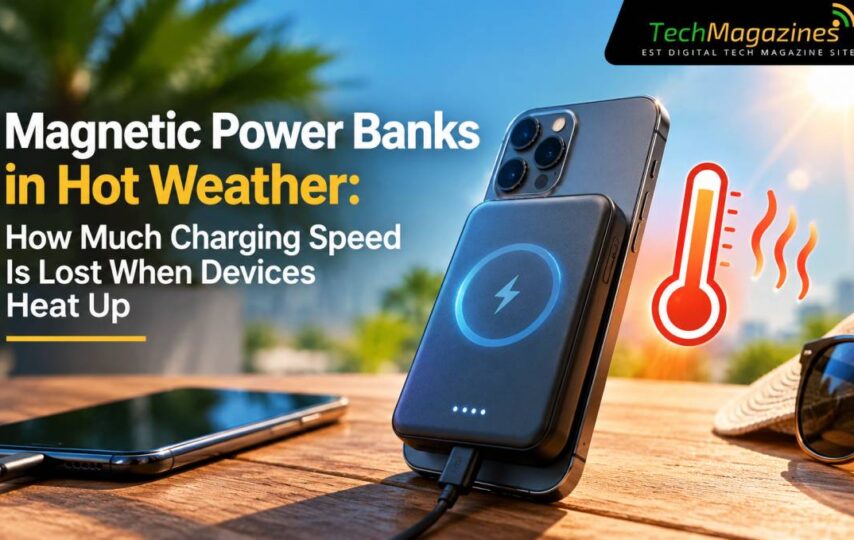

Magnetic Power Banks in Hot Weather are frequently not able to charge at the maximum wattage advertised. If a phone and power bank get too hot, both will automatically limit charging power to help preserve battery life, so actual charging speed may be much lower than what is advertised on the box.
Why magnetic charging produces heat
Magnetic power bank wirelessly charges a phone with aligned coils. Wireless power transfer is less efficient than a cable, and some of the energy that is not transferred to the battery is lost as heat.
Heat management is more difficult due to the magnetic design. The power bank is attached to the back of the phone, which means that there is not much airflow between the two heat-generating devices.
A magnetic pack traps heat at the contact surface, whereas a wired charger keeps the power source separate from the phone. Faster wireless charging will produce more heat than slower wireless charging.
Why charging slows down
Battery-management systems are used to monitor temperature in phones and power banks. Thermal throttling is the automatic reduction of input or output power as internal heat approaches a safe limit.
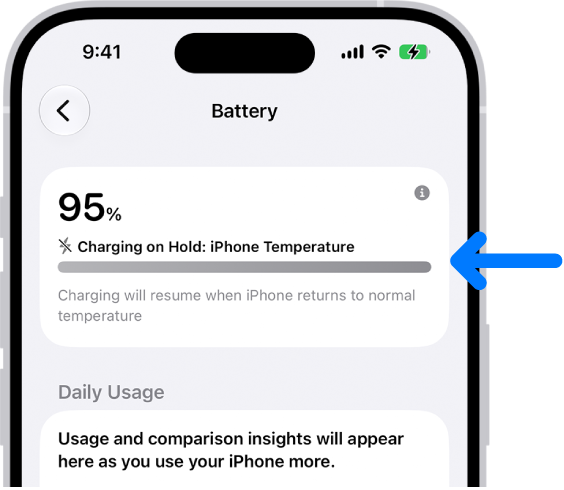
Apple says that the iPhone batteries are protected by limiting charging in hot and cold environments. When an iPhone is too hot, the operating system will automatically reduce its charging speed or even stop charging until it cools down to a safe temperature.
According to Apple, these protections apply to phones charged via cable, MagSafe charger, or other wireless chargers, including Magnetic Power Banks in Hot Weather. This slowdown is not necessarily a defect, but rather is intentional. If the phone keeps charging at its maximum power setting when it is hot, it would put a greater strain on its lithium-ion battery.
How much speed is lost?
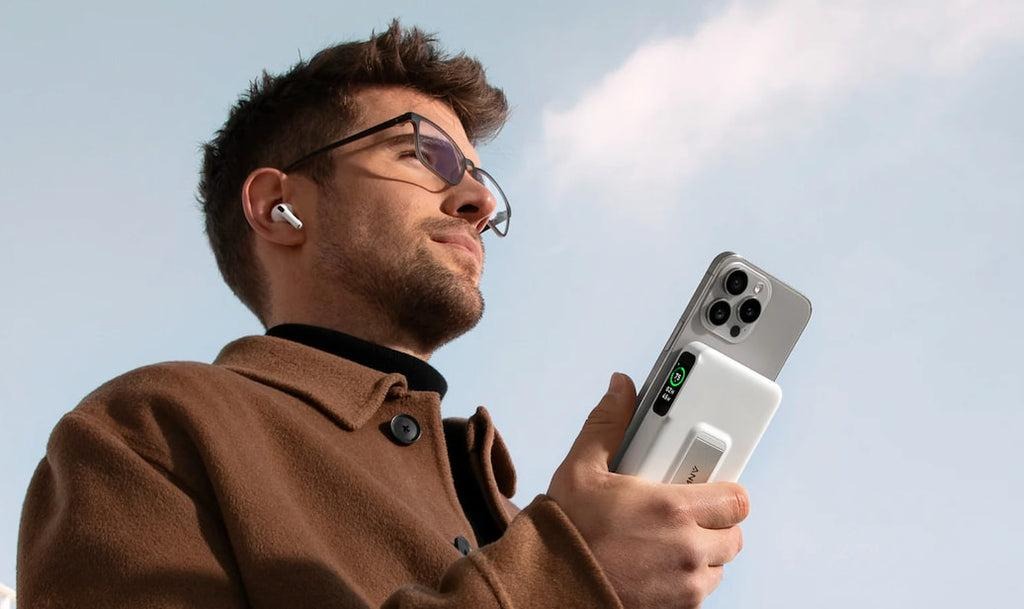
For Magnetic Power Banks in Hot Weather, there is no official percentage of charging efficiency loss. It varies depending on the phone’s model, power bank quality, ambient temperature, battery level, case thickness, coil position, and phone usage while charging.
The main point is that the loss may be significant. For example, the magnetic charger stating 15W output will provide a burst of 15 watts on a cold day, but the output will drop as your phone and the charger warm up. Therefore, on a hot summer day, you may notice that your phone stops charging or charges at a much slower rate.
So, it is not enough to look at the maximum wattage provided by the charger. The power bank’s performance will also depend on how long it will maintain the maximum output. Thus, if you have two similar chargers, but one can provide 15 W for a short time while the other delivers 10 W constantly, the latter option will charge your phone faster.
Heat affects battery health too
Apple recommends that the iPhone be not used or charged in ambient temperatures above 35°C (95°F), as this will shorten battery life. Apple also says that the comfort zone for their devices is 16°C to 22°C (62°F to 72°F).
Phones can be used at a broader range, but extended time at high temperatures is bad for battery life. Therefore, a magnetic power bank should not be used to “force” fast charging in extreme temperatures. The phone’s protective limits are in place to avoid unnecessary battery damage.
The hidden cost: wasted energy
Wireless charging is more energy-intensive than wired charging and a lot of that wasted energy is converted into heat. This is a problem in hot weather, as the charging speed decreases with heat, and inefficient wireless transfer generates more heat.
When the coils of the phone and power bank are not aligned, the energy lost will be dissipated as heat instead of powering the battery. A thick case, uneven surface or improper installation can thus decrease the effective charging speed before the outdoor temperature is a factor.
This also implies that the stored power in the power bank could be discharged quicker than anticipated. The loss of energy due to heat does not increase the percentage points available to the user, so the same battery capacity provides less usable energy.
How to reduce the slowdown
Thermal protection can’t be circumvented, but the conditions that cause it can be minimized.
- Charge in the shade or indoors, not in the sun.
- Do not leave the phone and the power bank in the parked car, on the dashboard or in a hot pocket.
- Remove a thick or insulating case while magnetic charging.
- When speed is the most important factor in charging, use the power bank’s USB-C cable.
- Do not play games, navigate, record videos or do any other demanding activity during the charging process.
- Look for a magnetic pack that has good thermal management characteristics, such as temperature protection and a design that provides steady output rather than only peak watts.
Apple is particularly cautionary about placing iPhones in hot areas, and recommends keeping them away from direct sunlight for long periods of time.
What to look for when buying
When choosing Magnetic Power Banks in Hot Weather, avoid focusing only on maximum wireless output. The “15W” or “25W” rating is a maximum under ideal conditions, and may not be the speed you will achieve after prolonged use in hot conditions. Instead, check for consistent performance, quality thermal design, correct coil positioning and safety features.