
You type your vehicle details into a website, hit submit, and instantly, your phone starts ringing off the hook. Within an hour, your email inbox is flooded with drastically different price estimates to move your car across the country. One company promises to do it for an unbelievably low rate, while another asks for double the price. This chaotic scenario is the reality for most people trying to figure out shipping logistics for the first time. The digital tools designed to make this process easier often end up creating far more confusion than clarity.
However, it does not have to be an overwhelming experience. When utilized correctly, these online platforms provide incredible leverage. They give you the raw market data necessary to negotiate fair rates, optimize your shipping schedule, and completely bypass predatory brokers. Mastering these digital platforms is about knowing exactly what data to input, understanding how the underlying algorithms generate their numbers, and recognizing when a displayed price is nothing more than a digital bait-and-switch. Here is exactly how to take control of the quoting process.
The Mechanics Behind the Numbers: Lead Generators vs. Real-Time Engines
Before you start filling out any online forms, you need to understand what happens on the backend of these websites. Not all quote-generating engines are built with the same intentions. The vast majority of websites you encounter in a quick search are simply lead-generation algorithms. These companies do not actually ship cars, and they do not pull live data from the freight market. Instead, they operate as digital middlemen. You input your data, and their system instantly sells your contact information to a dozen different brokerages. Those brokers then manually bid for your attention, resulting in the avalanche of phone calls and spam emails.
Conversely, direct pricing engines operate completely differently. Instead of selling your data, they pull real-time metrics from national dispatch load boards. They analyze current diesel fuel prices, historical route density, driver availability, and seasonal demand to generate a baseline estimate based on hard facts. Understanding this critical distinction is your first line of defense. You want to use a tool that genuinely analyzes the heavy freight market, not one that simply auctions off your phone number to the highest bidder. Recognizing the difference ensures you receive a realistic reflection of what a truck driver will actually charge today.
Essential Data: The Exact Inputs That Dictate Your Rate
The accuracy of any digital estimate relies entirely on the precision of the details you provide. If you generalize your information, the algorithm will give you a generalized, and ultimately useless, price. To get an estimate you can actually rely on, you must treat the input form like a binding legal document.
First, never use broad city names or state-to-state generalizations. A route from “California to Texas” is a mathematically useless metric in the freight industry. You must use exact zip codes. Moving a vehicle from a major industrial hub in downtown Los Angeles to a rural, unpaved driveway two hours outside of Dallas costs significantly more than a straight shot between two major highway terminals.
Second, be incredibly specific about your vehicle’s physical footprint. “An old Ford truck” is not a usable metric for a dispatcher. You need the exact year, make, model, and trim level. A lifted F-250 with oversized tires, a custom roof rack, and a heavy winch takes up drastically more trailer space and weight capacity than a standard F-150. If you fail to declare custom modifications online, the rate you see on the screen will be instantly voided the moment the driver physically sees the oversized truck.
Finally, operability is a massive, non-negotiable pricing factor. If the car does not start, steer, and brake perfectly, it requires a specialized carrier truck equipped with a heavy-duty winch system to safely load and unload it. Checking the “operable” box on a digital form when the car actually has a dead battery or a blown transmission will generate an artificially low estimate that completely collapses on pickup day, triggering immediate surcharges.
Open vs. Enclosed Transport: Testing Variables Online
One of the greatest advantages of using digital quoting tools is the ability to run multiple scenarios without speaking to a sales representative. The most significant variable you can test is the physical transport method.
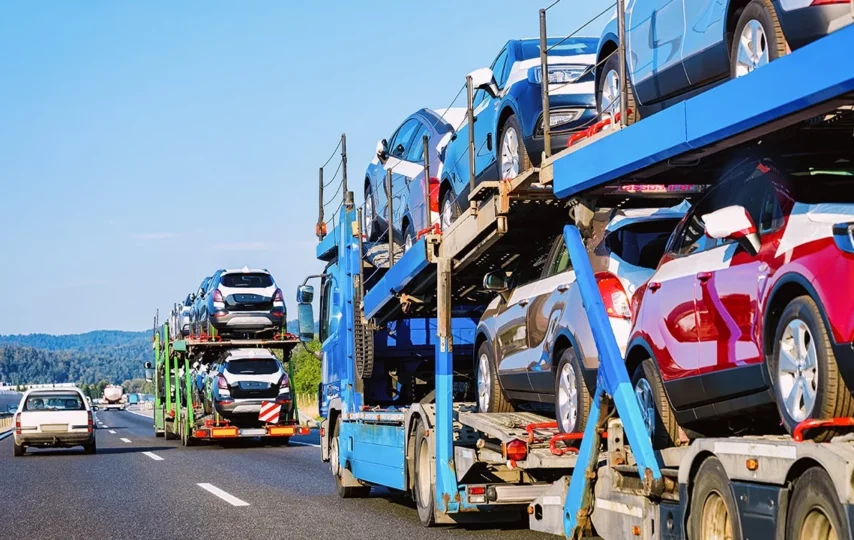
By toggling between open and enclosed transport options on a reliable platform, you can instantly see the exact price gap for your specific route. Open transport, where your vehicle rides on a multi-level steel trailer exposed to the elements, is the industry standard and the most budget-friendly option. Enclosed transport utilizes a specialized trailer with solid walls, protecting the vehicle completely, but drastically reducing the trailer’s capacity.
A high-quality online tool allows you to see if the enclosed premium is worth the cost for your specific situation. If you are moving a standard Honda Civic, the tool will quickly show you that paying an extra 40% for enclosed shipping makes zero financial sense. However, if you are shipping a restored 1967 Mustang, adjusting that single variable online helps you budget accurately for the premium protection that classic car requires.
How to Effectively Analyze and Compare Quotes
Once the numbers actually start rolling in, your job shifts from simple data entry to active market analysis. The biggest and most expensive mistake consumers make at this stage is automatically sorting the results from lowest to highest and blindly booking the cheapest option on the screen. In the heavy trucking industry, an aggressively low number is rarely a lucky break; it is almost always a calculated trap.
To navigate this effectively, you need to establish a legitimate baseline average. Throw out the absolute highest number you receive, as it likely comes from a broker with high overhead. More importantly, immediately discard the two absolute lowest numbers. The tight cluster of prices resting comfortably in the middle represents the actual, genuine market rate to move your specific vehicle on that specific route right now.
When you are actively reviewing auto transport quotes, you must dig past the bottom line and look at the actual terms of service. Does the quoted rate include full door-to-door service, or does the fine print quietly assume you will drop the vehicle off at a distant commercial terminal? Does the estimate include the broker’s administrative fee, the driver’s total pay, and all necessary fuel surcharges, or are there hidden taxes waiting at the end? A reliable online tool provides a highly detailed, itemized breakdown, leaving absolutely zero room for sudden upcharges when the truck arrives.
The Danger of the “Guaranteed” Digital Price
You must remember that a digital estimate is exactly that – an estimate. No computer algorithm on earth can predict sudden, severe snowstorms in the Rocky Mountains, a sudden overnight spike in national diesel prices, or a localized shortage of open-air trailers in your specific county. Therefore, you must view the number on your screen as a solid foundational baseline rather than a legally binding, unbreakable contract.
Predatory operators exploit this digital disconnect aggressively. They manipulate their online tools to spit out artificially suppressed rates just to get your attention. You see a number that is $400 cheaper than the market average, you eagerly type in your credit card to pay the deposit, and then you wait. Weeks pass because no actual truck driver on the national board will accept the heavy labor for that ridiculously low rate.
Eventually, the broker calls you back, claiming the freight market “suddenly shifted overnight,” and demands an extra $500 to actually dispatch a truck. You can bypass this entire scam by relying on tools that prioritize data accuracy over sales psychology. A realistic online estimate will always look slightly more expensive on day one, but it ultimately saves you from being held hostage on day fourteen.
Protecting Your Privacy With Dedicated Tools
The most valuable asset you have during the initial research phase is your personal contact information. If you input your primary cell phone number and personal email address into a generic, low-quality lead-aggregation site, you surrender your privacy instantly.
To protect yourself, completely change your strategy. Use standalone, data-driven calculation engines that do not require an email address, phone number, or home address just to show you a baseline price on the screen. These dedicated platforms operate on transparency, allowing you to run a dozen different timeline scenarios and map out your budget in total peace.
By utilizing a sophisticated online shipping cost calculator, you gain direct access to the exact same market data the professional dispatchers use, completely anonymously. You can evaluate how the seasonal “snowbird” migration affects rates heading south in the fall, or see how shifting your pickup date by just one week lowers the bottom line. Once you know exactly what your specific route should cost, you can then reach out directly to two or three highly-rated companies of your choosing. You initiate the contact, you control the conversation, and you lead the negotiation.
Conclusion
Navigating the logistics of moving a vehicle across the country no longer requires relying blindly on the verbal promises of a single, highly-commissioned salesperson. The digital tools available today put immense analytical power directly into your hands, provided you know how to wield them correctly. By understanding exactly what data is required, aggressively protecting your personal contact information, and learning how to identify a legitimate baseline market rate amidst the noise, you strip away the stress and uncertainty of the shipping process. The numbers on your screen are simply tools for leverage. Use them wisely to weed out the dishonest operators, negotiate fair, transparent terms, and secure a reliable trucking professional who will treat your vehicle with the exact level of care it demands.