
Laser cutting and engraving depend as much on material selection as they do on machine capability. Choosing the wrong material can result in poor finish quality, excessive wear on equipment, or even safety issues. For businesses and makers looking to achieve reliable results, a clear understanding of laser materials is essential. Each material reacts differently to laser energy, and knowing what works—and what doesn’t—can significantly improve both quality and efficiency.
Why Material Compatibility Matters
Laser machines operate by directing concentrated heat onto a surface, either engraving or cutting based on the power and settings used. Not all materials respond well to this process. Some engrave cleanly with sharp detail, while others melt, burn unevenly, or release harmful fumes.
Material compatibility affects several factors, including edge quality, engraving clarity, production speed, and overall safety. By matching the right material to the correct machine settings, users can avoid wasted stock and achieve more consistent outcomes.
Common Materials That Work Well
Several materials are widely used in laser cutting and engraving due to their predictable performance.
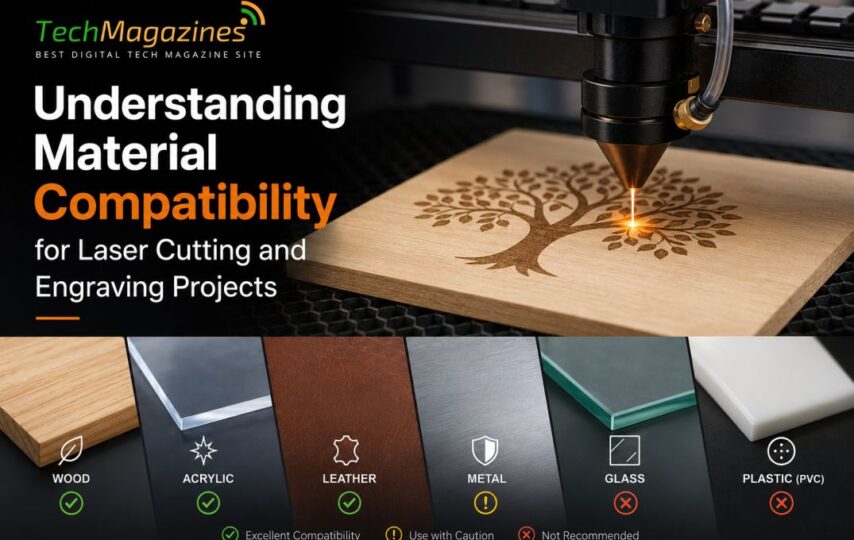
Wood is one of the most forgiving and versatile options. It engraves with a natural contrast and cuts cleanly, especially when using hardwoods or high-grade plywood. Its wide availability makes it a practical choice for both decorative and functional applications.
Acrylic is another popular choice, particularly for signage and display items. It cuts with smooth, polished edges and allows for sharp engraving. Cast acrylic, in particular, produces better engraving results than extruded types.
Leather works well for engraving and cutting, offering a distinctive finish suitable for fashion items, accessories, and branding. Natural leather generally performs better than synthetic variants, which may not respond as consistently.
Paper and cardboard are also suitable materials, especially for packaging, prototyping, and craft applications. They cut quickly and cleanly, making them ideal for high-volume, low-cost production.
Materials That Require Caution
Some materials can be used with laser systems but require careful handling and the correct settings.
Certain plastics, for example, can be engraved or cut effectively, but results vary depending on the composition. ABS plastic tends to melt rather than cut cleanly, while polycarbonate may discolour or produce rough edges. Testing is critical when working with unfamiliar plastics.
Coated metals can be marked using lasers, particularly when using marking compounds or specialised systems. However, standard CO₂ lasers cannot cut or deeply engrave most bare metals without additional equipment.
Glass is another material that can be engraved but not cut using most standard systems. Engraving on glass produces a frosted appearance, but achieving consistent results requires even surfaces and careful control of power settings.
Materials to Avoid
There are certain materials that should not be used with laser machines due to safety risks.
PVC (polyvinyl chloride) is one of the most important examples. When exposed to laser heat, it releases chlorine gas, which is harmful to both the operator and the machine. This gas can also corrode internal components, leading to costly damage.
Vinyl materials pose similar risks, as do some synthetic foams that release toxic fumes when heated. Unknown or mixed materials should also be avoided unless their composition is confirmed, as they may contain harmful substances.
Being selective about materials is not just about quality—it’s also about maintaining a safe working environment.
Matching Materials to Applications
Different projects call for different material properties. Understanding how materials behave allows users to make better choices based on the intended use.
For detailed engraving work, materials with a consistent surface—such as acrylic or hardwood—deliver the best results. For structural or functional parts, materials that cut cleanly and maintain strength after processing are more suitable.
In signage and branding, contrast plays a key role. Materials that naturally produce high contrast when engraved, or can be easily finished, tend to deliver stronger visual impact. Matching the material to the purpose ensures both form and function are achieved.
Testing and Calibration
Even with the right material, achieving consistent results requires proper calibration. Variations in thickness, density, and surface finish can affect how a material responds to the laser.
Running test cuts or engravings before full production helps identify the optimal settings for power, speed, and frequency. Keeping records of these settings for each material type can save time and reduce trial and error in future projects.
Regular testing also helps account for changes in material batches, as not all supplies are identical—even when sourced from the same vendor.
Storage and Handling Considerations
Material condition can impact performance as much as material type. Wood, for example, can absorb moisture, which affects how it engraves and cuts. Warped or damp materials may lead to uneven results or incomplete cuts.
Proper storage—keeping materials dry, flat, and clean—helps maintain consistency. Protective coverings should be left in place until just before use to prevent scratches and contamination.
Handling materials carefully also reduces waste, particularly for higher-value items like acrylic sheets or specialty substrates.
Conclusion
Understanding material compatibility is a key part of successful laser cutting and engraving. By selecting appropriate materials, avoiding hazardous options, and fine-tuning settings through testing, users can achieve cleaner results and more efficient production. Whether working on custom products, signage, or industrial components, material choice remains a central factor in delivering reliable, high-quality outcomes.