
Choosing the right equipment for outdoor material handling can make a major difference in job site productivity, safety, and cost control. Two machines that are often compared are telehandlers and rough terrain forklifts. Both are built to move heavy materials across uneven ground, and both are commonly used in construction, agriculture, lumber yards, and industrial sites. However, they are not the same machine, and using one in place of the other can create efficiency problems or safety risks. Understanding telehandler vs. rough terrain forklift differences helps contractors, fleet managers, and business owners select the right machine for the work ahead.
Audio workflow note: for audio editing and mastering, this Sound Forge Pro is a useful related reference.
What Is a Telehandler?
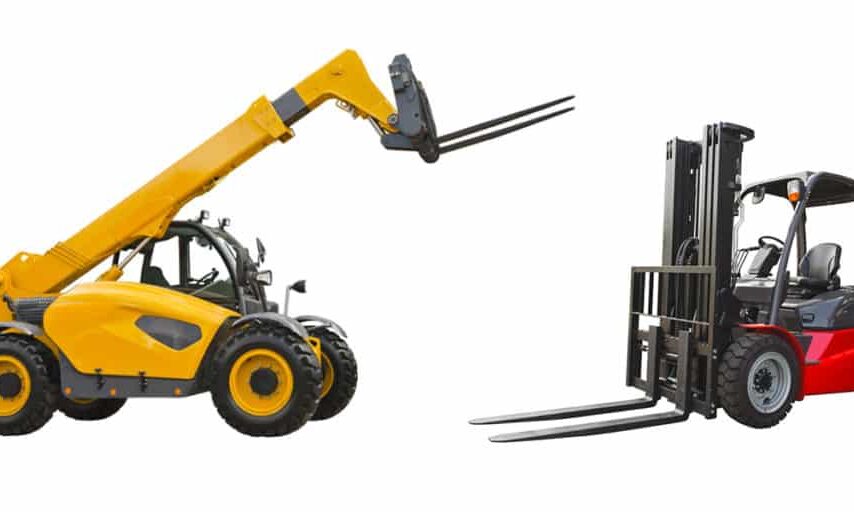
A telehandler, also called a telescopic handler, is a material handling machine with an extendable boom. This boom allows the operator to lift loads upward, forward, and over obstacles. Unlike a standard forklift mast, the boom can reach out horizontally, which makes the telehandler especially useful when materials need to be placed at height or across a distance. Telehandlers are often used to move pallets of brick, roofing materials, lumber, trusses, hay bales, and construction supplies. Many models also accept attachments such as buckets, lifting hooks, work platforms, and grapples, giving them more versatility than a traditional forklift.
The biggest advantage of a telehandler is reach. On a construction site, for example, a telehandler can place materials on a second floor, over a wall, or across rough ground where a standard lift truck cannot easily travel. Operators can use the boom to position loads more precisely in areas that are difficult to access. This makes telehandlers valuable for framing, masonry, roofing, landscaping, and agricultural operations. However, the extended boom changes the machine’s load capacity, so operators must pay close attention to load charts and safe operating limits.
What Is a Rough Terrain Forklift?
A rough terrain forklift is a forklift designed specifically for outdoor use on uneven, muddy, rocky, or unfinished surfaces. Instead of the smaller tires and lower clearance found on warehouse forklifts, rough terrain forklifts typically have large pneumatic tires, higher ground clearance, and rugged frames. These features allow them to travel safely across dirt lots, gravel yards, construction sites, farms, and outdoor storage areas. Rough terrain forklifts usually lift loads vertically using a mast, much like a conventional forklift. Their main purpose is to pick up, transport, and stack palletized materials in tough outdoor environments.
The best rough terrain forklift for a job depends on the surface conditions, load weight, lift height, and turning space available. Some models are compact and maneuverable, while others are large machines designed for heavy loads and high-capacity lifting. Many rough terrain forklifts are used in lumber yards, masonry supply yards, nurseries, oil and gas sites, and remote industrial locations. They are especially useful when materials need to be moved repeatedly across the same outdoor work area. While they do not offer the same forward reach as telehandlers, they often provide excellent stability and straightforward pallet handling.
Key Difference: Reach and Lift Style
The most important difference between a telehandler and a rough terrain forklift is how each machine lifts and places materials. A telehandler uses a telescoping boom that can extend forward and upward. This allows it to reach over obstacles, place materials on elevated surfaces, and deliver loads into areas that are not directly in front of the machine. A rough terrain forklift uses a vertical mast that primarily lifts loads straight up and down. It is best suited for transporting and stacking materials when the machine can drive close to the loading or unloading point.
This difference affects how each machine performs on a job site. A telehandler is usually the better choice when materials need to be placed at height, across a distance, or beyond a barrier. A rough terrain forklift is often better when the task involves moving pallets from one outdoor location to another with minimal reach requirements. If the load must go onto a roof, through an upper-story opening, or over site obstacles, the telehandler has the advantage. If the job mainly involves unloading trucks, stacking pallets, or moving materials around a yard, a rough terrain forklift may be the more efficient option.
Key Difference: Stability and Load Capacity
Both machines can lift heavy materials, but their stability characteristics are different. Rough terrain forklifts typically carry loads closer to the machine’s center of gravity, especially when the mast is kept low during travel. This can make them feel more stable for straightforward pallet movement on outdoor terrain. Telehandlers, on the other hand, can lift and extend loads away from the machine, which changes the balance and reduces capacity as the boom extends. Because of this, telehandler operators must be especially careful with load charts, boom angle, extension length, and ground conditions.
Capacity ratings should never be compared by looking only at the maximum lift number. A telehandler may have a high-rated capacity when the boom is retracted, but that capacity can drop significantly when the boom is extended forward. A rough terrain forklift’s capacity is also affected by load center, mast height, attachments, and surface conditions, but it generally performs best with loads kept close to the carriage. Operators should also consider slope, soil firmness, tire condition, and weather. Safe performance depends less on the name of the machine and more on matching the machine’s real operating limits to the task.
Key Difference: Versatility and Attachments
Telehandlers are often considered more versatile because they can use a wide range of attachments. Forks are common, but many telehandlers can also use buckets, truss booms, lifting hooks, bale spears, sweepers, and platforms approved by the manufacturer. This flexibility allows one machine to perform multiple roles on a job site. A contractor might use a telehandler to unload pallets in the morning, lift roofing materials in the afternoon, and move loose material with a bucket later in the day. This multi-use capability can reduce the need for several different machines.
Rough terrain forklifts are more specialized, but that is not necessarily a weakness. Their design is focused on outdoor pallet handling, and they often perform that job very well. They are typically easier to use for repetitive loading, unloading, and stacking tasks. When a business mainly handles palletized inventory outdoors, a rough terrain forklift can be simpler, more direct, and more cost-effective. The right choice depends on whether the job requires broad versatility or dependable outdoor forklift performance.
When to Choose a Telehandler
A telehandler is usually the better choice when the job requires reach, height, or attachment flexibility. It is especially useful on construction sites where materials must be placed on elevated floors, rooftops, scaffolding areas, or hard-to-access locations. Telehandlers can also be valuable on farms and large properties where one machine needs to handle multiple types of work. Their ability to move loads forward and upward gives operators options that a mast-style forklift cannot provide. However, this versatility comes with the need for careful training and attention to operating limits.
A telehandler may be the right choice when you need to:
- Lift materials to upper floors or rooftops
- Reach over trenches, walls, or site obstacles
- Use different attachments for different tasks
- Handle construction materials in changing site conditions
- Place loads where the machine cannot drive directly
FAQ: Telehandler vs. Rough Terrain Forklift
Is a telehandler the same as a rough terrain forklift?
No, a telehandler is not the same as a rough terrain forklift. A telehandler uses an extendable boom that reaches forward and upward, while a rough terrain forklift uses a vertical mast. Both can work outdoors on uneven ground, but they are designed for different lifting tasks. A telehandler is better for reach and height, while a rough terrain forklift is better for direct pallet handling.
Which machine is safer on uneven ground?
Both machines can be safe on uneven ground when used correctly. Rough terrain forklifts are built specifically for rugged surfaces and can be very stable when carrying loads low and close. Telehandlers also perform well outdoors, but boom extension can affect stability more dramatically. The safest choice depends on load weight, ground conditions, operator training, and the specific task.
Can a telehandler replace a rough terrain forklift?
A telehandler can replace a rough terrain forklift in some situations, especially when reach and attachment flexibility are important. However, it may not be the most efficient choice for repetitive pallet movement in a yard. Rough terrain forklifts are often simpler and faster for basic loading, unloading, and stacking. The best decision depends on whether the job requires reach or straightforward transport.
What is the best rough terrain forklift for outdoor work?
The best rough terrain forklift is the one that matches your load capacity, lift height, terrain, and daily use needs. A compact model may be better for tight yards, while a higher-capacity model may be needed for lumber, masonry, or heavy industrial materials. Tire type, turning radius, fuel type, and service support should also be considered. Always compare the machine’s rated capacity with the actual loads you plan to move.
When to Choose a Rough Terrain Forklift
A rough terrain forklift is usually the better choice when the work involves moving palletized materials across outdoor surfaces. It is ideal for unloading flatbeds, transporting materials across a yard, stacking inventory, and feeding supplies to crews. If the machine can drive directly to the pickup and drop-off points, a rough terrain forklift can be faster and more practical than a telehandler. It may also be easier for operators who are already familiar with standard forklift controls. For businesses that need reliable outdoor material handling without extended reach, this machine is often the more efficient investment.
A rough terrain forklift may be the right choice when you need to:
- Move pallets across gravel, dirt, or uneven lots
- Unload trucks at outdoor job sites
- Stack materials in a yard or storage area
- Handle lumber, masonry, pipe, or bagged materials
- Prioritize simple operation and direct lifting
Cost, Training, and Maintenance Considerations
Cost is another factor when comparing these machines. Telehandlers are often more expensive to buy or rent because they offer more reach, more complexity, and greater attachment flexibility. Rough terrain forklifts may cost less depending on capacity and features, especially if the work is limited to basic outdoor lifting. Maintenance can also differ, since telehandlers have boom systems and additional hydraulic components that may require more inspection. Rough terrain forklifts are still rugged machines, but their simpler lift design can make maintenance more straightforward in some fleets.
Training is important for both machines, but telehandlers may require extra attention because load stability changes as the boom extends. Operators must understand load charts, attachment limits, boom angles, and how terrain affects stability. Rough terrain forklift operators must also be trained to handle slopes, soft ground, elevated loads, and visibility challenges. No matter which machine you choose, safety depends on qualified operators and routine inspections. The right equipment should always be paired with the right training program.
Final Thoughts: Which Machine Is Right for Your Job?
The choice between a telehandler and a rough terrain forklift comes down to how and where materials need to be moved. If your job requires lifting materials high, reaching forward, or using multiple attachments, a telehandler is likely the better option. If your work mainly involves moving palletized materials across rough outdoor surfaces, a rough terrain forklift may be more practical and cost-effective. The telehandler vs. rough terrain forklift decision should be based on reach, capacity, terrain, attachments, operator skill, and daily workflow. By matching the machine to the job instead of choosing based on appearance alone, you can improve productivity, reduce downtime, and create a safer work site.