
The commercial solar projects are growing rapidly. Companies, cities and big developers are trying to install panels before it gets too expensive or others get ahead. But one of the problems in commercial solar has not been the panels themselves, it has been the structures that hold them up. That is where prefabricated steel structures are making a difference.
The Old Problem with Solar Construction
In the past solar installations, big ones used to be built on site from scratch. Engineers would design the structure factories would make the parts and construction workers would put it all together on site. This process was slow, expensive. Had a lot of problems that could cause delays.
For someone trying to build a solar project like a 2-megawatt solar farm, waiting for weeks for the steel structure to be built on site is a big problem. It can cause the project to go over budget.. Every day that the project is delayed means less money saved on energy and less money made from the solar panels.
Prefabricated steel structures solve this problem.
What Prefabrication Actually Means in Solar Construction
Prefabrication refers to the process where the majority of the fabrication activities, such as engineering, cutting, drilling, welding and finishing, is carried out in a factory prior to sending it to the installation site. Each part is made to exact specifications checked for quality and shipped ready to be put quickly.
This change from building on site to building in a factory is a deal. It means that by relying on workers to figure things out on site project managers get a system that is designed specifically for their site with all the parts ready to go. This makes the installation process much faster.
Speed: The Visible Advantage
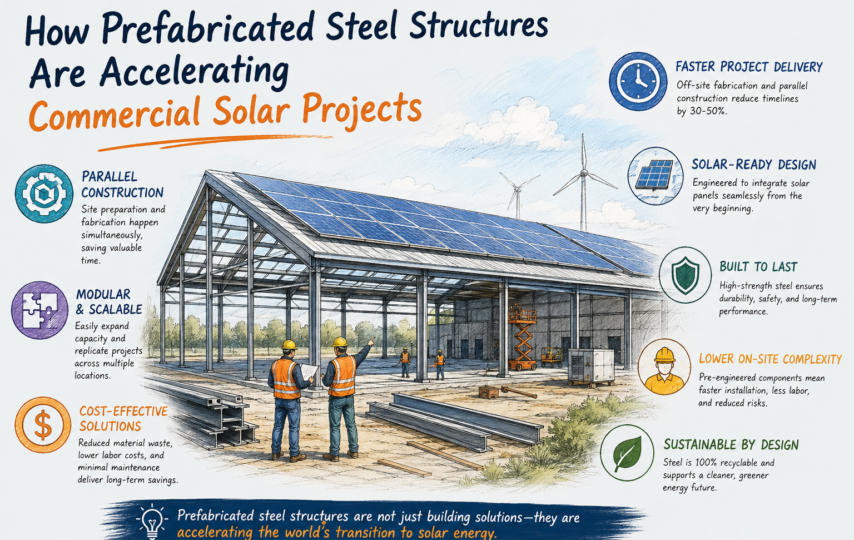
When a commercial solar project starts, speed is very important. There are deadlines to meet, like getting connected to the grid, getting permits and meeting tax credit deadlines. Prefabricated steel structures make the on-site construction phase much shorter.
Big solar farms that used to take weeks to build can now be put together in days. Rooftop solar systems benefit from lightweight, -made steel parts that reduce the time needed to lift them into place and minimize disruption to the building. Parking canopy systems, which are becoming very popular, are especially well-suited to prefabricated approaches. Modern solar carport structures are designed, made and shipped as kits that can be put together quickly turning a parking lot into a solar farm in a fraction of the time.
Quality Control and Engineering Precision
Building in a factory does more than just save time. It also means that the quality is much better. A factory has temperatures, uses precise equipment and has specialized workers who do the same job over and over. This means that the parts are made to exact specifications with tolerances and uniform finishes.
For solar developers this precision is very important. A steel structure that is not made right can cause problems with the solar panels like drainage issues or maintenance problems. A structure that is made easily holds the panels at the right angle and lasts for the 25-to-30-year life of the solar system.
The steel used in applications is also protected from rust with a special coating, which means it lasts longer and needs less maintenance. This is important for investors and asset managers who are looking at the long-term economics of a project.
Cost Efficiency Across the Project Lifecycle
The cost of prefabricated steel in solar is a good investment when you look at the whole project. Yes it may cost a bit upfront but it saves money in the long run. It reduces the number of labor hours needed on site, which means money spent on workers. It also means delays due to bad weather, which can save a lot of time and money.
Project managers also have overhead because the prefabricated system comes with detailed instructions and pre-made parts. This means mistakes and less supervision needed. Because the manufacturing timeline is controlled, project managers can plan better and align their finances with the project milestones.
When you add up all these savings across projects the financial case for prefabricated steel becomes clear. Developers who use prefabricated steel consistently report project timelines and better margins.
Versatility Across Commercial Applications
One of the strengths of prefabricated steel structures is that they can be used in many different applications. The same factory that makes a parking canopy system can also make ground-mount racking for a factory, rooftop systems for a store or elevated structures for a farm.
This versatility is important because commercial solar projects are often unique. A company might need panels on the ground on a roof and over a parking lot all on the same site. A prefabricated steel supplier with engineering capabilities can handle all these different projects using the same materials and finishes.
The modular design of prefabricated systems also means that projects can be scaled up or down. A company that installs a solar system today can easily add more panels later using the same structural system.
Environmental and ESG Considerations
Companies that care about sustainability are looking at the impact of their solar installations. Prefabricated steel structures do well in this analysis.
Steel is the recycled material in the world and the steel used in solar applications is often made with recycled content. Factory fabrication also generates more waste than building on site.. Because the steel is protected from rust it lasts longer and needs less maintenance.
For companies that have to report on their impact these attributes are important. A solar project built with prefabricated steel that has recycled content and documented environmental benefits fits well into sustainability reports.
Choosing the Right Structural Partner
The benefits of prefabricated steel are only realized when the fabricator is an expert in engineering. Not all prefabricated systems are the same. A solar developer should look for a fabricator that can do site- engineering, has good quality control and has experience with similar projects.
For developers who want to learn about prefabricated steel solar solutions there are many options available. To see what a purpose-built prefabricated steel solar solution looks like, you can learn more about the engineering and product capabilities of manufacturers.
The Competitive Advantage of Moving Faster
In the end the solar market rewards speed. A prefabricated steel structure is not merely a minor aspect of building; rather, it is a strategic element that can reduce time, cost and provide good-quality construction. The construction of these commercial solar structures will become an essential part of future industrial practices. The future of solar is prefabricated and it is arriving faster than expected.