
If you’ve ever typed a prompt into an AI image generator and crossed your fingers hoping for magic, you’re not alone. The truth is, randomness might occasionally surprise you, but it rarely delivers consistent, high-quality results. That’s where a GPT Image Prompt formula becomes a game-changer. Think of it like a recipe—if you throw ingredients together without measuring, you might get something edible, but it won’t taste the same twice. A structured prompt, on the other hand, ensures you can recreate and refine your results with precision.
AI models interpret language in layers, not unlike how humans process instructions. When your prompt is scattered or vague, the model has to guess your intent, often filling in gaps with unpredictable choices. A repeatable structure removes that ambiguity. It guides the AI step by step, telling it exactly what matters most: the subject, the style, the lighting, and even the emotional tone. This layered clarity is what separates amateur outputs from professional-grade visuals.
Experts in generative AI often emphasize the importance of structured prompting. According to research from OpenAI and similar labs, prompts with clear hierarchical organization significantly improve output relevance and quality. In practical terms, this means fewer failed generations and more usable images on the first try. That’s not just convenient—it’s efficient, especially if you’re working on branding, content creation, or design projects where consistency is non-negotiable.
So, if you’re tired of hit-or-miss results, it’s time to stop guessing and start structuring. A well-defined prompt formula doesn’t limit creativity—it actually unlocks it by giving your ideas a reliable framework to thrive within.
The Problem with Random Prompting
Random prompting might feel creative, almost like brainstorming out loud, but it often leads to frustration. You type something like “a cool futuristic city at night with neon lights,” and the results vary wildly—sometimes stunning, sometimes completely off-track. Why does this happen? Because without a repeatable structure the AI is left to interpret your words in inconsistent ways.
Imagine giving directions to someone without any order: “Go somewhere near the park, maybe turn left, or right, and look for something tall.” Confusing, right? That’s exactly what random prompts do to AI models. They lack clarity, hierarchy, and specificity. As a result, the output becomes unpredictable, making it nearly impossible to replicate a great result even if you stumble upon one.
Another major issue is lack of control. When prompts are unstructured, you can’t easily tweak one element without affecting the entire image. For instance, changing the lighting might unintentionally alter the style or composition because the AI doesn’t clearly understand which part of the prompt holds priority. This leads to a cycle of trial and error that wastes both time and creative energy.
There’s also the scalability problem. If you’re creating multiple images for a brand, campaign, or project, inconsistency becomes painfully obvious. Colors shift, styles drift, and the overall visual identity falls apart. Without a standardized approach, maintaining cohesion is nearly impossible.
This is why professionals rely on a GPT Image Prompt formula. It transforms chaotic experimentation into a controlled creative process. Instead of hoping for a good result, you design it—step by step, element by element. And once you find a formula that works, you can reuse it, refine it, and scale it effortlessly.
What Is a Repeatable Structure in Image Prompting?
A repeatable structure in image prompting is exactly what it sounds like—a consistent framework you can use over and over again to generate reliable results. Instead of reinventing the wheel every time you write a prompt, you follow a predefined pattern that organizes your ideas into clear, logical sections. This approach doesn’t just save time; it dramatically improves the quality and predictability of your outputs.
Think of it like building a house. You wouldn’t randomly place walls, windows, and doors without a blueprint. A repeatable prompt structure acts as that blueprint for AI-generated images. It ensures every important detail is accounted for, from the main subject to the smallest stylistic nuance. By maintaining this structure, you create a system that consistently produces images aligned with your vision.
One of the key advantages of this method is clarity. When each part of your prompt has a defined role, the AI can process your instructions more effectively. For example, separating the subject from the style and the lighting helps the model understand what to prioritize. This reduces ambiguity and leads to outputs that are not only more accurate but also more visually cohesive.
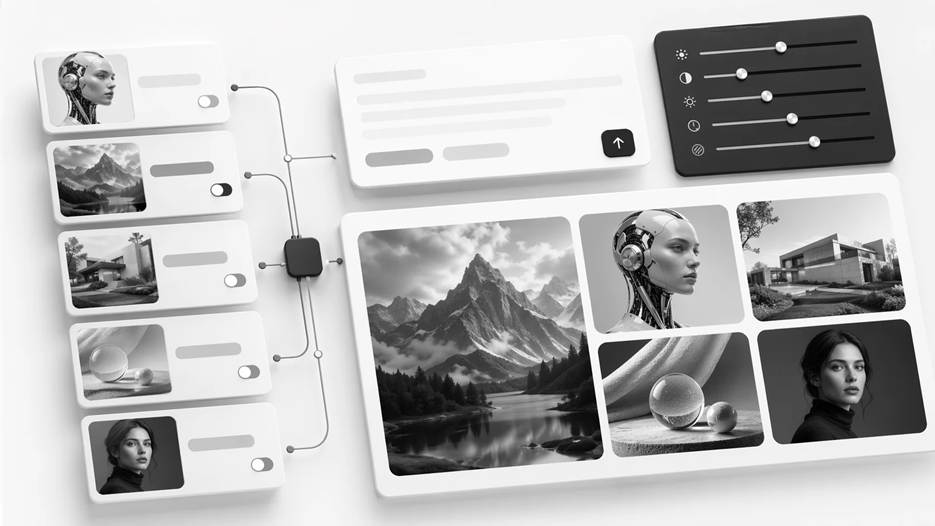
Another important aspect is reusability. Once you develop a strong prompt formula, you can adapt it to different projects with minimal changes. Want to switch from a portrait to a landscape? Just modify the subject while keeping the rest of the structure intact. This flexibility makes a repeatable structure incredibly powerful, especially for designers, marketers, and content creators who need consistent results at scale.
Ultimately, a repeatable structure isn’t about limiting creativity—it’s about channeling it. By giving your ideas a solid framework, you make it easier for the AI to bring them to life exactly as you imagined.
Benefits of Using a Standardized Prompt Framework
Using a standardized prompt framework offers more than just convenience—it fundamentally changes how you interact with AI tools. Instead of guessing what might work, you operate with a clear, strategic approach that delivers predictable outcomes. One of the biggest benefits is efficiency. With a structured formula, you spend less time experimenting and more time refining. This means faster workflows and better results with fewer iterations.
Consistency is another major advantage. Whether you’re creating images for a social media campaign, a website, or a product line, maintaining a unified visual style is crucial. A GPT Image Prompt formula ensures that every image follows the same underlying structure, making your content look cohesive and professional. This is especially important for branding, where even small inconsistencies can weaken your visual identity.
There’s also the benefit of scalability. Once you have a repeatable structure in place, you can generate dozens—or even hundreds—of images without losing quality or consistency. This is invaluable for businesses and creators who need to produce large volumes of content بسرعة. Instead of starting from scratch each time, you simply plug new ideas into your existing framework.
Another often overlooked advantage is learnability. When you use a consistent structure, you start to understand how different elements affect the final output. Over time, you develop an intuitive sense of what works and what doesn’t. This makes you more skilled and confident in your prompting abilities, turning what once felt like guesswork into a refined craft.
In a world where AI-generated content is becoming increasingly common, having a reliable system sets you apart. A standardized prompt framework doesn’t just improve your results—it elevates your entire creative process.