
Hiring is practical work, but it is also personal. Every application comes from someone considering a change in their life. Every open role belongs to a team that needs help and steadiness.
Recruiters sit in the middle of that. They are asked to move quickly, keep managers informed, respond to candidates with care, and still make good judgments. When volume grows, even thoughtful teams can feel stretched.
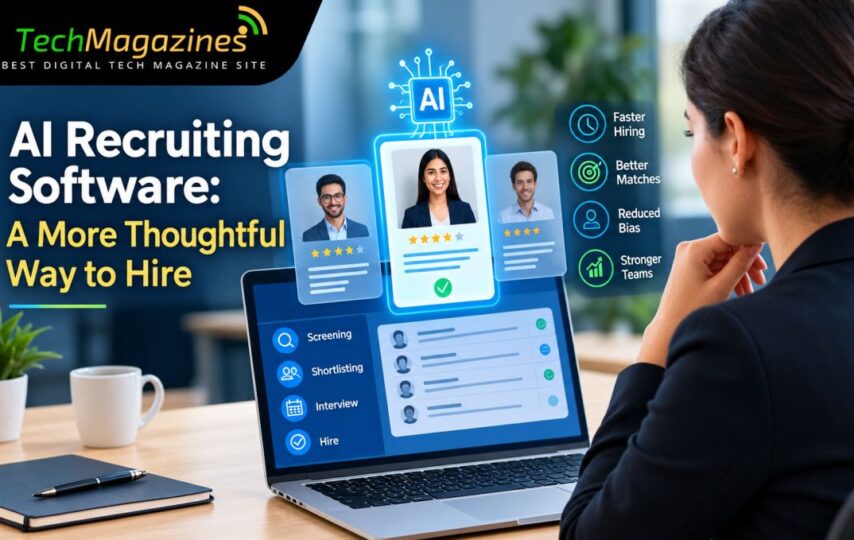
AI recruiting software can help. Not as a replacement for recruiters, and not as a way to make hiring feel automatic. Used carefully, it can handle repetitive work, organize information, and make communication more consistent. The point is to give people more room for the parts that require judgment, patience, and trust.
What AI Recruiting Software Actually Does
The phrase can sound bigger than it is. AI recruiting software helps with recurring recruiting tasks that often take up time.
Depending on the tool, it may help draft job descriptions, organize applications, answer routine candidate questions, schedule interviews, or show recruiters which applicants may match a role’s requirements. Some systems focus on one narrow task. Others support a broader workflow.
The right fit depends on the team. A small company may need something simple. A growing operation with many applicants, managers, and locations may need more structure. Either way, the question should stay grounded: what problem are we actually trying to solve?
Why Hiring Teams Look for Better Support
Recruiting can look simple from the outside. A job gets posted, candidates apply, interviews happen, and someone is hired. In practice, many small pieces compete for attention.
Applications arrive from different sources. Candidates ask for updates. Hiring managers change availability. Feedback needs to be collected. Offers need follow-up. New hires need forms, reminders, instructions, and clarity about what happens next.
None of this is dramatic. But together, these tasks can quietly take over the day, leaving less time for careful review, honest conversations, and helping candidates understand the role.
AI recruiting software can reduce some of that pressure. It can help teams keep candidate information in one place, notice applications that need review, send timely updates, coordinate interviews, track where candidates are dropping out, and prepare repeatable onboarding steps.
Keeping People at the Center
There is a fair concern that automation can make hiring colder. Many candidates have dealt with systems that never respond, reject them without explanation, or make it hard to reach a person.
So AI should be treated as assistance, not authority.
Software can sort information and suggest next steps, but people should remain responsible for decisions that affect someone’s opportunity. A recruiter may notice context that a system misses: transferable skills, a thoughtful reason for a gap in employment, or strong potential that does not show up neatly in keywords.
Human oversight matters because automated tools can reflect the limits of the data behind them. If a system is trained on patterns from past hiring, it may repeat old habits. If job requirements are unclear, recommendations may be weak too.
A simple principle helps: if an automated step could meaningfully affect a person’s chance at a job, a qualified human should be able to review it. Efficiency is useful. Fairness and dignity matter more.
Connecting Recruiting and Onboarding
Hiring does not end when someone accepts an offer. In many ways, that is when trust becomes even more important.
The time between acceptance and the first few weeks on the job can shape how a new employee feels about the company. Long silences, unclear instructions, repeated requests, or last-minute paperwork can create stress at a moment that should feel steady.
Bringing recruiting and onboarding into one connected process can make the transition smoother. Information shared during hiring does not need to be collected again. New hires can receive clear reminders about forms, schedules, training, equipment, and the first day.
Good onboarding automation should support a human welcome, not replace it. A system can send a reminder. A manager should still reach out. Software can organize paperwork. A colleague should still explain how the team works and help the new person feel included.
The strongest process is usually a mix of both: structure for predictable steps, and real human attention for everything that needs warmth.
Where AI Can Help Without Taking Over
Not every part of hiring needs automation. The most useful approach is often selective. Use AI where it removes avoidable friction. Keep people close to the parts that involve judgment and trust.
Practical Areas Where AI Can Help
Job descriptions
AI can help create a first draft, simplify unclear language, or point out missing details.
Still, the final job description needs human review. It should reflect the actual role, including the schedule, responsibilities, expectations, and challenges. A polished description that does not match the work creates problems later.
Applicant review
Software can help organize applications or highlight relevant experience, making a large applicant pool easier to manage.
But it should not be the only voice deciding who moves forward. Recruiters should understand why someone was recommended or filtered out, and review whether strong candidates are being overlooked.
Candidate communication
Automated confirmations and reminders can make the process feel more respectful. Silence is hard on candidates who have taken time to apply or interview.
Even so, sensitive messages deserve care. Rejections, delays, compensation conversations, and difficult updates should not feel careless or robotic. A template may help, but the message should still sound honest and human.
Interview scheduling
Scheduling is one of the clearest places where automation can help, saving recruiters, managers, and candidates from long email threads.
The process should still leave room for flexibility. Candidates may need accommodations, have limited availability, or simply need help.
Onboarding administration
Software can track forms, training steps, equipment requests, reminders, and important dates.
Managers can then spend more time setting expectations, making introductions, answering questions, and helping the new employee understand how to succeed.
Choosing AI Recruiting Software Carefully
The best system is not always the one with the longest feature list. A simple tool used consistently may be more valuable than a complex platform that frustrates people.
Before choosing AI recruiting software, it helps to ask practical questions:
- Where does our hiring process slow down most often?
- What frustrates candidates today?
- Will this tool make communication clearer and more respectful?
- Can recruiters review and understand the system’s recommendations?
- Does it fit with the tools and job boards we already use?
- How is candidate information stored, protected, retained, and deleted?
- Can we adjust the workflow as our hiring needs change?
- What happens when the system gets something wrong?
Those questions may not sound exciting, but they matter. Recruiting involves personal information and real opportunities. A team should understand what a tool is doing before it shapes the candidate experience.
Measuring What Actually Improves
Saving time is helpful, but speed alone is not the goal. A faster process is not automatically a better one.
Teams should look at both operations and experience. Useful measures may include response time, interview scheduling time, stage completion rates, offer acceptance, early retention, and feedback from candidates and new hires. Recruiters can also ask whether they have more time for meaningful follow-up.
The numbers need context. If a process gets faster but candidates feel ignored, something is wrong. If fewer people reach later stages and no one understands why, that deserves review. If new hires arrive confused, the handoff from recruiting to onboarding needs attention.
When legally and appropriately possible, teams should also look for patterns across role, location, and candidate groups to see where the process may be creating barriers.
Starting Small Is Often Wiser
Adopting AI recruiting software does not require rebuilding the whole hiring process at once. A modest start can be better.
A team might begin with interview scheduling, candidate status updates, or onboarding reminders. These areas are practical, visible, and easier to review.
Starting small also keeps expectations honest. AI cannot fix an unclear role, a weak offer, poor manager communication, or an interview process that does not respect people’s time. It can help a sound process run more smoothly.
The work still belongs to people.
A More Human Use of Technology
The promise of AI in recruiting is not that hiring can happen without humans. It is that humans can spend less time chasing details and more time listening, evaluating, explaining, and welcoming people well.
Used carefully, AI recruiting software can bring helpful structure to a demanding process. It can keep information organized, make communication more consistent, and connect hiring with a more thoughtful onboarding experience.
But the best use of the technology is humble. It should support recruiters, not overrule them. It should make the process clearer for candidates, not more distant. It should help teams move with care, not just speed.
The goal is not perfect automation. The goal is a hiring process that feels more manageable for the people running it, and more respectful for the people moving through it.