
Wastage in Commercial Buildings
In most commercial buildings, water wastage doesn’t come from one major failure. It usually
comes from small, repeated inefficiencies that go unnoticed.
A flush that runs longer than needed. A system that activates even when no one is using it. Or
in some cases, fixtures that depend too much on how people behave.
Individually, these don’t seem like serious problems. But in buildings where usage is continuous,
they add up faster than expected.
This is where a urinal sensor starts to make a practical difference.
The Real Issue: Inconsistent Usage
Traditional flushing systems rely on manual operation or timed cycles. Both have their own
limitations.
Manual systems depend on users. Some people flush properly, some don’t. In busy
environments, this inconsistency becomes common.
Timed systems solve that problem partially, but create another one. They flush at fixed intervals,
whether the urinal is used or not.
That means water is used even when it isn’t required.
A urinal sensor addresses both of these gaps by linking flushing directly to actual usage.
How Sensor-Based Flushing Works
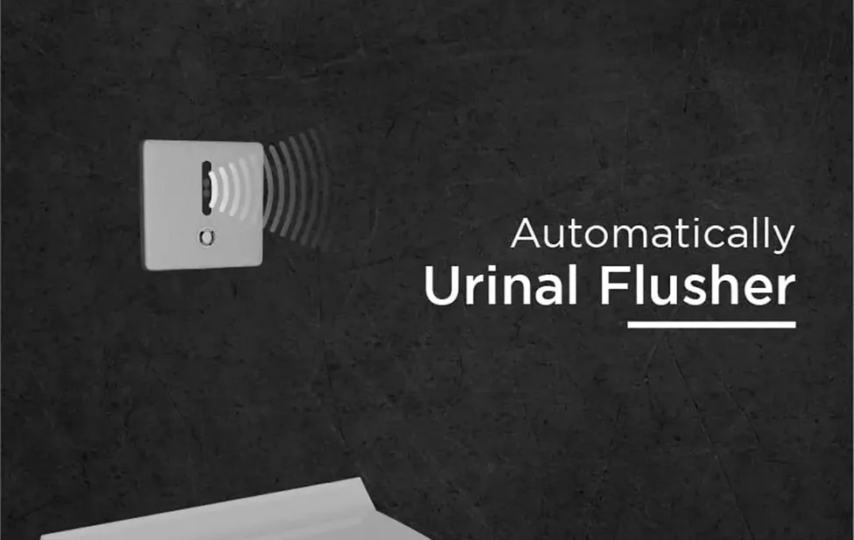
A urinal sensor detects presence or movement and activates flushing only after use.
It doesn’t rely on someone pressing a button or on a fixed timer.
This makes the system responsive rather than repetitive.Water is used only when needed, and in a controlled amount.
Where the Water Saving Actually Happens
The biggest reduction doesn’t come from using less water per flush. It comes from avoiding
unnecessary flush cycles.
In timer-based systems, flushing continues throughout the day, even during low usage periods.
Early mornings, late evenings, or off-peak hours still trigger the same cycle.
A urinal sensor eliminates those idle flushes.
Over time, especially in large buildings, this results in a noticeable reduction in total water
consumption.
Small Savings, Large Impact
Let’s say a timed system flushes every 10 minutes. That’s six flushes an hour, regardless of
usage.
Now consider a building where actual usage is much lower during certain periods.
That gap between actual use and system behavior is where water gets wasted.
A urinal sensor closes that gap by aligning flushing with real usage patterns.
In high-traffic environments, even a small reduction per cycle scales up quickly across the day.
Consistency Without Manual Dependence
One of the biggest advantages of sensor systems is consistency.
Manual systems depend on user action. Some users may skip flushing altogether, while others
may overuse it.
A urinal sensor standardizes this. Every use triggers a controlled flush cycle.
This improves both water efficiency and hygiene without relying on user behavior.Maintenance and Operational Efficiency
Water saving is only one part of the picture. Maintenance also plays a role.
Timed systems often lead to overuse of water, which increases load on plumbing and drainage
systems.
Manual systems, on the other hand, can lead to underuse, causing hygiene issues and requiring
more frequent cleaning.
A urinal sensor balances both. It ensures proper flushing without excess usage.
Over time, this reduces strain on infrastructure and keeps maintenance more predictable.
Where These Systems Make the Most Difference
The impact of a urinal sensor becomes more visible in high-usage environments.
Airports, where facilities operate almost continuously.
Shopping malls, where footfall varies throughout the day.
Corporate buildings, with peak and off-peak usage cycles.
Hospitals, where hygiene and controlled usage are both critical.
Educational institutions, where maintenance needs to stay manageable.
A System-Level Effect on Water and Energy
Reducing water usage also affects energy consumption.
Less water flowing through the system means reduced pumping, storage, and in some cases,
treatment requirements.
The United Nations has highlighted the growing need for efficient water management across
urban infrastructure.
In that context, systems like urinal sensors contribute to broader sustainability goals, not just
localized savings.
What Happens When the System Isn’t Designed WellNot all installations deliver the same results.
If the sensor is too sensitive, it may trigger unnecessary flushes.
If it’s not sensitive enough, it may fail to detect usage properly.
Incorrect calibration or placement can reduce effectiveness.
These issues don’t always appear immediately, but they show up over time.
Final Thoughts
Water wastage in commercial buildings rarely comes from one large issue. It comes from small
inefficiencies repeated throughout the day.
A urinal sensor addresses one of those key areas by aligning water usage with actual need.
It removes unnecessary flush cycles, reduces dependence on user behavior, and brings
consistency into the system.
In high-traffic environments, that consistency leads to measurable savings over time.
And without requiring any active effort from users, it becomes one of the simplest ways to
improve efficiency in modern washrooms.