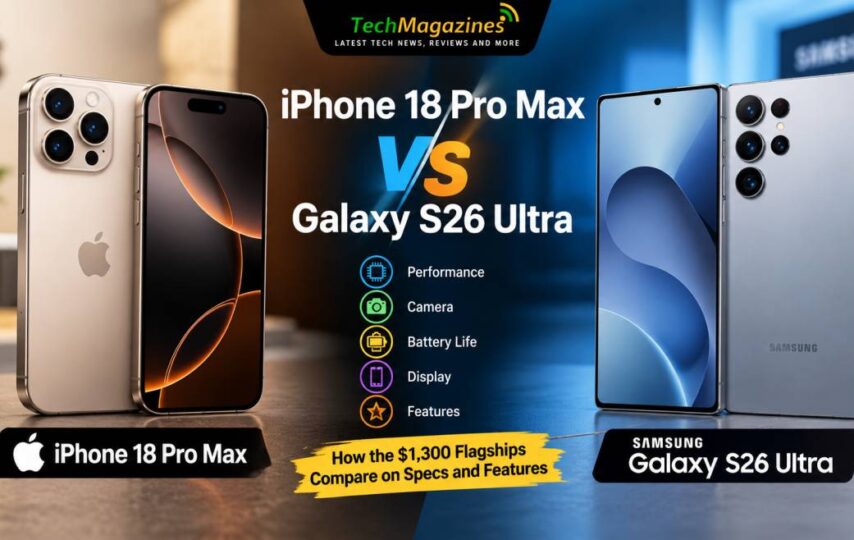

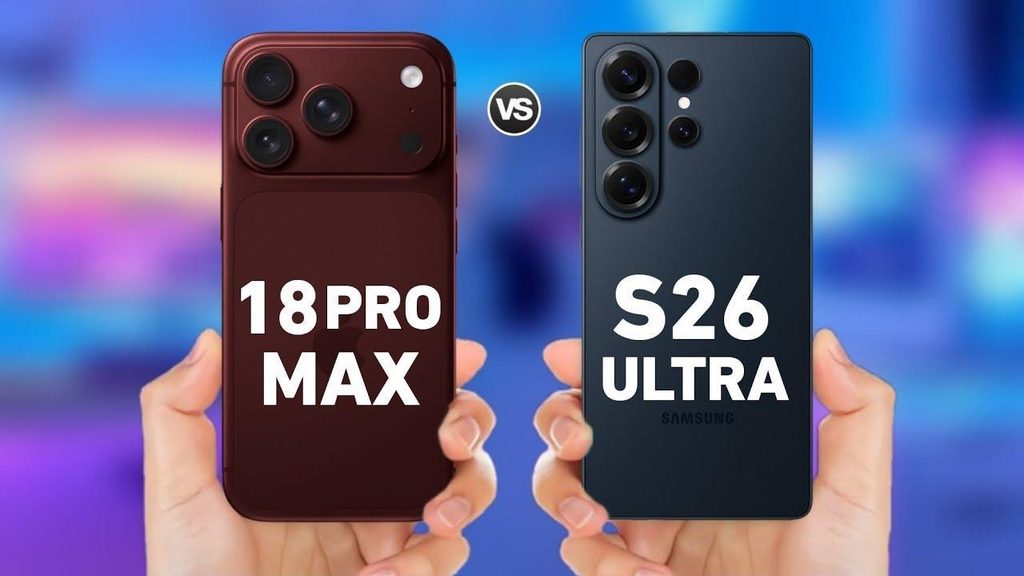
The battle for the most expensive end of the smartphone market now includes Apple’s iPhone 18 Pro Max and Samsung’s Galaxy S26 Ultra. Both manufacturers have put their newest hardware at the front of their ranges, with bigger screens, faster chips, improved camera systems and a greater reliance on artificial intelligence.
Apple has raised the entry price of its top iPhone to $1,299, with that amount covering the 256GB version. Buyers are therefore paying $100 more than they did for the equivalent iPhone 17 Pro Max. The change also leaves very little daylight between Apple and Samsung on price. The Galaxy S26 Ultra begins at $1,300.
According to Apple, conditions in the component market have contributed to the increase. The continuing shortage of RAM is among the pressures affecting costs across the iPhone range. The higher price nevertheless leaves the iPhone 18 Pro Max firmly positioned against Samsung’s flagship, with cameras and battery endurance remaining two of the main areas of competition.
Design, Screen Size and Build: How the Two Flagships Differ
There is little doubt that both phones are large, but their physical design reflects two different choices. Apple has continued along one path, while Samsung has taken another.
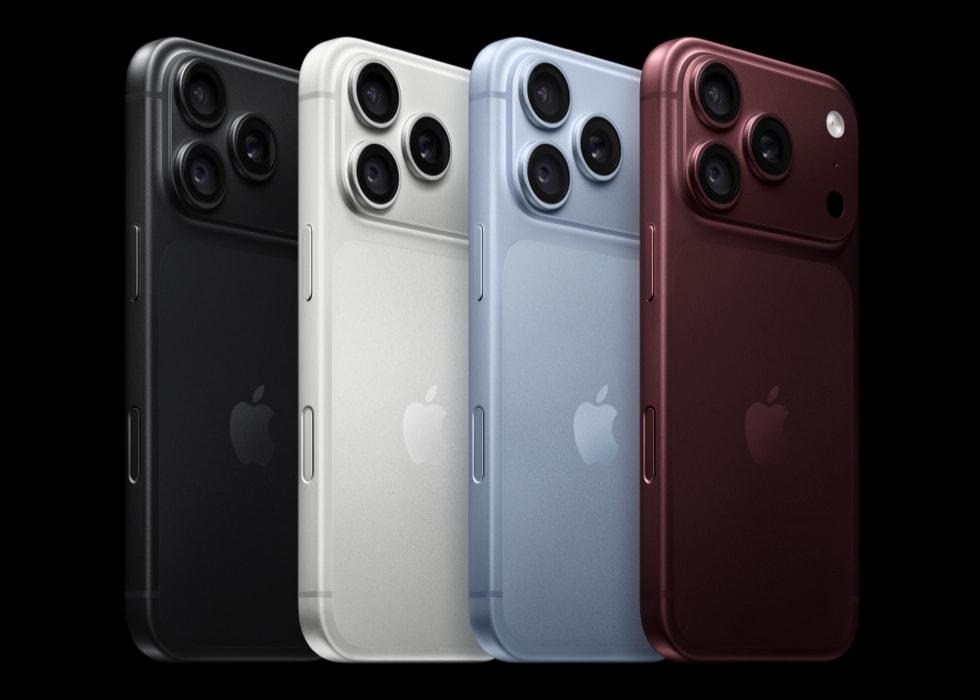
For the iPhone 18 Pro Max, Apple has retained the aluminium unibody construction first used on the iPhone 17 Pro Max. Buyers can choose between burgundy red, glacier blue, silver and black. The device weighs 249 grams and carries a 6.8-inch OLED screen.
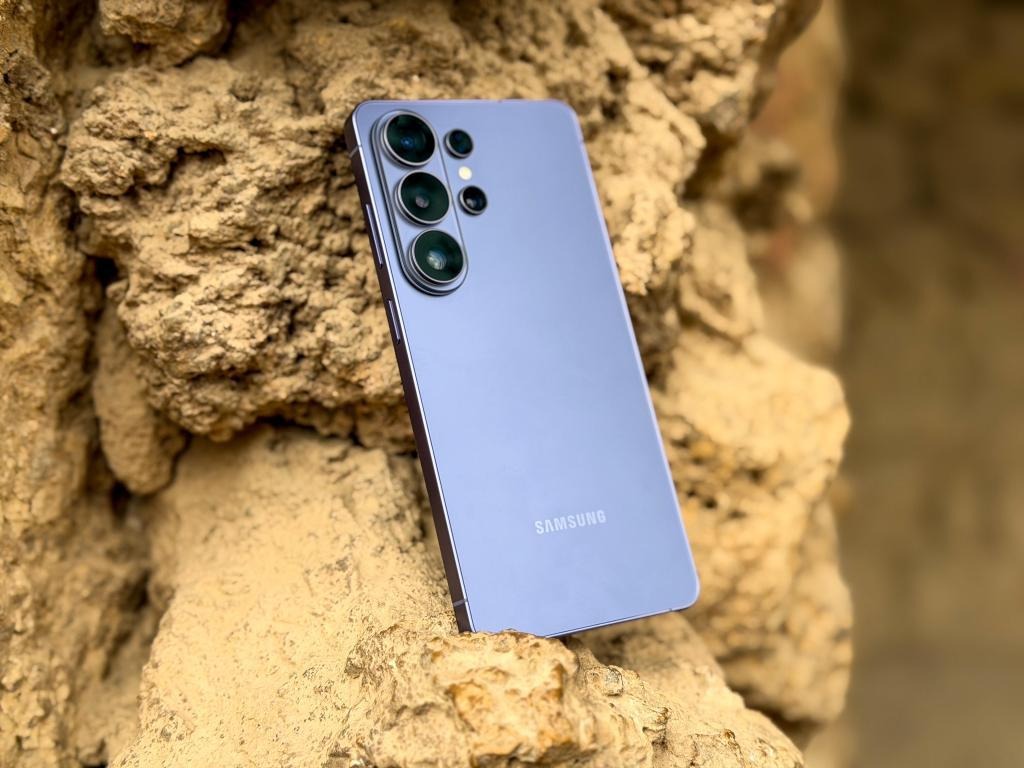
Samsung’s flagship has a bigger screen than Apple’s. The Galaxy S26 Ultra uses a 6.9-inch AMOLED panel. Yet it weighs 214 grams, which makes it 35 grams lighter than the iPhone 18 Pro Max. Samsung offers the phone in six colours: pink gold, silver shadow, cobalt violet, sky blue, white and black.
The company has also built privacy controls into the display itself. Its Privacy Display can restrict the visibility of certain apps and notifications when someone views the phone from the side. This removes the need for a separate privacy screen.
Battery Life and Charging Speeds Compared
Battery capacity tells only part of the story here. Apple has not published the capacity of the US iPhone 18 Pro Max, so a direct comparison is not possible from its US specifications alone.
There is more information from Apple’s Irish site. The version that accepts a physical SIM carries a 5,391-mAh battery. On paper, that gives it a small advantage over the Galaxy S26 Ultra, whose battery measures 5,000 mAh. Apple may use a larger cell in the US model, which relies on eSIM, but the company has not confirmed that.
Apple focuses instead on endurance. It says the iPhone 18 Pro Max can manage up to 45 hours of video playback. The company has not said how quickly the battery can recharge.
Samsung has been more forthcoming about charging. The Galaxy S26 Ultra supports 60W wired charging. Independent testing by CNET found that the phone reached 76% charge after 30 minutes, starting from an empty battery.
The charging figures put the two generations in a useful perspective. Apple gave the iPhone 17 Pro Max a 40W charging system. In the same 30-minute test, it climbed to 69%. The iPhone 18 Pro Max has not yet gone through that test. Its real charging advantage, if there is one, will have to wait for independent testing.
Camera Hardware
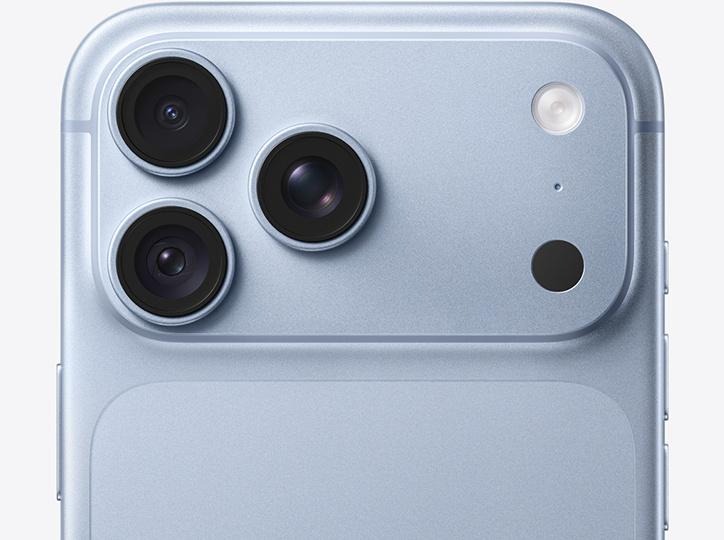
The camera systems reveal a sharper difference in philosophy. Apple has concentrated on giving its main lens greater control. Samsung has chosen to put more cameras and more megapixels on the device.
The iPhone 18 Pro Max now uses a variable aperture. The mechanism changes the size of the lens opening as lighting changes. This can give the camera more control over exposure. Alongside it sit two other rear cameras. The main sensor offers 49 megapixels, while the ultrawide reaches 48 megapixels. The telephoto camera also has 48 megapixels and provides 4x optical zoom.
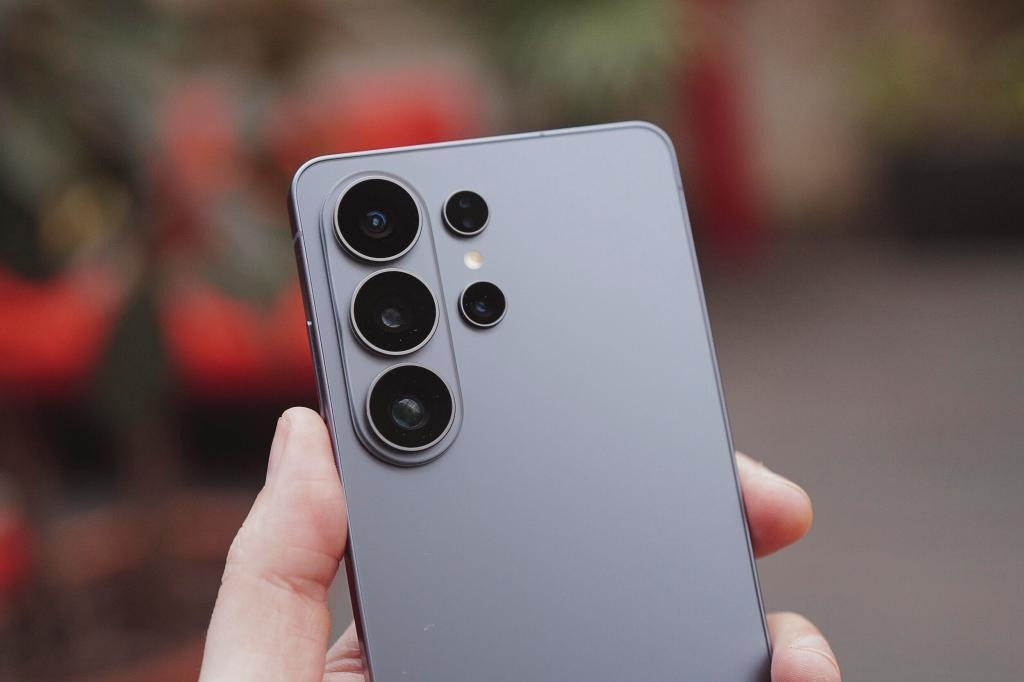
Samsung fills the rear of the Galaxy S26 Ultra with four cameras. The main sensor has 200 megapixels. A 50-megapixel ultrawide handles wider scenes. The phone also carries two telephoto units. One combines 50 megapixels with 5x optical zoom. The other has 10 megapixels and offers 3x optical zoom.
The numbers favour Samsung at first glance. It has one more camera and much higher resolution on its main sensor. Apple’s new variable aperture is the more unusual change. Whether that matters more than Samsung’s hardware advantage will depend on actual photographs, not the specifications alone.
A20 Pro vs Snapdragon 8 Gen 5: Performance and AI Features
Apple has put its A20 Pro chip at the centre of the iPhone 18 Pro Max. It drives the phone and its newest AI features. Siri also gets a new AI system. Apple developed it as part of its work with Google’s Gemini.
Siri is becoming more useful because it can work with information already on the phone. It can draw details from emails and text conversations. It can then act on those details. A message about an appointment, for instance, could lead to a reminder or a calendar entry.
Apple has also made heat management part of its pitch for the A20 Pro. Gaming can put sustained pressure on a phone, so the iPhone 18 Pro Max uses a vapor chamber to disperse heat. The aim is simple. Keep temperatures under control when the processor has to work hard.
Samsung takes a different route on the processor side. The Galaxy S26 Ultra runs on Qualcomm’s Snapdragon 8 Gen 5 for Galaxy. Samsung’s AI software covers practical tasks rather than one single function. It can offer suggestions based on the situation and provide tools for editing photographs. The phone also targets users who expect strong gaming performance.
Apple or Samsung: Which Flagship Fits Your Needs?
The two phones are closely matched in price, but the similarities largely end there. Apple has built its case around the A20 Pro and its new camera technology. The reported battery capacity also gives the iPhone an advantage on paper. Samsung puts more emphasis on physical hardware. Its phone weighs less, has the larger screen and supports quicker wired charging. It also gives users four rear cameras and the Privacy Display.
At about $1,300, neither phone offers a clear price advantage. The better choice will depend on what the buyer values. Apple may appeal to someone who wants its software, camera system and AI tools. Samsung may make more sense for someone who wants a lighter handset, a larger display, faster charging or a more extensive camera setup. The two phones offer different answers to the same question: what should a flagship smartphone do best?
Final Words
The iPhone 18 Pro Max and Galaxy S26 Ultra are at the top of the smartphone food chain, and more about the type of flagship you want to carry around. Apple’s advantages are the A20 Pro and variable-aperture camera, as well as the AI-powered Siri, while Samsung’s are a lighter body, larger screen, faster wired charging and a more complex camera system. It’s like a price war that just about anyone would have found hilarious, both phones are in the $1,300 range.
That doesn’t mean that buyers are getting a deal either. Rather, it’s a matter of priorities. For those who are loyal to Apple’s software and artificial intelligence offerings, the company has a solid answer, and Samsung has a lot to offer for those who want larger screens, faster charging speeds, and more camera gear.