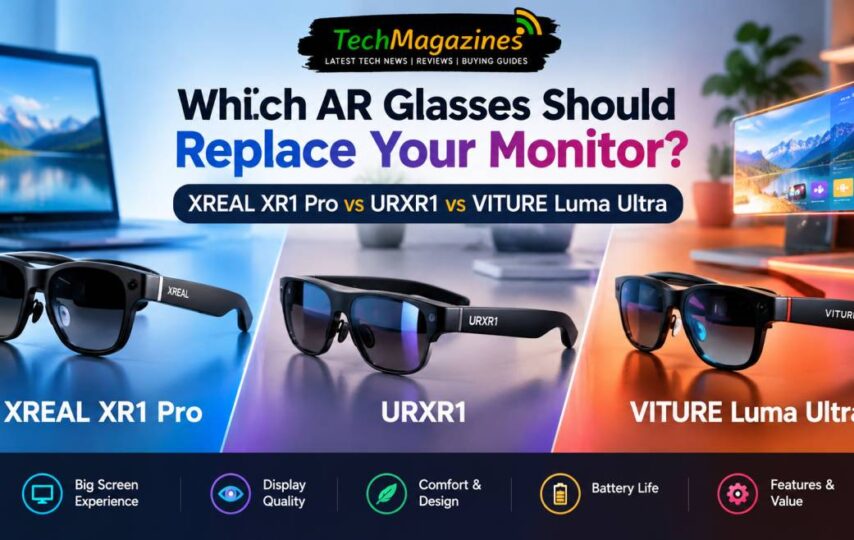

AR glasses are beginning to move beyond the novelty stage and into the territory of practical computing devices. Their main attraction is simple: they can provide a large virtual display without requiring the user to sit in front of a physical monitor. We examine three models – the XREAL XR1 Pro, URXR1, and VITURE Luma Ultra – and weighs them against six different criteria, including display flexibility and price.
The differences are not merely technical. The XREAL XR1 Pro, for example, includes an anchor mode that keeps the virtual screen in a set position. This can be useful for work such as coding or editing documents, where having the display remain steady is more important than having another collection of features.
The comparison also shows where the other two models have an advantage. The URXR1’s mixed-reality functions make it suitable for users who need to handle several tasks within the same workspace. The VITURE Luma Ultra, meanwhile, produces clearer text, giving it a practical advantage for productivity.
Comfort is another consideration, particularly for anyone intending to wear the glasses for long periods. In the end, the right choice depends on the buyer. Some may want a cheaper option, others may value newer capabilities, while some will prefer a compromise between flexibility, comfort and ease of use.
Display Experience: How Flexible Are These AR Glasses?
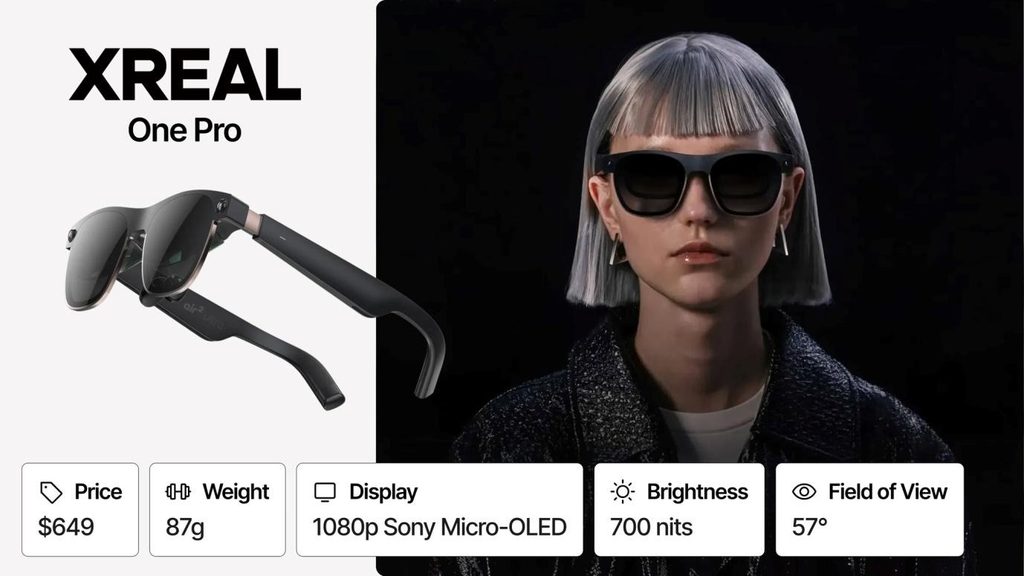
A virtual screen is useful only if it behaves as the user needs it to. The XREAL XR1 Pro gives the user two ways to control it. Follow mode keeps the display with the movement of the head. Anchor mode leaves it fixed in one position. This makes the glasses useful in two quite different situations. They can follow the user during a game or presentation. They can also stay still while the user writes code or works on a document.
The URXR1 takes another route. It lets the user choose between four combinations of screen size and viewing distance. A person can bring the display closer for detailed work or move it away when a larger, more open view is wanted. The VITURE Luma Ultra gives less choice. It uses follow mode only. That may not matter during entertainment, but it can become inconvenient when someone wants a steady screen for work.
Using AR Glasses Around Other People
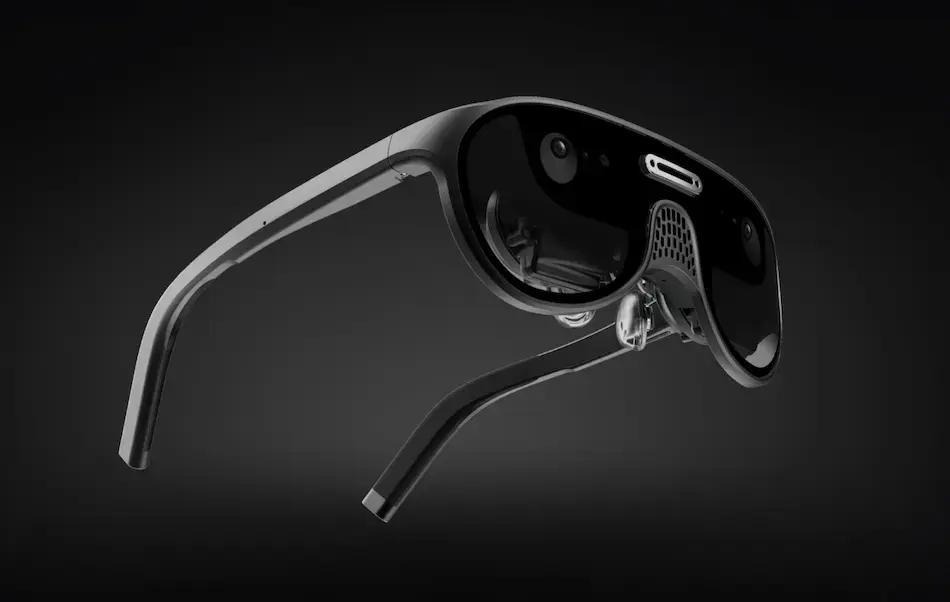
AR glasses must also work in the real world, not just inside the display. The URXR1 has an advantage here. Its mixed-reality features let the user see the surrounding environment while using the virtual screen. This can matter in an office or meeting. The wearer can deal with digital work without completely shutting out the people around them.
The XREAL XR1 Pro is reasonably effective here. Its lighter tint lets more of the outside world remain visible, while its display can occupy different positions. The wearer can therefore keep some awareness of what is happening nearby without giving up the main benefit of the glasses. The VITURE Luma Ultra has a harder time. Its darker tint blocks more of the surroundings. That can make a conversation or other face-to-face exchange less natural.
Which AR Glasses Deliver the Sharpest Text?
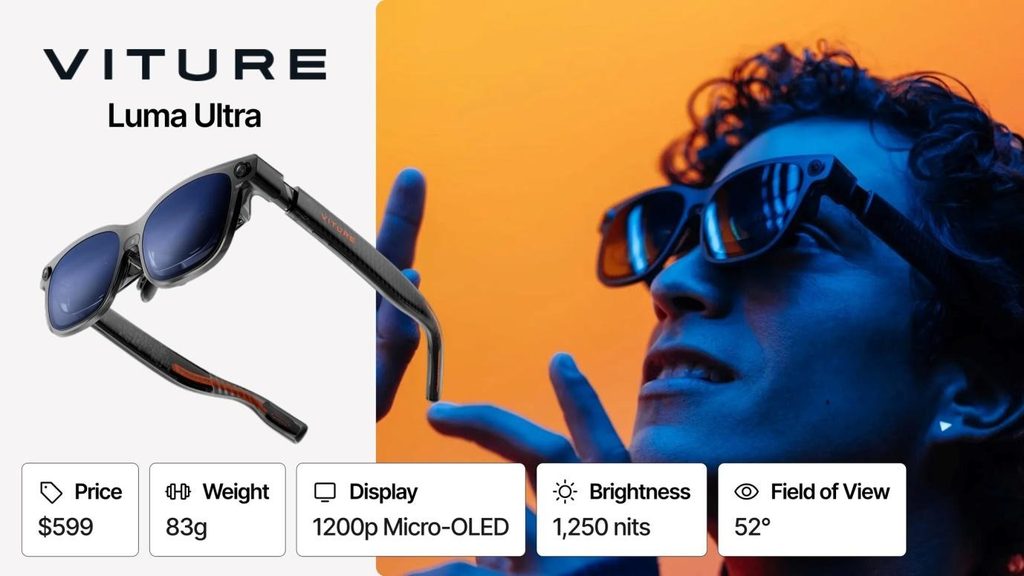
Clear text matters greatly when AR glasses serve as a work tool. The VITURE Luma Ultra has the sharpest image near the centre of its display. Its higher pixels-per-degree count helps, and the built-in diopter adjustment can further improve focus. The picture becomes less clear towards the edges, however. This may prove troublesome when the user needs to take in a broad area of text at once.
The URXR1 takes a more even approach. Its micro-OLED display keeps the image sharp across the screen, including near the edges. That makes it well suited to reading, coding and other work that depends on steady, readable text. The XREAL XR1 Pro does a respectable job, but it falls behind the other two when fine detail and overall screen clarity are the main concerns.
Built-In Sound: What Each AR Glasses Model Offers
Sound matters when a pair of AR glasses is meant to work as a complete device. Built-in speakers remove the need to carry another set of headphones or connect a separate speaker. The XREAL XR1 Pro and VITURE Luma Ultra both provide them.
The sound should be adequate for most everyday uses, while also making the glasses simpler to use. The URXR1 takes a different approach. It has no speakers of its own, so the user must supply another audio device. That is not necessarily a serious problem, but it makes the setup less self-contained.
AR Glasses Price Comparison: Which Model Offers Better Value?
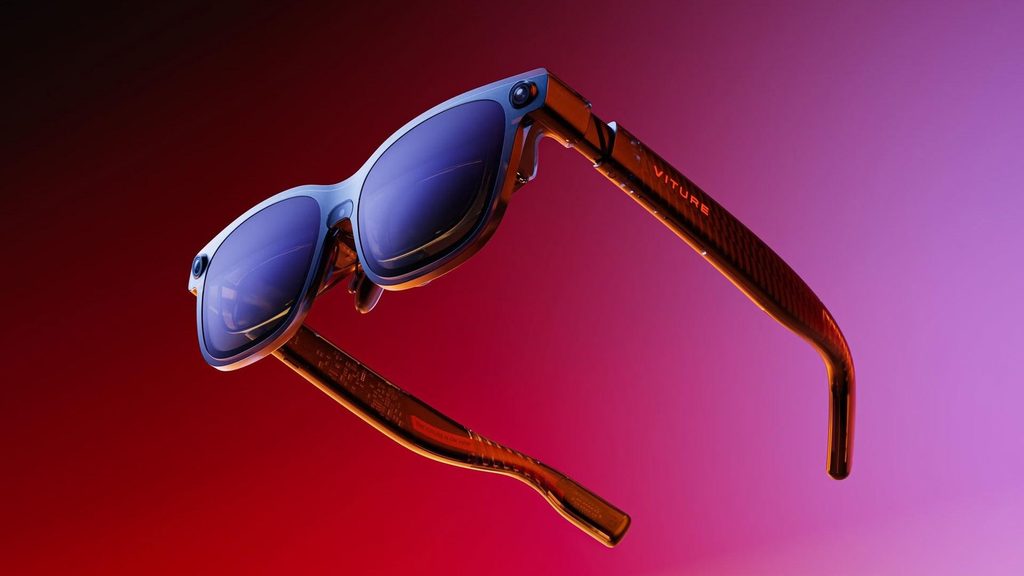
Price can settle the question before the technical details do. At $599, the VITURE Luma Ultra costs the least of the three. It also has built-in diopters, so buyers who need prescription correction do not have to pay separately for that feature. This gives it an obvious advantage for people watching their spending.
The XREAL XR1 Pro costs $649. Prescription lens inserts add another $60. The difference is not large, but it raises the final cost for some users. The URXR1 starts at $799 on Kickstarter and does not include prescription lenses. Its higher price reflects its broader feature set. That may make sense to enthusiasts who want more advanced hardware. For a buyer with a limited budget, however, the extra expense is harder to justify.
Long-Term Wearability: Which AR Glasses Feel Most Comfortable?
Weight becomes important when AR glasses stay on your face for hours. The XREAL XR1 Pro has the advantage here. It is the lightest of the three and uses soft nose pads that put less pressure on the wearer. This makes it the easiest choice for long sessions.
The URXR1 sits at the other end of the scale. Its greater weight may mean that users have to adjust the fit from time to time. Some people may find that tiring. The VITURE Luma Ultra falls between the two. It provides a reasonable level of comfort, but its design cannot match the lighter XR1 Pro.
Final Words
The ultimate question is what is going to be sitting on your nose for hours and hours? With its lighter build and flexible screen modes and built-in audio, the XREAL XR1 Pro is a compelling choice for productivity. The URXR1 includes more advanced mixed-reality capabilities and a crisp, uniform screen, but the cost and bulk may be a turn-off for some users. The VITURE Luma Ultra, on the other hand, is fairly inexpensive, but provides great clarity of the central text and some handy cameras and diopters.
AR glasses are still in the process of being developed, each offering a different balance of comfort, clarity, features, and price. As of now, it’s not really about the “best” pair, but the pair that works best for you. Don’t despair, your monitor may not be in danger of extinction just yet, but it does have some interesting competition.