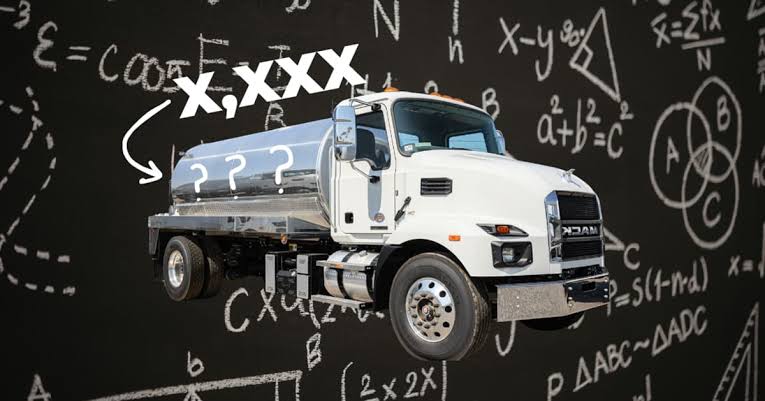

Choosing the right septic truck tank size can have a major impact on route efficiency, operating costs, payload management, and the types of jobs your business can handle. A tank that is too small may require frequent trips to a disposal facility, while a tank that is too large can add unnecessary weight and may require a heavier-duty chassis. The best choice depends on your customer base, service area, typical pumping volume, and truck configuration.
This septic truck tank size guide explains the most common capacity ranges, what they are best suited for, and which factors should influence your decision. Whether you are buying your first septic truck or expanding an existing fleet, understanding tank capacity can help you invest in equipment that fits your daily workload.
Why Septic Truck Tank Size Matters
Tank capacity directly affects how many jobs a truck can complete before it needs to unload. For companies serving customers far from disposal locations, a larger tank can reduce downtime and improve route productivity. On the other hand, businesses working in tight residential areas may benefit from a smaller, more maneuverable truck.
Tank size also affects the overall weight of the vehicle. Wastewater is heavy, so increasing capacity can significantly increase the truck’s loaded weight. The chassis, axles, suspension, brakes, and tires all need to be rated appropriately for the maximum expected load.
Choosing capacity is therefore not just about carrying more liquid. It is about balancing productivity, maneuverability, equipment costs, and safe vehicle operation.
Common Septic Truck Tank Sizes
Septic trucks are available in a wide range of tank capacities. Smaller units may carry less than 1,000 gallons, while larger commercial pump trucks can hold several thousand gallons. The right range depends largely on the kind of work the truck performs.
Common capacity categories include:
- 500 to 1,000 gallons for compact or specialized service work
- 1,000 to 1,500 gallons for smaller residential routes
- 1,500 to 2,500 gallons for general residential septic pumping
- 2,500 to 3,500 gallons for high-volume residential and commercial work
- 3,500 gallons and above for larger commercial, industrial, and municipal applications
These ranges are general rather than absolute. Tank manufacturers and truck builders offer many configurations, and actual usable capacity can vary depending on tank design, compartments, pumps, hose racks, toolboxes, and other equipment.
500 to 1,000 Gallons: Compact and Specialized Service
Smaller septic tanks are often found on compact vacuum trucks, slide-in units, and specialty service vehicles. They are useful when maneuverability is more important than maximizing the amount of waste carried during each trip.
A 500- to 1,000-gallon unit may work well for portable sanitation service, grease collection, small holding tanks, spot pumping, or jobs where access is limited. These trucks can often reach properties where larger vehicles would have difficulty navigating narrow driveways or crowded urban locations.
The primary disadvantage is limited capacity. A smaller tank may need to be unloaded after only one substantial septic pumping job, particularly if the system being serviced contains a large amount of liquid.
1,000 to 1,500 Gallons: A Versatile Smaller Option
A tank between 1,000 and 1,500 gallons can be a practical choice for companies that want more pumping capacity without moving to a large commercial truck. These sizes may be suitable for lighter residential work, small commercial properties, holding tanks, and portable sanitation routes.
Smaller operators may also find this capacity easier to integrate into their fleet. The truck can remain more maneuverable than higher-capacity models while still providing enough room to complete multiple smaller jobs before unloading.
However, operators should consider the typical septic tank sizes in their service area. If most residential jobs involve systems near or above the truck’s total capacity, frequent unloading can reduce the efficiency advantages of using a smaller vehicle.
1,500 to 2,500 Gallons: A Strong Residential Range
For many septic pumping companies, the 1,500- to 2,500-gallon category offers a useful balance between capacity and vehicle size. Trucks in this range can handle a wide variety of residential pumping jobs while remaining practical for routine route work.
A larger tank may allow technicians to complete several smaller jobs before traveling to a disposal location. That can be especially valuable in rural service areas where customers and approved dumping facilities are spread far apart.
Businesses considering this range should look at more than total tank volume. Hose storage, vacuum pump performance, tank material, equipment compartments, and axle weight distribution can all influence how efficiently the truck operates.
2,500 to 3,500 Gallons: Built for Higher Productivity
Larger septic pumping businesses often choose trucks in the 2,500- to 3,500-gallon range. These trucks are well-suited for companies with busy residential routes, larger septic systems, commercial customers, and longer distances between unloading points.
The additional capacity can reduce the number of disposal trips required during the workday. If a crew regularly spends substantial time driving to and from a treatment or disposal facility, increasing tank capacity can translate into more productive pumping hours.
The tradeoff is that larger trucks require more space to maneuver and generally come with higher purchase and operating costs. Fuel consumption, chassis requirements, maintenance expenses, and driver qualifications should all be considered before moving into this category.
3,500 Gallons and Above: Heavy-Duty Applications
High-capacity vacuum trucks are designed for demanding operations where large volumes of liquid need to be transported efficiently. They may be used for commercial septic work, industrial wastewater, municipal projects, large holding tanks, and other heavy pumping applications.
The main advantage is productivity. A high-capacity truck can remain on a route longer before unloading, which can be valuable for large jobs or locations far from disposal facilities.
However, these trucks are not always the best option for residential pumping. Their size and weight can make access difficult on narrow roads, residential driveways, and properties with limited turning space.
Factors to Consider Before Choosing Tank Capacity
There is no universal septic tank truck size that works for every pumping company. The best choice depends on how the vehicle will actually be used throughout the workweek.
Before selecting capacity, consider:
- Average gallons pumped per customer
- Number of jobs completed each day
- Distance between customers
- Distance to the disposal facility
- Residential versus commercial workload
- Local road and access conditions
- Chassis gross vehicle weight rating
- Axle and suspension capacity
- Tank construction material
- Vacuum pump performance
- Hose, tool, and equipment storage
- Plans for future business growth
Looking at these factors together can prevent a company from buying more or less truck than it realistically needs.
Calculate Capacity Based on Your Average Route
One of the best ways to estimate the right capacity is to examine your current or expected daily route. Start by calculating the average amount of liquid pumped per stop, then multiply that figure by the number of jobs you would ideally complete between disposal trips.
For example, a company that typically removes 800 gallons per property may want enough capacity to service two or three customers before unloading. In that situation, a 1,500-gallon tank could still require frequent disposal trips, while a 2,500-gallon truck might provide better route efficiency.
Actual pumping volumes vary significantly, so your own records are more useful than relying on a general industry average. Existing operators can review pump tickets and job histories to identify recurring patterns.
Consider the Distance to Disposal Facilities
Disposal distance is sometimes more important than the number of customers on the route. A truck that needs to travel 30 or 40 minutes each way to unload loses significant productive time every time the tank reaches capacity.
If disposal facilities are nearby, a smaller truck may still operate efficiently because unloading does not cause a major interruption. If your territory covers a large rural area, carrying additional capacity may substantially reduce nonproductive driving.
Route planning software, job histories, and fuel records can help reveal how much time your current fleet spends traveling solely for disposal. Those figures can help determine whether a larger tank would actually deliver a worthwhile operational benefit.
Do Not Ignore Payload and Chassis Requirements
A larger tank does not automatically mean a better truck. Liquid weight increases quickly as capacity rises, and the completed truck must remain within its allowable gross and axle weight ratings.
The truck also carries much more than liquid. The weight calculation needs to include the tank, vacuum pump, hoses, tools, fuel, water, equipment, driver, passengers, and any additional accessories installed on the vehicle.
Work with an experienced tank builder or truck upfitter when determining the proper chassis. Matching the tank and equipment package to the vehicle is essential for safe handling, braking, durability, and legal operation.
Tank Material Can Affect Your Decision
Tank construction may also influence the final truck configuration. Steel, stainless steel, and aluminum tanks each have different characteristics related to weight, durability, corrosion resistance, cost, and maintenance.
A lighter tank material can sometimes preserve more payload capacity for the liquid being transported. However, material selection should also account for the substances being pumped and the operating environment.
Operators should compare the complete tank package rather than looking at capacity alone. Two trucks with the same advertised gallon rating may have different empty weights and, therefore, different real-world payload characteristics.
FAQ About Septic Truck Tank Sizes
What is the most common septic truck tank size?
Many residential septic pumping trucks fall within the 1,500- to 3,000-gallon range. The ideal size varies based on local septic systems, route density, and disposal distance.
Is a 1,000-gallon septic truck large enough?
It can be sufficient for smaller residential jobs, portable sanitation, holding tanks, and specialized pumping. For busy residential septic routes, however, it may require frequent unloading.
Is a bigger septic tank truck always better?
No. Larger trucks carry more liquid but cost more to operate and can be harder to maneuver. The best size is the one that fits your workload and vehicle requirements.
How many septic tanks can one truck pump?
That depends on the truck’s capacity and how many gallons are removed from each system. A 2,500-gallon truck may handle several smaller jobs or one or two high-volume jobs before unloading.
How much does septic waste weigh?
Wastewater is extremely heavy and can add thousands of pounds to a fully loaded truck. Exact weight varies based on the material being pumped, so payload calculations should be based on realistic operating conditions.
Should I choose a smaller truck for residential work?
A smaller truck can be advantageous in neighborhoods, narrow driveways, and locations with limited access. However, the savings in maneuverability should be weighed against additional disposal trips.
Can one septic company use multiple truck sizes?
Yes. Many growing fleets use different capacities for different routes. A smaller truck can handle restricted-access jobs while a larger truck covers high-volume routes and commercial work.
Choosing the Right Septic Truck Tank Size for Your Business
The right tank capacity should allow your crews to complete a productive route without forcing the truck to carry unnecessary size and weight. For some businesses, a compact 1,000-gallon system is enough, while others need 2,500 gallons or more to minimize disposal trips and keep crews productive.
Use this septic truck tank size guide as a starting point, then compare the numbers against your actual workload. Review average pumping volume, disposal distance, daily job count, access conditions, chassis limitations, and expected business growth before making a purchase.
Ultimately, the best septic truck is not necessarily the one with the biggest tank. It is the truck that carries enough capacity to complete your work efficiently while remaining practical, properly rated, and economical to operate.