
Walk through most furniture showrooms, and you’ll discover yourself assaulted with unmistakable fashion names. “Mid-century modern!” “Contemporary!” “Traditional!” “Farmhouse!” Each fashion has its lovers, its particular stylish rules, and—often—a built-in close date. But there’s a reason why transitional furniture has unobtrusively gotten to be the foremost well known fashion in American homes over the past decade. It’s fathoming a issue that most homeowners confront: how to form a domestic that feels current and new without looking dated in five a long time.
What Makes Transitional Plan Extraordinary
Transitional plan sits within the sweet spot between conventional and modern styles, borrowing the finest components from both whereas maintaining a strategic distance from their overabundances. It’s the furniture proportionate of a flawlessly custom fitted blazer—classic sufficient to be fitting in any setting, cutting edge sufficient to feel current.
But transitional furniture style isn’t fair “traditional-lite” or “modern with conventional components.” It’s its possess particular approach with particular characteristics:
Clean Lines With Unpretentious Subtle elements: Transitional pieces highlight straight lines and basic profiles, but they’re mollified with tender bends or negligible ornamentation. A couch might have straight arms that are rolled somewhat.
Impartial Establishment: The color palette tends toward neutrals—grays, beiges, taupes, delicate whites. Strong colors come through embellishments and materials that can be changed as your tastes advance.
Blended Materials: One of transitional design’s most noteworthy qualities is combining materials—wood and metal, smooth and finished, glossy and matte.
Quality Over Decoration: Transitional pieces depend on excellent materials and great craftsmanship for their offer. The excellence is within the grain of the wood, the quality of the upholstery, the accuracy of the joinery.
Why Southern California Grasps Transitional Plan
Living in Southern California makes one of a kind plan challenges. The engineering here is eclectic—Spanish colonial recoveries, mid-century farms, Mediterranean estates, modern glass boxes—often all on the same road in Agoura Slopes or encompassing communities.
Transitional furniture bridges these building separates. It works in a 1960s farm and a brand-new custom construct. It regards the bones of more seasoned homes without battling them, and it relaxes modern design without weakening it.
There’s too the California tasteful itself—that mix of casual advancement, indoor-outdoor living, and appreciation for normal materials. The climate implies your insides furniture choices ought to facilitate with open air spaces. Transitional’s unbiased palette and common materials make consistent stream from interior to exterior.
Building Your Transitional Living Room
The Couch: Your Grapple Piece
Your couch sets the tone for the whole room. Explore for:
Rearranged Outlines: Straight or delicately rolled arms, clean-lined backs with negligible specifying, legs that are display but not conspicuous.
Flexible Textures: Unbiased strong weaves like linen-look textures, cotton mixes, execution materials in gray, taupe, or delicate white. Inconspicuous designs like tone-on-tone geometrics. Calfskin in advanced colors like cognac, charcoal, or delicate gray.
Legitimate Extents: Transitional couches tend toward direct scale—not overstuffed conventional but not low-slung modern either.
Coffee Tables: The Lost Interface
Coffee tables are where transitional plan truly sparkles through blending materials and styles.
Wood and Metal Combinations: A wooden beat with metal base combines conventional fabric with modern structure.
Rearranged Conventional Shapes: Conventional shapes executed with clean lines and negligible embellishing components.
Elective Alternatives: Settling tables that can be improved, footrest coffee tables with plate tops, or bench-style tables with capacity.
Highlight Chairs: Including Identity
Whereas your couch remains impartial, emphasize chairs can present unobtrusive identity. Consider wingback chairs upgraded in modern texture, shoe chairs with their moo profile and need of arms, or barrel chairs with bended backs.
The Feasting Room: Where Styles Focalize
California feasting rooms frequently serve numerous purposes—formal engaging, family suppers, homework station, farther work spot. Transitional furniture handles this flexibility delightfully.
Table Selection
Eating tables in transitional fashion include basic, solid lines in rectangular or circular shapes. Quality wood or blended materials—solid wood in walnut, oak, or maple with matte wraps up, or wood tops with metal bases.
Seating Harmony
Transitional plan permits blended seating: upholstered have chairs at table closes with wood side chairs, seat on one side with chairs on the other, or chairs in two complementary styles. This works since the basic tasteful is cohesive indeed when particular pieces vary.
Room Tranquility
Rooms particularly advantage from transitional plan since the style’s calm, impartial stylish advances rest.
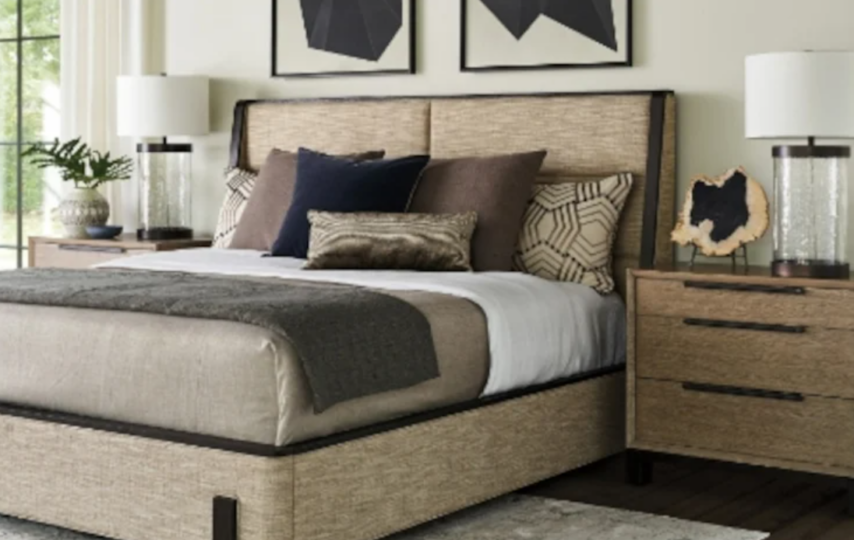
Transitional beds frequently highlight upholstered headboards in unbiased textures with unpretentious surface, stage beds with negligible enhancement and clean lines, or wooden bed outlines with disentangled points of interest.
The transitional approach emphasizes textural intrigued through material bedding, fleece tosses, velvet or calfskin complement pads, and jute or sisal carpets. Adjusted symmetry utilizing comparative pieces instead of correct matches makes calm without feeling unbending.
The Stickley Approach: Craftsmanship Meets Immortality
When talking about transitional furniture, it’s inconceivable not to say craftsman-made furniture from legacy brands. Companies like Stickley speak to an curiously crossing point of conventional craftsmanship and transitional stylish.
Stickley’s approach emphasizes quality development utilizing time-honored joinery, lovely wood chosen for grain and character, plans that shun over the top adornment, and pieces built to final eras. These standards adjust superbly with transitional philosophy—rooted in convention but doesn’t see in reverse, made with remarkable craftsmanship but doesn’t parade it.
Avoiding Common Transitional Pitfalls
Too Much Beige
The “unbiased palette” can ended up “beige on beige on beige” in case you’re not cautious. Maintain a strategic distance from this by employing a extend of neutrals, consolidating distinctive surfaces, including characteristic materials, and counting shifted sheens.
Over-Matching
Transitional isn’t almost buying a coordinated furniture set. Instep, select pieces that share stylish standards but not indistinguishable styling, blend merchants and collections, and allow wood tones to differ marginally.
Playing It Too Safe
Fair since transitional plan is impartial doesn’t cruel it ought to be boring. Infuse interest through one unforeseen fabric or wrap up, lighting that creates a articulation, craftsmanship that reflects your identity, and many pieces that incline somewhat conventional or modern.
Living With Transitional Plan
One of transitional style’s most prominent points of interest is adaptability. As your life changes, the furniture adjusts:
After you move: Transitional pieces work in numerous spaces and with diverse design As trends advance: Your furniture doesn’t see dated since it wasn’t stylish to start with After you redecorate: Unbiased furniture works with distinctive adornments, divider colors, and complements
Through life stages: The same pieces work whether you are a youthful proficient or a retiree
Finding Quality Transitional Furniture
When shopping for transitional furniture in Agoura Slopes, search for showrooms that show furniture in room settings, carry set up brands known for quality development, utilize learned staff who can talk about development strategies, and offer customization choices.
The venture in quality transitional furniture pays off over time. These aren’t pieces you’ll tire of or got to supplant when patterns move. They’re the establishment of a domestic that feels current nowadays and will still feel fitting in a decade.
Making Transitional Work in Your Home
Start with these steps:
- Assess your space: What architectural elements do you need to work with?
- Choose your neutrals: Will you lean warm (taupes, beiges) or cool (grays, soft whites)?
- Identify interest makers: Maybe it’s a dramatic light fixture, beautiful rug, or interesting coffee table.
- Invest in quality for major pieces: Sofa, dining table, bed—these are your long-term commitments.
- Allow flexibility in accessories: Pillows, throws, small tables, lamps can be changed as your tastes evolve.
The Transitional Mentality
Eventually, choosing transitional plan is around receiving a specific attitude toward your domestic. It’s choosing that your domestic ought to feel current without attempting as well difficult, quality things more than amount, flexibility trumps stylishness, and calm, cohesive spaces are more bearable than sensational ones.
It’s a grown-up approach to furniture and design—sophisticated without being stuffy, current without being cutting-edge, individual without being unpredictable.
For those of us who need homes that feel great nowadays and will still feel great in a decade, transitional plan offers the culminate way. It’s furniture for genuine life—beautiful sufficient to appreciate, comfortable sufficient to live with, flexible sufficient to adjust, and immortal sufficient to final.
And in a world of quick furniture and brief patterns, that feels progressively profitable.