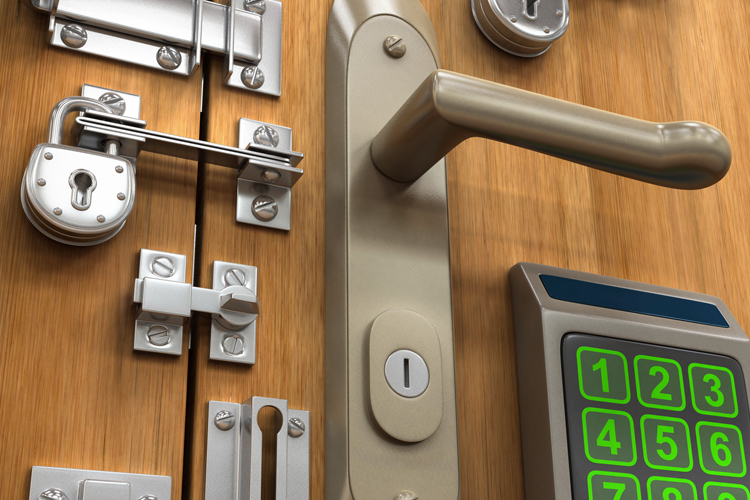

A door lock is often the first physical barrier between a home and an unauthorized visitor, but not all locks provide the same level of protection. High-security door locks are designed with stronger materials, more advanced cylinders, and features that resist common attack methods. These products do more than prevent someone from using the wrong key. They are built to withstand manipulation, drilling, prying, forced rotation, and unauthorized key duplication. However, the lock must also be installed correctly and supported by a solid door and frame. Understanding what makes a high-security lock difficult to defeat can help homeowners make more informed security decisions.
Stronger Materials Improve Physical Resistance
One of the most important differences between standard and high-security locks is the quality of the materials used in their construction. Basic locks may contain lightweight components that can bend, crack, or break under force. High-security models often use hardened steel, reinforced alloys, and stronger internal parts. These materials make it more difficult to damage the lock with common hand tools. They also help the lock maintain its shape and function after repeated use. Strong construction is especially important for deadbolts installed on exterior doors.
The bolt itself is another major factor in physical security. A weak bolt may bend or retract if enough pressure is applied to the door. High-security deadbolts often use hardened steel bolts that extend deeply into the door frame. Some designs include anti-saw pins or rotating components that make cutting more difficult. The bolt should also fit tightly into a reinforced strike plate without excessive movement. This combination helps the lock resist kicking, prying, and other forms of forced entry.
Advanced Lock Cylinders Resist Manipulation
The cylinder is the portion of the lock that accepts the key and controls the internal mechanism. Standard cylinders may have simple pin arrangements that are more vulnerable to picking or manipulation. High-security cylinders use more complex internal designs that increase the number of possible key combinations. They may include side pins, rotating discs, sliders, magnetic components, or multiple locking elements. These features require more precise interaction before the cylinder can turn. Increased complexity makes unauthorized manipulation more difficult and time-consuming.
Some high-security locks also include false gates, mushroom pins, spool pins, or other specially shaped internal parts. These components are designed to produce misleading feedback when someone attempts to manipulate the lock. A person using picking tools may have difficulty determining whether a pin is correctly positioned. The lock may appear to be close to opening when it is still securely engaged. This uncertainty can slow down an attack and make it less likely to succeed. The exact design varies by manufacturer and product line.
Drill Resistance Protects the Internal Mechanism
Drilling is a direct attack method that targets the lock cylinder or internal components. Once certain parts are damaged, a poorly protected lock may become easier to rotate or bypass. High-security door locks often include hardened steel inserts, anti-drill plates, or ball bearings around vulnerable areas. These components can damage, deflect, or slow a drill bit. Some cylinders also contain hardened pins that are more difficult to penetrate. This added protection prevents quick access to the operating mechanism.
Drill resistance does not mean that a lock is completely indestructible. With enough time, specialized equipment, and noise, many physical security products can eventually be damaged. The goal is to increase the effort, tools, and time required to defeat the lock. A difficult and noisy attack creates a greater chance that someone will notice the activity. It may also encourage an intruder to abandon the attempt. Effective security is often based on delaying unauthorized entry rather than assuming any single product is impossible to defeat.
Protection Against Forced Rotation
Some attacks focus on gripping and twisting the cylinder rather than manipulating its pins. If the cylinder protrudes too far from the door, it may provide enough surface for a tool to grab. Lower-quality components may snap, pull free, or rotate under pressure. High-security locks often use reinforced cylinder housings and protective collars to reduce this risk. These features help shield the cylinder from direct contact. They also make it harder to apply leverage with pliers, wrenches, or other gripping tools.
Proper installation is essential for resistance to forced rotation. Even a well-designed lock may be vulnerable if the cylinder extends too far beyond the door surface. The hardware should sit securely and fit the thickness of the door. Mounting screws must also be tight, correctly placed, and protected from exterior access. A locksmith can verify that the cylinder, trim, and door hardware work together as intended. Small installation errors can reduce the effectiveness of otherwise strong security products.
Restricted Keys Limit Unauthorized Duplication
Physical strength is only one part of high-security lock design. Key control is equally important because a strong lock offers limited protection if unauthorized copies of the key can be made easily. Many high-security systems use restricted keyways that are not available through ordinary hardware stores. Duplicate keys may require authorization, identification, or documentation from the registered owner. Some manufacturers limit blank key distribution to approved locksmiths or dealers. This system makes it easier to track and control who can obtain additional keys.
Restricted key systems can be especially useful for landlords, businesses, and households that regularly provide temporary access. They reduce the likelihood that an employee, contractor, tenant, or service provider can make an unnoticed copy. However, homeowners must still maintain accurate records of issued keys. Lost keys should be reported and evaluated promptly. In some cases, rekeying may still be appropriate even when duplication is restricted. Key control works best when it is supported by clear household or organizational procedures.
Patented Key Designs Add Another Layer of Control
Some high-security lock manufacturers protect their key designs through patents or other legal restrictions. A patented keyway can limit the legal production and distribution of compatible key blanks for a certain period. This makes it more difficult for unauthorized businesses to offer copies. The key itself may also include angled cuts, dimples, side grooves, moving parts, or magnetic elements. These features must align precisely with the cylinder. The added complexity improves both key control and resistance to manipulation.
Patented designs should not be viewed as a replacement for physical strength. A restricted or unusual key provides little benefit if the lock body can be easily broken. The strongest systems combine controlled key duplication with reinforced construction and attack-resistant cylinders. Homeowners should also ask what happens when a patent expires or a product line is discontinued. Replacement keys and service support should remain reasonably available. A locksmith can explain the long-term advantages and limitations of a particular system.
Reinforced Strike Plates Strengthen the Door Frame
A high-security lock cannot perform properly if the strike plate is attached to a weak frame. The strike plate is the metal component that receives the deadbolt when the door is locked. Standard plates may use short screws that attach only to thin decorative trim. Under force, those screws can tear out and allow the door to open. Reinforced strike plates use longer screws that extend into the structural framing around the doorway. This distributes impact across a stronger section of the wall.
A secure strike plate should also fit the deadbolt correctly. If the opening is too shallow, the bolt may not extend completely. If the plate is loose or misaligned, the lock may appear secure while providing limited resistance. High-security installations may use larger plates with multiple fastening points. Door reinforcement kits can also strengthen the area around the lock and hinges. These improvements help the entire door assembly resist concentrated force.
Door and Frame Quality Matter
Even the strongest lock cannot compensate for a hollow, damaged, or poorly fitted exterior door. High-security hardware should be installed on a solid wood, metal, fiberglass, or otherwise reinforced door that is appropriate for exterior use. The frame must also be strong and securely connected to the building structure. Cracks, rot, loose trim, and large gaps can weaken the entrance. Hinges should be properly fastened and protected from exterior removal when applicable. Security depends on the complete opening rather than the lock alone.
Door alignment also affects lock performance. A deadbolt that rubs against the strike plate may not extend fully when the homeowner turns the key. Some people compensate by pushing, pulling, or lifting the door while locking it. This may indicate loose hinges, settling, moisture changes, or frame movement. A locksmith can identify whether the problem involves the lock or the door itself. Correct alignment ensures that the bolt reaches its intended locking position every time.
Common Features of High-Security Door Locks
While products vary, many high-security locks share several protective characteristics. Homeowners should compare complete specifications rather than focusing on one advertised feature. A strong lock should address both physical attacks and key management concerns. It should also be appropriate for the door, household, and expected level of risk. Professional guidance can help separate useful features from unnecessary complexity. Common high-security features include:
- Hardened steel bolts and internal components
- Drill-resistant plates, pins, or inserts
- Pick-resistant cylinder designs
- Reinforced cylinder housings
- Protective collars that reduce gripping access
- Restricted or patented keyways
- Resistance to unauthorized key duplication
- Reinforced strike plates and long mounting screws
- Stronger protection against prying and forced rotation
- Compatibility with solid exterior doors and frames
No single feature guarantees complete security. A restricted keyway does not strengthen a weak frame, and a hardened bolt does not prevent careless key handling. The best results come from combining several layers of protection. These layers should address the most realistic risks for the property. A locksmith can evaluate the entrance and recommend a balanced solution.
Professional Installation Improves Performance
Installation quality has a major effect on how well a high-security lock performs. Incorrectly sized holes, loose screws, poor alignment, and excessive cylinder exposure can create weaknesses. The deadbolt should move freely and extend completely without requiring unusual pressure. The strike plate must be positioned correctly and fastened to structural material. Exterior trim should protect vulnerable parts of the cylinder. A locksmith can verify these details during installation.
Professional installation also helps protect the door from unnecessary damage. High-security locks may require precise measurements, specialized tools, or modifications to existing openings. Improper drilling can weaken the door or make the hardware difficult to secure. A locksmith can determine whether the existing door is compatible with the selected product. The professional may also recommend hinge reinforcement or frame repairs. Addressing these related issues provides more reliable protection than replacing the lock alone.
Frequently Asked Questions
Are high-security locks impossible to defeat?
No lock is completely impossible to defeat. High-security locks are designed to require more time, skill, noise, and specialized tools than standard locks.
Are high-security locks worth the cost?
They may be worthwhile for exterior doors, higher-risk properties, rental units, or homeowners who want stronger key control. The value depends on the property and security goals.
Can high-security locks be picked?
Some may be manipulated by highly skilled individuals, but advanced cylinders are designed to make picking substantially more difficult. They often include multiple security elements and misleading internal feedback.
Can a locksmith duplicate a high-security key?
An authorized locksmith may be able to duplicate the key after confirming permission. Restricted systems often require identification, ownership records, or a special authorization card.
Do high-security locks prevent break-ins?
They can reduce vulnerability and delay forced entry, but they should be combined with strong doors, reinforced frames, lighting, alarms, and responsible security habits.
Can I install a high-security lock myself?
Some products can be installed by experienced homeowners, but professional installation is recommended. Precise alignment and proper reinforcement are essential for full performance.
Should every exterior door have a high-security lock?
Each accessible exterior door should provide reliable protection. A locksmith can identify which entrances need upgrades based on their condition, location, and level of exposure.
Build Security Around the Entire Entryway
High-security door locks are harder to defeat because they combine strong materials, complex cylinders, drill resistance, key control, and reinforced installation. Their effectiveness depends on how well each feature works with the door, frame, strike plate, and surrounding structure. A strong cylinder installed in a weak door will not provide complete protection. Homeowners should evaluate the entire entrance rather than purchasing a lock based on one feature or label. Professional inspection and installation can identify weaknesses that may not be visible during a basic walkthrough. A layered approach creates a more dependable barrier and gives homeowners greater confidence in their property’s security.