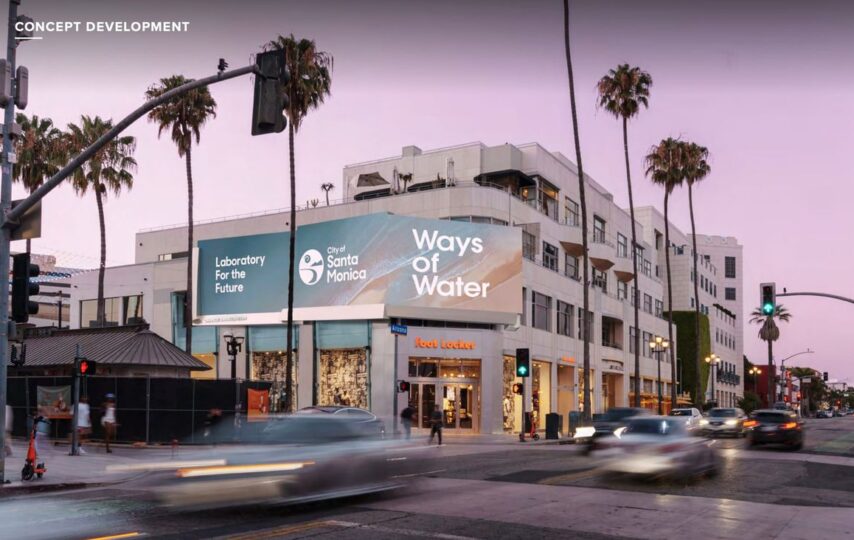

Santa Monica is one of those cities where signage has to work overtime. Between the beach crowds, the shopping corridors along Third Street Promenade and Montana Avenue, and the steady stream of tourists exploring the Pier, businesses are competing for attention in a visually busy environment. For many owners, the question eventually comes up: is it time to switch to LED signage? The answer depends on a combination of business goals, budget, location, and how a storefront currently performs against nearby competitors. As more storefronts and restaurants make the switch, LED signage in Santa Monica has become less of a trend and more of an expectation for businesses that want to stay visible and competitive.
This guide covers the situations where LED signage tends to make the most sense, the benefits it offers over traditional signage, and what business owners should think through before making the investment.
What Makes LED Signage Different
LED, or light-emitting diode, signage uses small semiconductor lights to produce illumination, either as the primary light source behind a sign face or as the actual pixels forming a digital display. This differs from traditional neon, incandescent, or non-illuminated signage in a few key ways.
- LEDs consume significantly less energy than neon or incandescent bulbs while producing comparable or greater brightness.
- LED components typically last much longer, often rated for tens of thousands of hours of use.
- LED signage can be static, like backlit channel letters, or dynamic, like digital displays capable of changing messages and graphics.
- LEDs generate less heat than older lighting technologies, reducing certain maintenance and safety concerns.
Understanding these basic differences helps clarify why so many businesses are reconsidering their signage strategy.
Signs It Might Be Time to Upgrade
Your Current Signage Is Hard to See at Night
If a storefront looks strong during the day but fades into the background once the sun sets, that is one of the clearest signals that an upgrade is worth considering. Santa Monica sees heavy evening foot traffic, particularly near the Promenade, the Pier, and popular dining areas, so a sign that loses visibility at night is missing a large share of potential customers.
You Are Losing Visibility to Nearby Competitors
In dense commercial areas, it does not take long for a business to feel overshadowed by a neighbor with brighter, more modern signage. If competitors on the same block have upgraded to LED and your storefront suddenly feels dim by comparison, that shift in relative visibility is worth taking seriously.
Your Business Relies on Frequent Promotions or Menu Changes
Restaurants, cafes, and retail shops that regularly update pricing, specials, or promotions can benefit significantly from digital LED displays. Instead of paying for new printed signage every time a promotion changes, a digital display allows updates to be made instantly, which can save money and staff time over the long run.
Your Current Sign Requires Frequent Repairs
Older lighting technologies, particularly neon and incandescent bulbs, tend to require more frequent maintenance as they age. If a business is regularly paying for bulb replacements, transformer repairs, or flickering fixes, the long-term cost of LED signage may end up being more economical despite the higher upfront investment.
You Are Opening a New Location or Rebranding
New construction or a full rebrand is often the most natural time to invest in updated signage. Since new signage typically needs to be designed and installed regardless of the outcome, it makes sense to evaluate LED options from the start rather than retrofitting an older sign style later.
Types of LED Signage to Consider
Channel Letters
Individually formed letters with LED illumination inside each letter are among the most common commercial sign types. They offer a clean, professional look and are highly customizable in terms of font, color, and size.
Backlit and Halo Lit Signage
Backlit signs shine light through a translucent face for even illumination, while halo lit signs project a soft glow around the edges of dimensional letters. Both options are popular for businesses wanting a more upscale, subtle nighttime presence rather than a bright, attention-grabbing display.
Digital LED Displays
Full digital displays allow for dynamic content, including rotating messages, animations, and time-sensitive promotions. These are particularly useful for restaurants, entertainment venues, and retail businesses that frequently update their offerings.
LED Neon Flex
For businesses that want the aesthetic of traditional neon without the fragility and maintenance demands, LED neon flex offers a flexible, durable alternative that mimics the classic glow while using modern LED components.
Cost Considerations
LED signage typically involves a higher upfront cost compared to traditional non-illuminated or incandescent options, but the long-term savings often offset that initial investment. A few cost factors worth considering include the following.
- Energy savings over time, since LEDs use significantly less electricity than older lighting technologies.
- Reduced maintenance costs, given the longer lifespan of LED components.
- Potential rebates or incentives, as some utility providers offer programs for businesses upgrading to energy-efficient lighting.
- Installation complexity, since digital displays and larger illuminated signage may require additional electrical work.
Businesses should request detailed quotes that separate equipment costs from installation and ongoing maintenance to get a clear picture of the total investment.
Local Regulations to Keep in Mind
Santa Monica has specific guidelines governing signage, including rules around brightness, illumination hours, and digital display content in certain commercial districts. Before committing to a design, business owners should check with the city’s planning and zoning department to confirm what is permitted for their specific location, particularly if the property falls within a historic district or a zone with additional design guidelines. Taking this step early helps avoid costly changes after installation.
How to Decide if the Timing Is Right
For business owners still weighing the decision, a few practical questions can help clarify whether now is the right time.
- Is your current signage difficult to see at night or from a distance during the day?
- Are you spending a noticeable amount on repairs or bulb replacements each year?
- Do you update pricing, menus, or promotions often enough that a digital display would save time and money?
- Are you already planning a renovation, rebrand, or new location opening where signage will need to be addressed regardless?
- Have you noticed reduced foot traffic or visibility compared to nearby competitors with updated signage?
If the answer to several of these questions is yes, it is likely a strong time to begin exploring LED options.
FAQ
Is LED signage more expensive than traditional signage? The upfront cost is often higher, but LED signage typically saves money over time through lower energy use and reduced maintenance needs.
Can I update a digital LED sign’s message myself? Most digital LED displays come with software that allows business owners or staff to update content directly, without needing to hire a technician each time.
Do I need a permit to install LED signage in Santa Monica? Yes, in most cases. The city regulates signage brightness, placement, and digital content, so it is important to confirm requirements with the local planning department before installation.
How long does LED signage typically last? LED components are generally rated for tens of thousands of hours of use, which often translates to many years of reliable performance with minimal maintenance.
Is LED signage a good fit for small businesses, or only larger storefronts? LED signage is scalable and can be designed for businesses of any size, from a small boutique sign to a large digital display for a restaurant or entertainment venue.
Will switching to LED signage actually increase foot traffic? While results vary by business and location, improved visibility, especially at night, often leads to increased attention and can support higher foot traffic over time.
Final Thoughts
Deciding when to invest in LED signage often comes down to a combination of visibility, cost, and timing. Businesses struggling with nighttime visibility, frequent repairs, or the need for flexible, updatable content tend to benefit the most from making the switch. As more storefronts throughout the city continue to modernize, staying visible and competitive increasingly depends on signage that performs well both day and night. For business owners on the fence, taking a close look at current performance and comparing it against nearby competitors is often the clearest way to determine whether the time to upgrade has arrived.