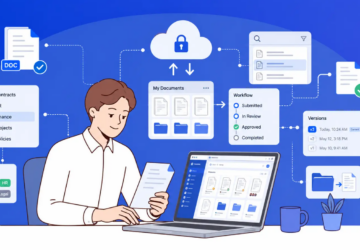

Most businesses don’t set out to create messy document systems. It usually happens gradually. A few folders are created in a hurry, different teams start saving files in different places, old versions stick around longer than they should, and before long, people are spending too much time asking where something is, which version is current, or who was supposed to approve it.
That’s why asking what is document management software? is a useful starting point for any business that feels like its files, records and internal documents have become harder to manage than they need to be. At its simplest, document management software helps organisations store, organise, find, share and control documents in a more structured way, so information doesn’t disappear into inboxes, desktops or scattered folders.
The hidden cost of disorganised documents
Document problems can feel small at first because they’re often hidden inside everyday routines. Someone spends ten minutes looking for a contract. Another person accidentally works from an outdated policy. A manager has to chase approvals through email threads. A staff member saves a file locally, then leaves the business, and suddenly no one knows where the final copy went.
Individually, these moments may not seem like a major issue, but across a team or organisation, they add up quickly. Lost time, duplicated work, compliance risks and avoidable frustration can all come from poor document control. The issue usually isn’t that people are careless; it’s that the system doesn’t make the right behaviour easy enough.
Why structure matters
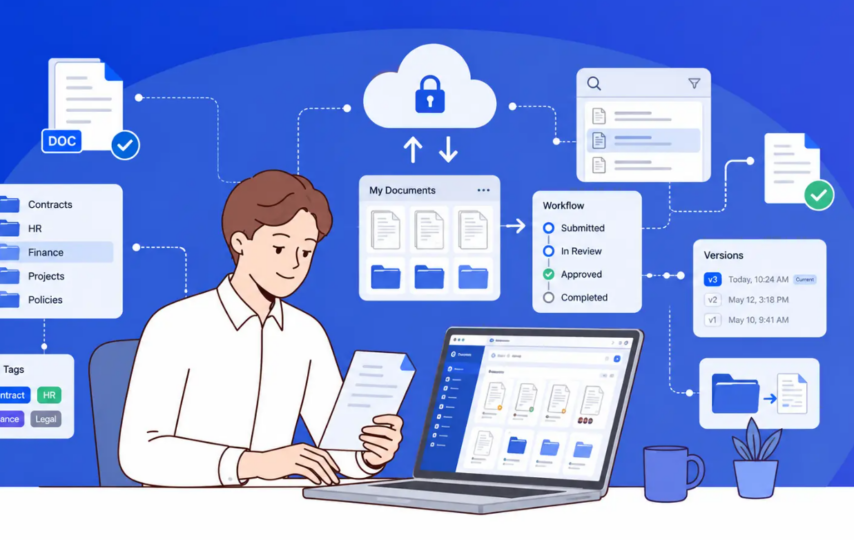
Good document management software gives businesses a clearer framework for handling information. Instead of relying on everyone to follow their own filing habits, documents can be stored in agreed locations, labelled consistently and managed with version control. That means staff can find what they need more quickly and feel more confident that they’re using the correct file.
It also helps with access control. Not every document should be available to every person in the business, especially when files contain sensitive financial information, HR records, contracts or client details. A proper system can help manage permissions so people have access to what they need, without opening the door too widely.
Making collaboration less clunky
Modern work often involves multiple people reviewing, editing and approving the same document, and that’s where messy systems become especially painful. Emailing attachments back and forth might work for a quick one-off task, but it becomes risky when several versions start circulating and no one is completely sure which one is final.
Document management software can make collaboration smoother by keeping work connected to a single source of truth. Teams can track changes, manage approvals and reduce the confusion that comes from saving different versions in different places. For businesses that deal with policies, procedures, contracts, reports or compliance documents, that consistency can make day-to-day work much easier.
Building better habits around information
The right software won’t magically fix every internal process, but it can create the structure needed for better habits to stick. When documents are easier to find, easier to protect and easier to manage, people are more likely to follow the process because it actually supports the way they work.
For growing businesses, this becomes even more important. The document system that worked for a small team may not hold up once there are more staff, more clients, more compliance requirements and more records to keep track of. By understanding what document management software does and why it matters, businesses can make smarter decisions about how they organise their information before the mess becomes much harder to untangle.