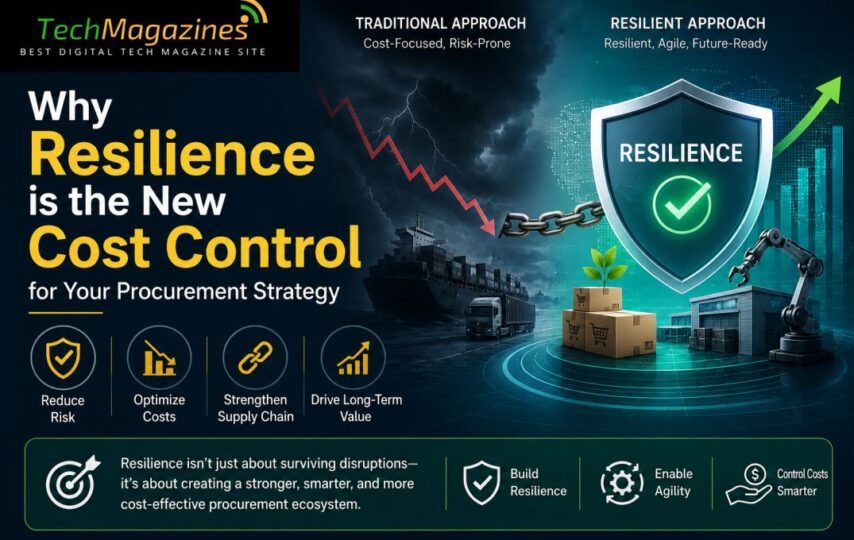

For decades, procurement’s scorecard was simple: get the lowest price, hit the delivery date, meet the spec. Cost reduction was the north star, and a procurement team’s value was measured almost entirely in savings percentages and negotiated discounts.
That scorecard hasn’t disappeared, but it’s no longer sufficient on its own. Port congestion, geopolitical disruption, extreme weather events, single-source supplier failures, and cyber incidents have all demonstrated the same lesson repeatedly over the past several years: the cheapest contract is worthless if the goods never arrive. Procurement’s job has expanded from cost control to risk control, and organizations that haven’t made that shift are discovering it the hard way — usually during a crisis, when it’s most expensive to learn.
From Transactional Buying to Strategic Function
The old model of procurement was largely transactional: a requisition comes in, a purchase order goes out, the invoice gets reconciled. That workflow still has to happen, but it’s no longer where procurement creates its greatest value.
Strategic procurement looks upstream and downstream of the transaction. It asks what happens if a key supplier goes dark for six weeks. It maps which categories of spend have one viable vendor versus five. It builds relationships with suppliers before there’s a crisis, not during one. And increasingly, it treats speed and flexibility as negotiating currency alongside price.
This shift shows up in how procurement teams are structured. Category managers are being asked to own risk assessments, not just savings targets. Sourcing decisions increasingly weigh a supplier’s geographic footprint, financial stability, and disaster history alongside their unit cost. None of this replaces price discipline — it sits on top of it.
Supplier Diversification Isn’t Optional Anymore
Single-sourcing has always offered attractive volume discounts and simplified management. It also concentrates risk in one place. When that one supplier faces a factory fire, a labor dispute, a raw material shortage, or a regulatory shutdown, the buying organization has no fallback — and often no leverage to negotiate priority access while competitors with dual-sourced contracts keep receiving shipments.
A more resilient approach doesn’t mean abandoning consolidated buying entirely; volume leverage still matters. It means being deliberate about where single-sourcing is an acceptable risk and where it isn’t. Mission-critical inputs, components with long lead times, and anything tied to safety or continuity of operations generally warrant at least a qualified backup supplier, even if that backup carries a slightly higher unit cost. That premium functions as insurance, and organizations that have weathered a real supply disruption tend to stop viewing it as wasted spend.
Contract Terms That Actually Protect You
Procurement teams are also rethinking what belongs in a contract. Force majeure clauses, once boilerplate language nobody expected to invoke, are getting real scrutiny — who bears cost during a disruption, what the notice requirements are, and whether the clause actually triggers for the scenarios most likely to affect the business. Lead time guarantees, penalty structures for late delivery, and clearly defined escalation paths are becoming standard asks rather than nice-to-haves.
One area seeing particular attention is emergency procurement — the contracts, vendor relationships, and pre-negotiated pricing an organization can activate quickly when a disruption hits, rather than starting a sourcing process from scratch under pressure. Waiting until an emergency to find a supplier for recovery equipment, temporary facilities, or urgent MRO supplies almost always means paying a premium and accepting whoever has capacity, not necessarily the best option. Cooperative purchasing groups have specifically built supplier portfolios to solve this problem. E&I Cooperative Services, for example, serves the education sector and maintains pre-vetted emergency procurement contracts for equipment rental, recovery and cleanup supplies, modular buildings, and crisis communication support. This enables member institutions to move immediately instead of negotiating terms mid-crisis. This tactic has value beyond education, of course. Any organization that pre-qualifies emergency suppliers and locks in terms before disaster strikes is buying speed, not just goods.
Data is Changing the Meaning of ‘Strategic’
Modern procurement also has access to a volume of supplier and market data that didn’t exist a decade ago. Spend analytics can flag category concentration risk automatically. Supplier scorecards can incorporate on-time delivery trends, not just historical pricing. Some organizations are monitoring news on their top suppliers in real time, so a factory closure or port strike shows up as an alert rather than something procurement learns about when a shipment doesn’t arrive.
This data doesn’t replace judgment, but it does compress the time between a disruption occurring and procurement knowing about it — which is often the difference between activating a backup plan and scrambling for one.
The Bottom Line
Procurement’s core mission — get the right goods and services at the right cost — hasn’t changed. What has changed is the definition of “right.” A contract that delivers the lowest price but leaves an organization exposed during the next disruption isn’t actually the better deal. It’s a deferred cost that shows up later, usually at the worst possible time.
Building resilience into procurement — through supplier diversification, stronger contract terms, pre-negotiated emergency arrangements, and better visibility into supply risk — isn’t a departure from procurement’s traditional mandate. It’s what that mandate looks like when an organization has actually been through a disruption and doesn’t want to repeat the experience.