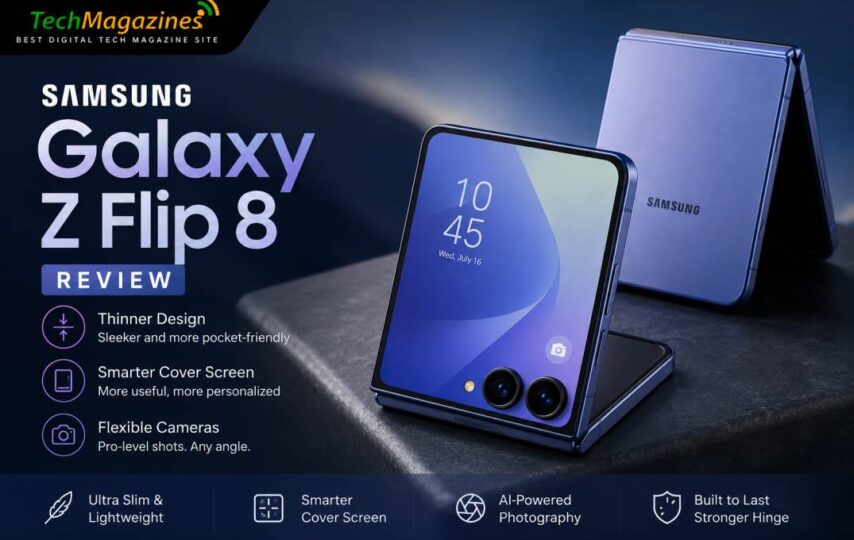

The Galaxy Z Flip8 is built around a simple idea: a phone need not be large merely because it is powerful. Samsung has reduced its weight to 180g and brought the thickness, when the phone is open, down to 6.1mm.
That is close to the dimensions of the Galaxy S25 Edge, which attracted considerable attention for being unusually thin. But the more telling fact is what happens when the Flip8 is shut. The same piece of hardware that is a full-sized phone in one position becomes a small object that can be carried almost anywhere.
Samsung Galaxy Z Flip 8 Design Gets Thinner and Lighter
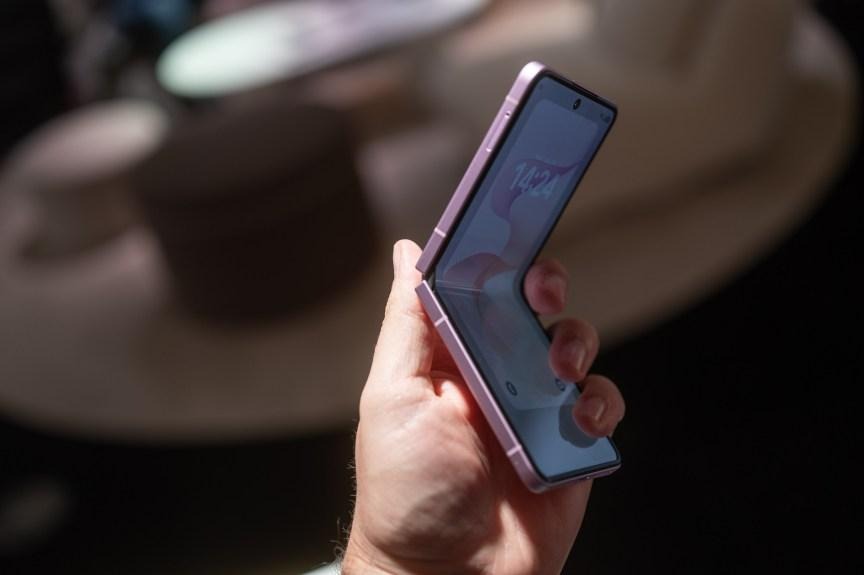
There is more to the design than convenience. In the hand, the closed phone feels neat and self-contained, and in a pocket it takes up remarkably little room. Samsung has also avoided making the folding mechanism look like a compromise. The colours and finish give it an appearance that is pleasant without being dull, and conspicuous without becoming gaudy.
Still, the most consequential change is found on the outside. The cover display is now large and bright enough to be useful for more than checking notifications. It gives the closed phone a degree of independence, so that opening it is no longer necessary every time something needs to be done.
Galaxy Z Flip 8 Cover Display Becomes More Useful
The cover screen now feels like something more than an accessory to the main display. It has its own way of working. Samsung has built a separate interface for it, rather than simply shrinking the main phone’s software to fit. The result is surprisingly convincing. The two screens behave differently. At times, the difference is large enough to make the phone seem like two devices joined together.
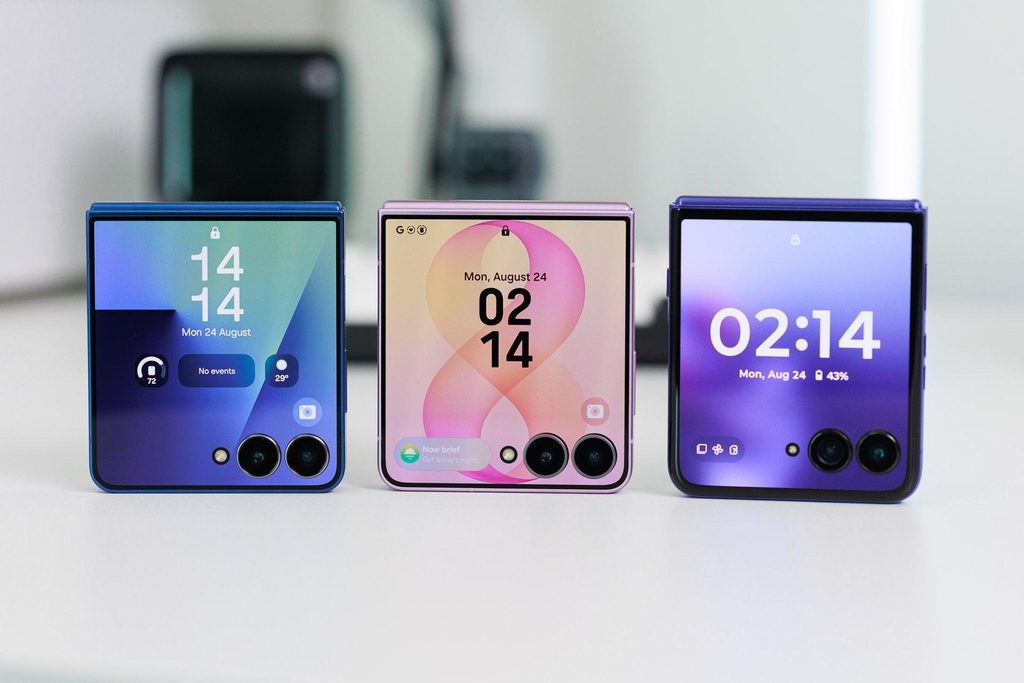
Yet Samsung has not allowed the two experiences to drift too far apart. The cover screen now has an app drawer of its own. Swipe upwards and the installed apps appear. Pick one and it opens there, without requiring you to unfold the phone. This matters because it removes one of the small irritations of a folding phone. You can now do quite a lot while keeping the device closed. For many ordinary tasks, there is no reason to open it at all.
Galaxy Z Flip 8 Quick Panel and Widgets
The Quick Panel has also become a proper part of the outside screen. Pull down from the top and the controls appear. Notifications remain within the same general system, so you can move between them instead of hunting through separate sections. A change in brightness takes only a moment. So does checking a new message. The phone can stay shut while you deal with both.
The outside display has become useful enough that Samsung can now fill it with more than a few fixed controls. There are more widgets to choose from. You can move through them, use their controls and open an application from the cover without unfolding the phone. This changes the character of the device. Opening it is no longer the first step in doing something. For much of the day, you can keep the phone shut and still get things done. It makes for a simple one-handed way of using a smartphone, and one that does not feel like a novelty.
The Camera Experience Is Built Around Flexibility
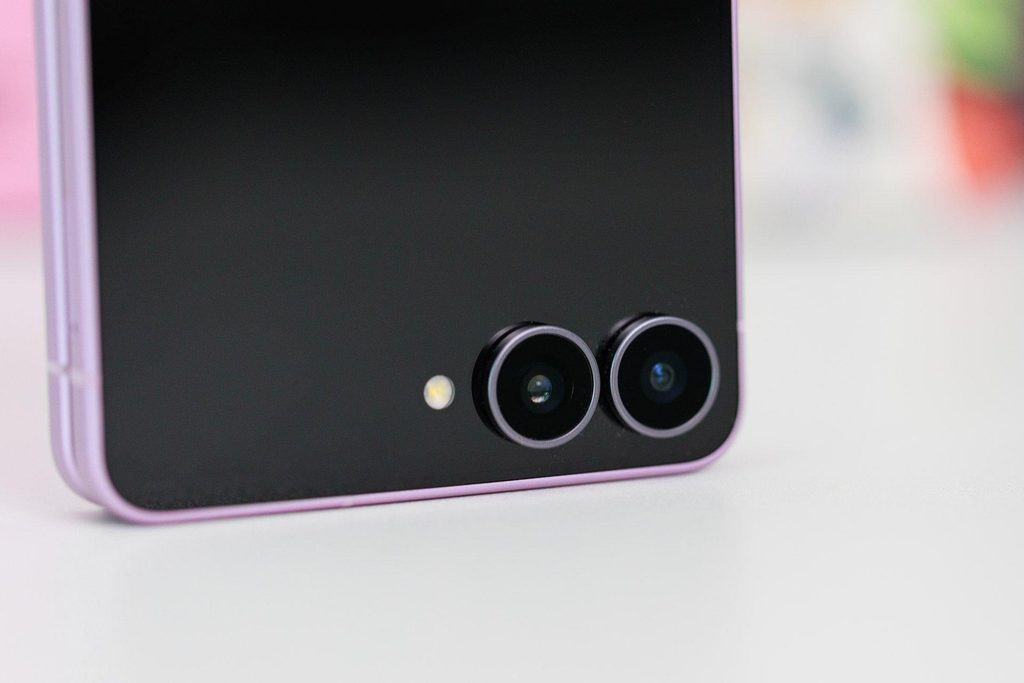
The camera system on the cover is less of a departure. Much of it works as it did last year. But that is not necessarily a weakness. The folding design still gives the Flip one useful trick that ordinary phones cannot easily match. You can close the phone and use its main cameras to take photographs or record yourself. There is no need to depend on the weaker front camera. When you need better video, turn the phone sideways and record in 4K. The higher resolution helps, and the wider view makes it easier to fit yourself and your surroundings into the frame.
This is where the Flip’s real freedom lies. It is not simply a matter of producing a better photograph or video. The useful thing is the method. You can hold the phone in odd positions, set it down, fold it at an angle and record without carrying another device. The phone itself provides most of the equipment you need.
Selfie and Video Features
One of the better things about the Flip is that you can use its proper cameras without unfolding it. This has been part of the appeal of the design from the beginning. The larger outside display makes the idea more practical. You do not have to open the phone, compose the shot, close it again and start over. The preview sits in front of you. It is large enough to see what you are doing, and the whole process feels much less awkward.
This matters even more with video and selfies. A small preview can make framing a matter of guesswork. The larger one removes much of that trouble. Samsung has pushed the idea further with Camera Assistant. It lets the cover display work with the cameras in a rather clever way. You can use the closed phone almost as you would use a small mirror. It is a simple trick, but a useful one.
Galaxy Z Flip 8 Camera Specifications and Limitations
The camera system itself is competent rather than revolutionary. Samsung has left the ultra-wide camera alone, and that is the disappointing part. The main camera still has 50MP, while the ultra-wide remains at 12MP. There is another omission. Camera Assistant offers a 24MP shooting option for the main camera, but not for the ultra-wide. The main sensor gets the extra choice. The wider lens does not. This is not a disaster, but it is hard to see why Samsung stopped halfway.
FlexCam lets you hold and position the phone more like a small camcorder. There are extra controls too, including a horizontal-lock feature that helps keep the recording in the intended orientation. None of this will replace a proper camera. That is not really the point.
The Flip’s camera appeal lies in the whole arrangement rather than in the numbers on a specification sheet. It gives you several ways to shoot. It is convenient. It is practical. And the results are good enough for photographs and video that you will actually want to keep on the phone. That is a more useful achievement than it may sound.
Samsung Galaxy Z Flip 8 Performance & Battery
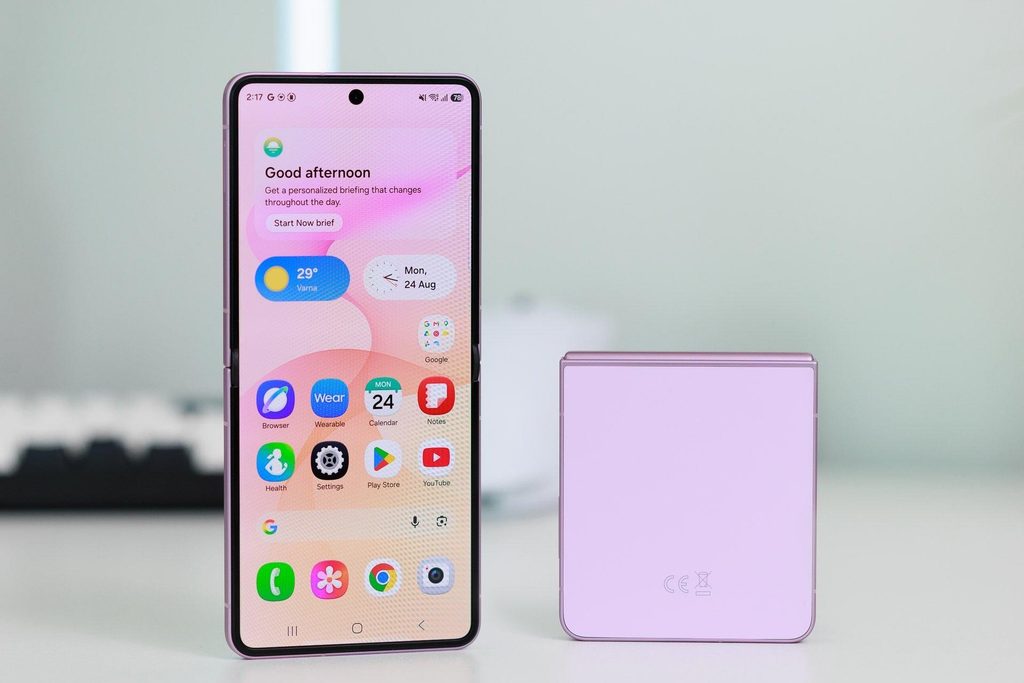
There are two ways to judge the Flip8’s performance. The generous view is that Samsung has kept a 4,300mAh battery inside a body that is lighter and thinner than the previous Flip7. That is not nothing. The less generous view is that the battery capacity has not increased, and neither has the charging speed. Both readings are reasonable.
The Flip8 is a flagship phone, and it behaves like one. You are not likely to run into the sluggishness that often comes with cheaper hardware. Ordinary use is effortless. So is watching a film with the phone partly folded. Even demanding games on the main display do not expose any obvious weakness. The Galaxy-tuned Exynos 2600 does its job without making itself known.
Final Words
There are still things Samsung could change. A third camera would be useful. Faster charging would be welcome too. But neither would alter the basic idea of the Flip. These are improvements at the edges. They do not change what makes the phone different.
The real strength of the Flip8 lies in its software, and most of that strength comes from the outside display. The hardware helps. The phone is thinner and lighter, so it takes up less room when folded. It also sits more comfortably in the hand. More importantly, the software has made the closed phone useful in its own right. You can check things, control things and use applications without constantly unfolding it.
That is the direction Samsung has taken with this generation. It has not tried to reinvent the Flip. It has removed some of the reasons for opening it. And that may be the more important change. Once you have lived with the Flip8 for a while, its shape stops seeming like a trick. It becomes a practical way of using a small phone. At present, nothing else combines compactness and usability quite so well. The Flip8 has not made the folding phone perfect. But it has come very close to making this particular kind of folding phone complete.