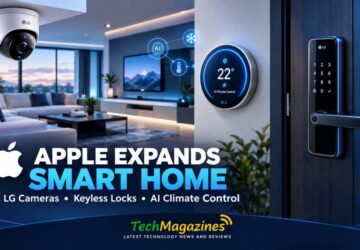
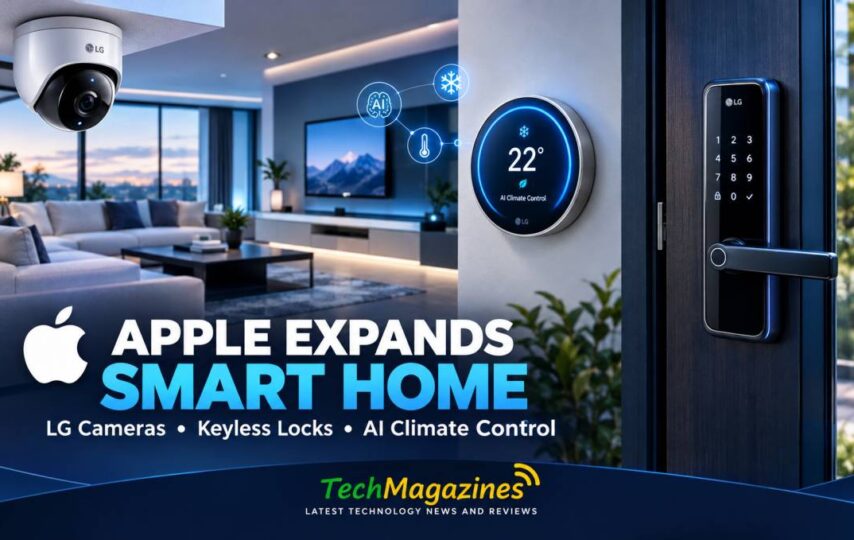

Apple has expanded its smart home ambitions with a fresh batch of hardware. The new arrivals include the HomeView smart display, a successor to the existing Apple TV 4K, and the HomePod mini 2. All three bring Siri AI into the mix. The company has also put together the Apple Home Collection, a separate range of connected household products developed alongside LG Electronics and Schneider Electric.
A Connected Home Ecosystem Built Around Apple Devices
Security, access control and climate monitoring are the main concerns of this collection. LG contributes four cameras and a smart door lock, while LG and Schneider Electric each provide a thermostat and a temperature sensor. Apple has kept the installation process simple. Owners can bring a device into their smart home setup with a single tap on an iPhone, then operate it using Siri or the Home app.
Separate companion applications and additional account registrations are not required. The accessories also communicate over Thread, which helps them work within a connected home network. A change to the Wi-Fi credentials should not mean setting up every accessory from the beginning, since the devices can update their network information automatically.
LG Smart Cameras Offer Advanced Home Monitoring Features
The four LG cameras offer video recording at up to 2.5K resolution. Their detection systems can distinguish between people, recognized faces, animals, vehicles and parcels left at the door. Apple has also avoided adding a dedicated recording plan to the cost of ownership. Instead, saved footage is handled through the user’s iCloud+ subscription, so there is no extra camera-specific fee for storing recordings.
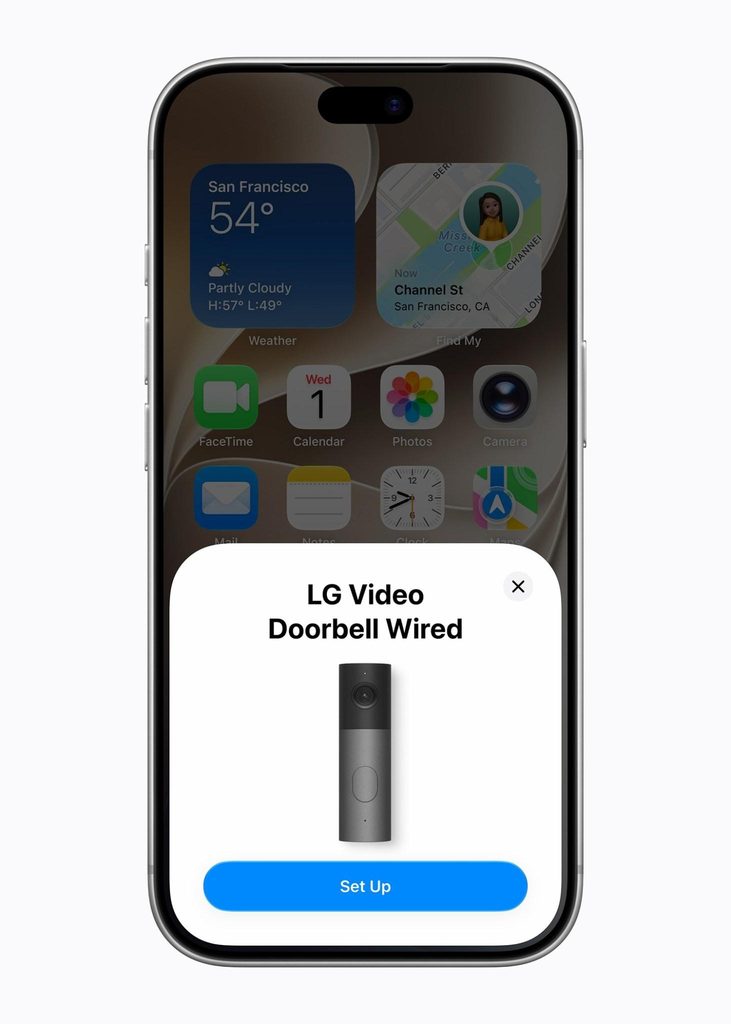
The LG Video Doorbell Wired keeps watch over two different areas. One camera faces visitors and records in 2.5K, while another points towards the ground to capture Full HD footage of deliveries. A spotlight helps illuminate the entrance, and two-way audio lets people speak through the device.
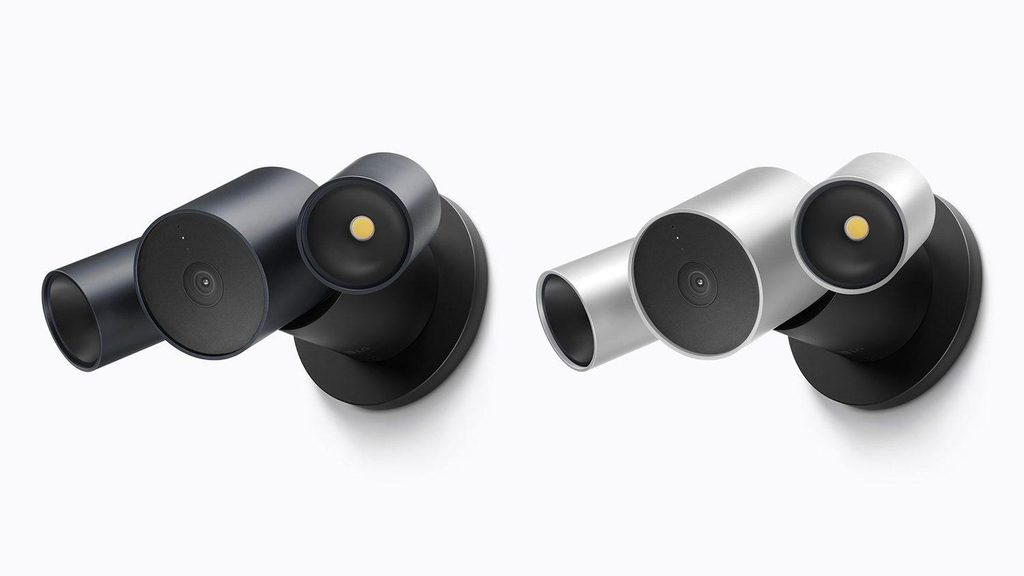
The doorbell can also sound its chime on an Apple HomeView display or through a HomePod or HomePod mini. For larger outdoor areas, LG offers the Floodlight Cam. Its two adjustable floodlights respond to detected movement and light up the surroundings. The camera also captures color footage in dim conditions, giving homeowners a clearer view of activity after sunset.
LG’s Outdoor Cam Plug-In brings color night vision to another outdoor camera. Its installation also allows users to choose a suitable angle without much difficulty. The Indoor Cam Plug-In takes a more flexible approach to monitoring. It sees across a 160-degree area and can change its position mechanically.
When a homeowner opens the live feed, the camera tilts upwards. It then turns down and stops monitoring when the first person from the household arrives home. Users need not rely on these automatic movements alone; they can change the camera’s angle manually or through Apple’s Home app.
LG’s Smart Deadbolt Lock Combines Keyless Entry With Added Security
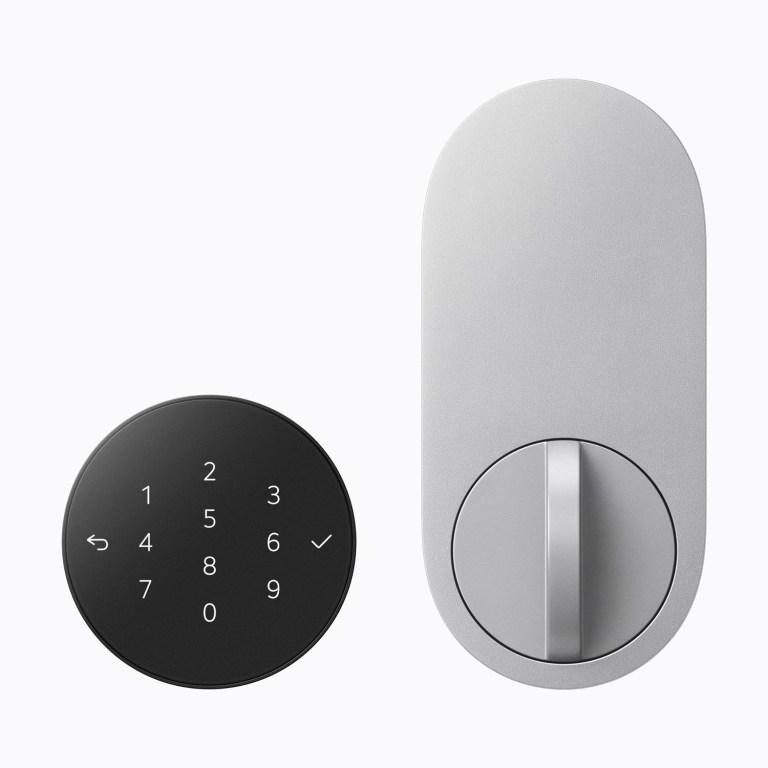
The LG Smart Deadbolt Lock offers a way to enter the house without reaching for a key or operating a keypad. Ultra Wideband technology detects an approaching iPhone or Apple Watch and triggers automatic unlocking. Those who prefer a more deliberate method can tap to open the lock or enter a PIN on its integrated keypad. A concealed physical key provides another option when electronic access is not convenient.
The LG Smart Deadbolt Lock gives homeowners more control over who enters the house. It keeps track of the door’s state and can detect attempts to tamper with it. When friends or other visitors need access, owners can arrange it through Apple’s Home app. The lock works with Matter and Aliro, allowing it to fit into compatible smart home and access-control systems. It also handles its essential operations locally. An internet outage, therefore, need not leave those functions unusable.
Smart Thermostats and Room Sensors Help Manage Indoor Comfort
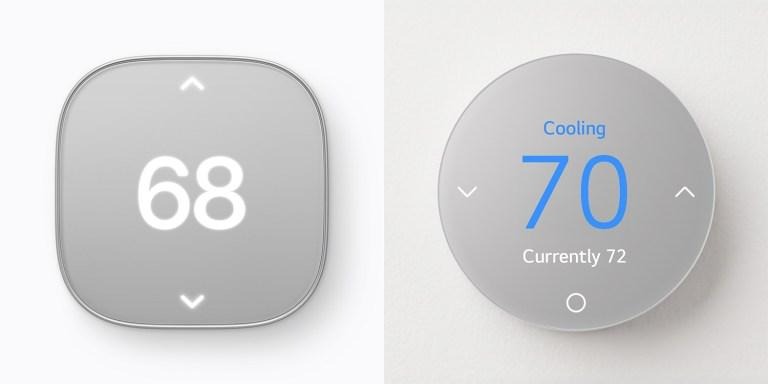
Keeping a house at a comfortable temperature is the job of two new thermostats from LG and Schneider Electric. Both use Apple’s Adaptive Temperature feature to adjust heating and cooling as the household’s routine changes. The system takes account of three situations: when people are home, when they sleep, and when they leave. Each thermostat also accommodates a wide selection of HVAC systems.
Built-in wire detection helps identify the wiring during installation, which should make fitting the units easier for people doing the work themselves. The two products take different approaches to appearance. LG has opted for a circular design. Schneider Electric uses a slim silver metal surround and a translucent matte screen designed to reduce glare.
According to Schneider Electric, its thermostat can also sense an approaching person. NFC offers another convenience: users can pair the unit even before supplying it with power. A thermostat needs reliable readings from around the house, not just from the room where it hangs. Apple’s HomeView display, HomePod and HomePod mini can supply temperature and humidity measurements through their built-in sensors.
For better coverage, owners can place additional sensors in other rooms. LG sells its own Temperature Sensor, while Schneider Electric offers the Schneider Home Room Sensor. Both are small, independent devices that extend environmental monitoring beyond the main thermostat’s location.
Accurate temperature readings are one of the features LG highlights in its thermostat range. The company says its sensing algorithms detect changes as they occur and help limit measurement errors. Matter over Thread provides the connection between the devices and the wider smart home network, helping commands travel without unnecessary delay.
Apple Emphasizes Privacy With Encrypted Smart Home Recordings
Apple also makes a strong claim about privacy. According to the company, end-to-end encryption protects information stored and shared through the Home app, including video from security cameras. Apple says neither it nor LG or Schneider Electric can access the encrypted content. Camera footage receives further protection through local processing on a home hub or through Apple’s Private Cloud Compute system. The recordings remain in iCloud for 10 days. To use the system, however, a household needs a compatible hub. Apple lists four options: HomeView, HomePod, HomePod mini and Apple TV 4K.
Apple Home Collection Prices, Launch Timeline and Availability
Buyers will have to wait until December for the first products in the Apple Home Collection. Some models will follow in early 2027. The wired LG Video Doorbell will cost $249.95. The Floodlight Cam sits at the top of LG’s camera range at $399.95, followed by the Outdoor Cam Plug-In at $299.95 and the Indoor Cam Plug-In at $199.95.
The company’s Smart Deadbolt Lock will sell for $349.95. Climate-control products cost less: each of the two thermostats carries a $199.95 price tag, while either standalone temperature sensor costs $39.95. The initial rollout will not cover every market equally. Customers in the US, Canada and UK can expect the cameras, but the lock, thermostats and sensors will initially be available only in the US and Canada.
Final Words
The Apple Home Collection is designed to make smart home technology more of a unified system, and less of a set of gadgets. Apple is bringing convenience, security and climate control together with LG’s security cameras and smart lock, thermostats and temperature sensors from LG and Schneider Electric.
The integration with Siri, Thread connectivity and the potential for encrypted camera footage are additional features that enhance its appeal, particularly for those who are already part of the Apple ecosystem.
Upgrading the home could leave wallets in need of a little reassurance of their own, with products running up to $399.95. The first devices are also not available to buyers until December, and some models won’t be available until early 2027. Its availability varies in different countries, which may restrict the initial choices for some customers.