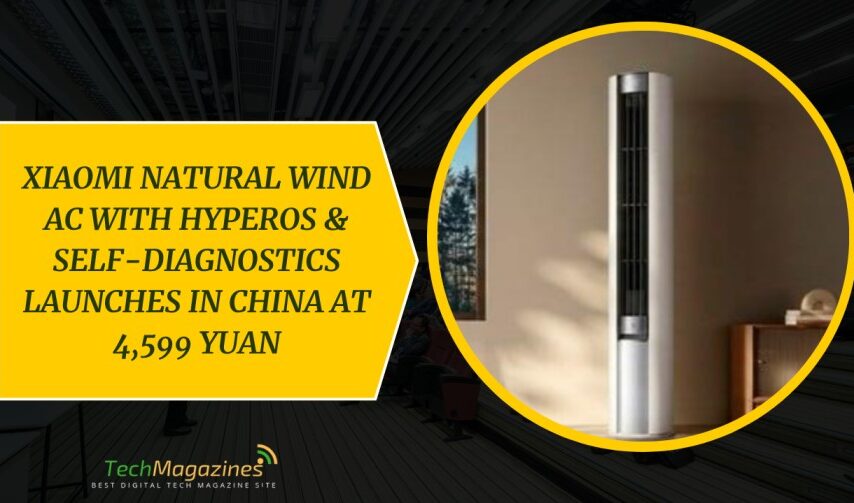

Xiaomi has launched a new air conditioner that attempts to resolve a major nuisance. The majority of units force out a cold stream of air that is sharp and direct. This one does not. It divides the air between the upper and lower section of a room hence the effect is less strained and unnatural. The modification may seem insignificant, yet it transforms the experience of the machine.
The model is known as Mijia Air Conditioner Natural Wind Vertical 3HP, it is capable of delivering air to a height of up to 13 meters and dispersing it over a 115 degree area. These are huge amounts, but they are important only when they enhance comfort. The system is designed to replicate the uneven shape of natural wind. It does not have the constant, mechanical bang which most individuals get weary of after some time.
Xiaomi’s Next-Gen Smart AC Focuses on Comfort, Reach, and Automation
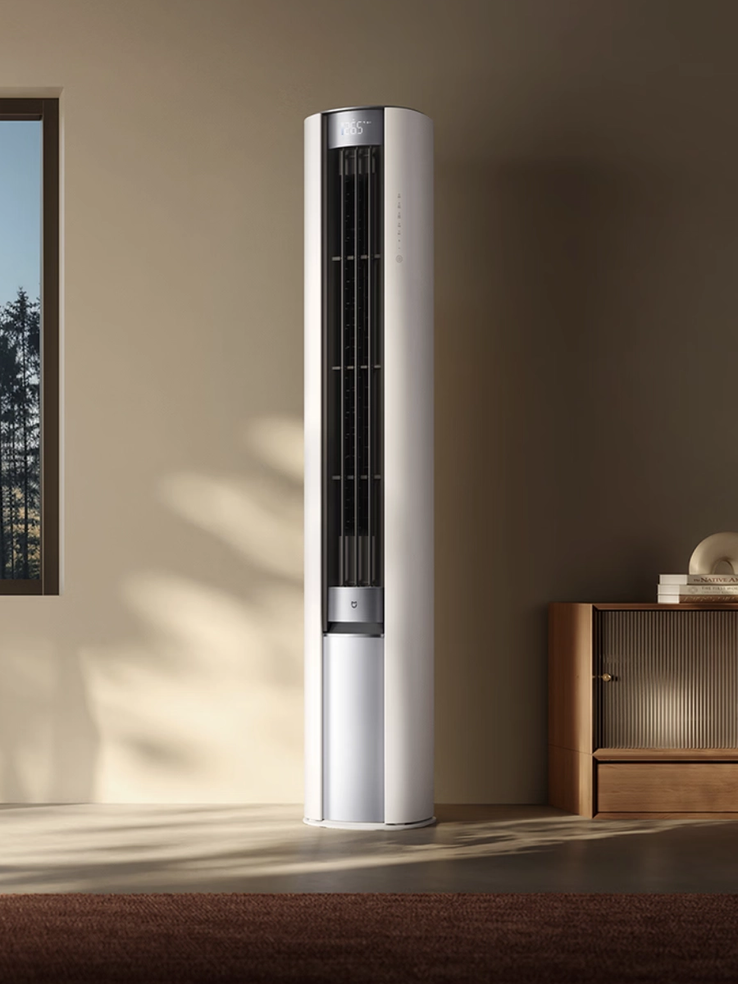
It is powered by HyperOS Connect, the software platform that connects Xiaomi devices. The same system is used in phones, watches and home appliances and they exchange information. It is not a new concept, and Xiaomi keeps on expanding it. The outcome is a home in which machines are no longer isolated but are a component of a broader system.
The air conditioner has a diagnostic system as well. It is able to identify over 120 faults on its own. This saves the manual inspection and external repair at least in simple cases. It exhibits a definite tendency. Machines now monitor their own status and report, rather than wait to fail.
Xiaomi released the unit in China on April 10. The cost is 4,599 yuan. This puts it in the high end. But the company boasts of features that are usually more expensive elsewhere. The success of that assertion in everyday life will decide whether it is justified or not, not numbers. Xiaomi is still increasing its line of air conditioners in various markets. However, it has not yet commented on a broader release of this model. To the people who subscribe to the products of the company, the device is a part of a bigger plan. It brings an additional dimension to the concept of a fully connected home.
Inside Xiaomi’s “Natural Airflow” Technology and How It Changes Cooling
The company places much weight on what it calls “natural wind.” The term may sound vague, but the meaning is fairly direct. Reports, including one from Tudo Celular, point to a split ventilation system as the main feature. The design aims to copy how air moves in the open, rather than how machines usually force it through a room.
Most air conditioners rely on a narrow and steady jet. It blows straight ahead and often causes discomfort. People feel it in their eyes and on their skin. This model avoids that approach. It sends air both upward and downward at the same time. The result is a softer current. It feels less harsh and less artificial.
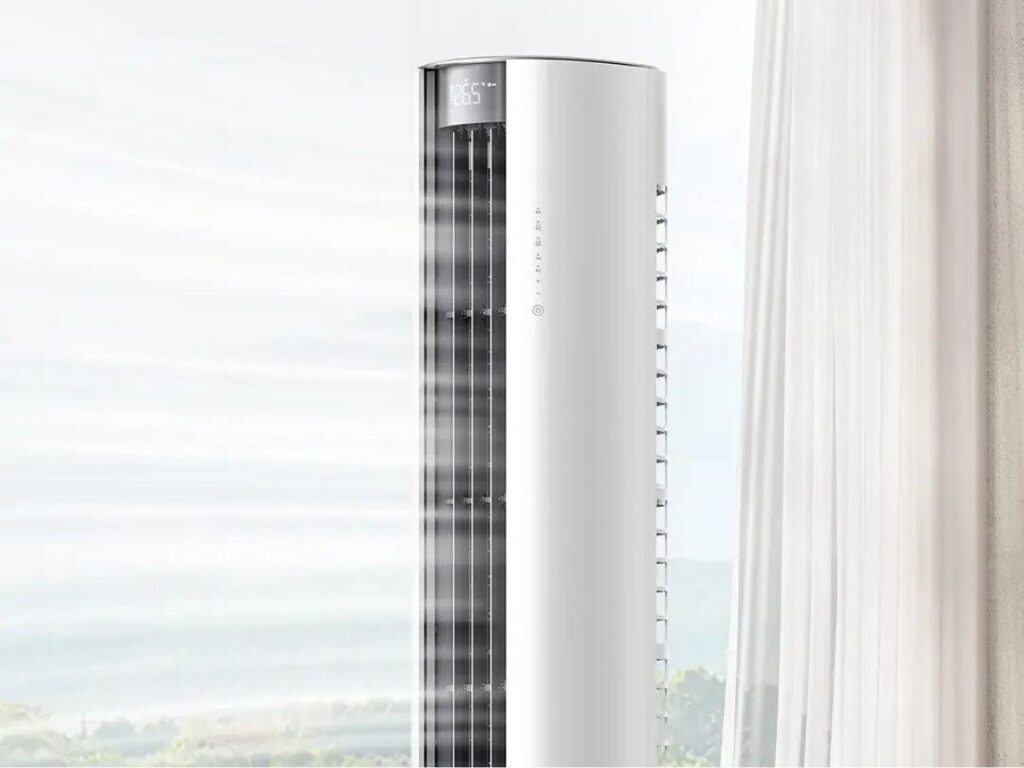
The claimed reach of 13 meters also serves a practical purpose. It allows the unit to cool a large space without running at full power. This can reduce noise and limit energy use. Such gains may seem modest, but they matter in daily use, where comfort depends as much on what is absent as on what is present.
The unit covers an angle of 115 degrees. This allows the air to spread across a wide area without constant adjustment. The user does not need to shift the device or redirect the louvers by hand. Other brands have attempted similar forms of ventilation. Xiaomi, however, builds this approach into both the design and the control system of the product.
How Xiaomi’s HyperOS Ecosystem Turns This AC Into a Connected Home Hub
The company treats its appliances as parts of a larger system. It does not design them to stand alone. This air conditioner works within the HyperOS Connect ecosystem. It links with other devices and follows the same logic that governs Xiaomi’s broader range.
The user can control the unit through an app. They can set schedules and adjust settings from a distance. The system can also work with sensors placed around the home. It reads temperature and humidity, then responds as needed. Voice commands provide another way to operate it. The aim is clear. Climate control becomes part of a wider, automated routine.
The most practical feature lies in its diagnostics. The system monitors performance at all times. It can detect more than 120 types of faults before they become obvious. These include problems with the compressor and blockages in the filters. The machine, in effect, keeps watch over itself.
It also supports over-the-air updates. Xiaomi can refine the software without sending a technician. The company can fix errors or add new functions as needed. This keeps the device current, even after installation, and reduces the need for direct intervention.
Pricing Strategy Explained: What 4,599 Yuan Says About Xiaomi’s Market Position
The price stands at 4,599 yuan, or about R$ 3,448. This puts the air conditioner in the upper market of China. It is not cheap. However, the price is an indication of the type of product that Xiaomi wants to sell. The offer is good in the case of a vertical 3HP unit that has a reach of 13 meters. It has a system that simulates natural wind, connects to a smart ecosystem and verifies itself against faults. It can detect more than 120 types of failure.
Compared to other models of the same type, offered by Daikin, Gree, or Midea, the price appears to be measured, not exorbitant. Xiaomi is not an exception. It introduces features, and maintains the price affordable to a larger market. To Brazilian buyers, the question is straightforward. Will the product be delivered and when? There are already home devices sold by Xiaomi. Robot vacuum and air purifiers are now available. Air conditioners have not. The gap remains.
As long as the company continues with its normal trend, growth will follow. It has done so with other products. It is hardly possible to believe that this case will be an exception. So far, there is another purpose of the launch. It demonstrates that Xiaomi does not concentrate on phones only. It is instead geared towards an entire system, with each device helping the others in a networked house.
Why This Xiaomi Launch Signals a Bigger Shift in Smart Appliance Competition
The air conditioner that runs on HyperOS does not stand alone. Xiaomi considers it as a part of a bigger plan. All appliances are nodes in a larger network. The aim is simple. All the devices are interconnected and each of them supports the other. This pattern is already being followed by refrigerators, washing machines, air purifiers, and security cameras. The air conditioner is added to them now. All run on the same system. All use the same app. The step is simple to those who already have Xiaomi products. The inclusion of another device is not so much of a choice as it is an extension. This will send a strong message to the older competitors.
An air conditioner is no longer competing based on cooling. Efficiency is important, but not sufficient. The machine should be able to communicate with the house, update itself, and notify about faults before they become severe. This way, the scope of function extends beyond the task at hand. Xiaomi started as a producer of cheap phones. It is now opposed to manufacturers who have much longer histories. It achieves this by providing products that are more affordable as well as those with extensive features.
These machines do not only do more, they do it collectively. Another step in that direction is the air conditioner with its smoother airflow and inbuilt diagnostics. It is not an end, but a step in a continuous change.
Final Words
Ultimately, the new air conditioner by Xiaomi does not seem like a mere appliance, but rather a silent message of where the future of home technology is going. It cools, yes, but it also watches, and adjusts, and will not attempt to irritate you in the process, which may already render it more thoughtful than most machines. The marketing poetry of the promise of natural wind might not be very appealing, but the concept of it, of comfort without being harsh, resonates in the daily life.
Include HyperOS, self-diagnostics, and a spot within a broader ecosystem, and the device starts to resemble a part of a larger change instead of a product all by itself. Its actual use will determine whether it is worth its cost or not. Yet this much is evident that the air conditioner has ceased to be merely about temperature, but rather about experience, convenience and, more and more, intelligence.